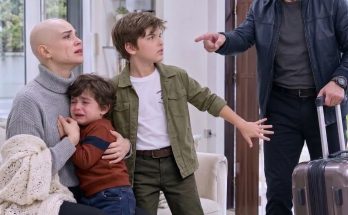
“You don’t have to make any.”
“So what do we do now?”
I told him about the call. I didn’t ask him to forgive and I didn’t forbid him to get close. My brother had spent years trying to build a less cruel version of our childhood. He had the right to decide without me speaking for him.
“I want to know if he’s as sick as he says,” he answered. “But I don’t want him moving in here.”
I sent Vernon a text: If you want to talk, we need clear information about your treatment first. We’re not promising to take care of you. And we’re not going to argue over the phone. He replied almost immediately with the address of his apartment and the time of an appointment at his dialysis center.
The next day I called him. I asked him to talk with me in front of a social worker and to authorize the medical staff to explain only what help he would need after he was discharged. He agreed, grudgingly. He wanted us to come to his place, but I wasn’t going to let his urgency set the terms.
We met in a small office at the clinic. It startled me to see how much he’d aged. He was fifty-five and looked older. The social worker explained that his treatment required regular assistance, follow-up care, and transportation to his sessions. She said the clinic could point him toward available resources, but that day-to-day help wouldn’t be solved automatically.
“I have two sons,” Vernon interrupted. “They can take turns.”
“We haven’t agreed to that,” I said.
Vernon looked at me with the same expression he’d had the night of the suitcase.
“You’re really going to do this to me while I’m sick?”
I asked the social worker to give us a few minutes. Then I asked him a question I’d prepared with Ben.
“Where’s Tiffany?”
My father rubbed his hands together.
“She left three weeks ago. Said she wasn’t a nurse and she still wanted to enjoy her life.”
My brother looked down. I remembered Mom gripping the couch while Vernon talked about his right to live. I didn’t feel glad about the coincidence. I felt an old sadness, mixed with the fear of discovering that he still thought the same way.
“Why didn’t you ever come looking for us?” Ben asked.
“Your aunt took you. I never knew where you were.”
I took out the copy of the email and set it in front of him. He saw the date, his email address, and his own words. It took him a few seconds to understand that we weren’t going to argue over memories. We were discussing a decision he had put in writing.
“That was a long time ago,” he said.
“Exactly,” I answered. “You had fifteen years to do something different.”
Vernon didn’t deny the message. He just pointed at the page and muttered that he’d been under a lot of pressure. Then he changed the subject: he claimed he had no money to pay anyone. I asked him to go over his options with us in the room, without handing over passwords or accounts to anyone. He said the recent sale of his truck had barely left him enough to live on.
But when I mentioned we could look into a paid caregiver, funded from his own resources, he straightened up in his chair.
“I’m not paying a stranger while my sons are alive.”
Ben stood so fast his chair scraped the floor.
“Then you’re not asking for help,” he said. “You’re collecting on a debt that never existed.”
I got up too. Vernon started talking louder, asking what kind of sons abandon a sick father. Before we left, I told him we would visit him one time, together, to give him a final answer.
That night Ben handed me the envelope with no stamp that Carol had lent us. Mom had written Vernon’s name on the front but never mailed it. My brother asked whether he should open it. We did. And we understood that our answer the next day could no longer be limited to an argument about who would take care of our father.
PART 3
The letter began without reproach. Mom explained that exhaustion no longer let her spend a whole afternoon with us, and that she had left our documents, school uniforms, and vaccination records in order for Carol. Then she wrote something that made me look away from the page: Wesley pretends not to be afraid so that Benjamin can cry. Don’t ask him to be the man of the house. He’s nine years old.
It wasn’t a plea for love. It was the last chance Mom gave Vernon to act like a father, even though the marriage was broken. She told him about Ben’s drawings, about my grades, and about how both of us still looked toward the door every time a pickup truck parked outside.
In the last paragraph she wrote: If you ever want to come back, let it be to get to know them, not so they have to rescue you. Being a father isn’t a favor you collect on later.
Carol told us Mom tried to send the letter, but an infection landed her in the hospital and she never could. My aunt kept it to give to us when we were older.
Ben cried when he read the line about his drawings. It was a different kind of sadness from what he’d felt over the email. In the email was our father’s contempt. In the letter was Mom’s effort to keep seeing us as children, not as two pending responsibilities.
“I made her laugh too,” he said. “I thought only you remembered.”
I hugged him. We talked about what Mom was like before she got sick: her off-key singing, the potato pancakes on Fridays. For the first time, Vernon didn’t take up all the room that belonged to her.
I called the clinic to ask for guidance from a social worker. Then I looked into two in-home care services. Nothing would be hired without Vernon’s approval, and he would have to pay what fell to him.
In our father’s apartment there were photographs of trips with Tiffany and plaques from his welding business. I didn’t find a single picture of us. He still had some savings from the sale of his truck, though not enough to feel safe.
We sat down at his kitchen table. Vernon looked at the envelope I’d set beside a notepad.
“I thought you came to tell me when you’re moving in.”
“We came to explain what we can do,” I said. “And what we won’t.”
Ben walked him through the options for transportation to dialysis and care at home. He offered to go with him once to look at the services, if that would make the process easier.
“I have sons, I shouldn’t need to pay nurses,” Vernon repeated.