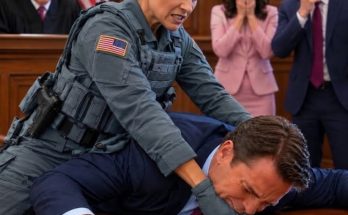
**Part 2**
The Envelope Grandfather Left Behind
Samuel opened his briefcase.
Inside were several neatly organized folders.
He placed the first in front of me.
“Before we discuss the envelope, I need you to understand what the court is actually deciding today.”
I nodded.
“Custody.”
“More precisely, the immediate question is where Toby should live and who should exercise legal decision-making authority while Rebecca recovers.”
I leaned forward.
“And the trust?”
“Separate proceedings, although your parents have tried to connect the issues.”
I stared at him.
“How?”
Samuel opened a document.
“They’ve argued that unified family management would provide stability.”
I frowned.
“Meaning Dad controls Toby and the money.”
“That’s the concern. But we need to prove any improper connection rather than assume it.”
I nodded.
“Understood.”
Samuel slid another document toward me.
It was a proposed agreement.
At first glance, it looked ordinary.
Dense legal language.
Paragraph numbers.
Signature lines.
But halfway down the second page, I found a provision authorizing changes to the trust’s investment oversight.
My stomach tightened.
“This is what they wanted Toby to sign?”
“An earlier version, yes.”
I looked up.
“Would his signature have been legally sufficient?”
“Not by itself. He’s a minor, and the trust has independent safeguards. But it could have been used to support their argument that he agreed with the changes.”
I stared at the document.
Then whispered, “He thought he was signing something about where he would live.”
Samuel nodded.
“That’s what his letter suggests.”
I looked toward the sealed envelope.
“What did Grandfather leave?”
Samuel hesitated.
“Instructions to the trust protector, along with a personal statement.”
I swallowed.
“About Toby?”
“Yes.”
He slid the envelope toward me.
“The personal statement may be relevant to the trust dispute. The judge will decide what weight, if any, it carries in this hearing.”
I looked at the handwriting.
Arthur Sterling.
My grandfather.
The man who taught me to fish.
The man who attended my commissioning ceremony when my parents refused.
The man who once told me that strength was not the ability to frighten people.
It was the willingness to protect someone who couldn’t protect himself.
I touched the envelope.
Then looked at Samuel.
“Can I read it?”
He nodded.
The letter was dated four years earlier.
Grandfather had written it shortly after a family argument about Toby’s future.
The opening was simple.
To those responsible for Toby’s welfare:
My grandson is a child, not a financial asset.
I stopped reading.
My throat tightened.
I continued.
I have watched adults in this family speak about his inheritance more often than his happiness. I have heard discussions about investment authority, tax planning, and family control while Toby sat in the next room waiting for someone to help him with his homework.
Tears blurred the page.
The purpose of the trust is to protect Toby’s future. It is not intended to reward anyone for gaining influence over him.
I swallowed.
Then reached the final paragraph.
If a dispute ever arises, I ask that the court and the trustee listen to Toby himself. He is thoughtful, observant, and capable of expressing what makes him feel safe. His voice should not be lost beneath the voices of adults arguing over money.
I lowered the letter.
For a long moment, I couldn’t speak.
Samuel waited.
Then said, “There’s more.”
I looked up.
He opened another folder.
Inside were financial records.
Not the trust’s confidential investment details.
Those were being handled through the appropriate legal process.
These were records showing payments connected to the litigation.
Consulting fees.
Legal retainers.
Proposed management expenses.
And a series of invoices issued by a company affiliated with my father’s business interests.
I stared at one.
“Sterling Strategic Advisors?”
Samuel nodded.
“Your father’s company.”
I looked at the amount.
It was substantial.
“What was this for?”
“Proposed trust-management services.”
I frowned.
“Was the trust already paying him?”
“No. These were proposed fees connected to the requested restructuring.”
I looked up.
“So he wanted authority over Toby’s trust and planned to charge the trust for managing it?”
“That appears to be the proposal.”
I sat back.
My grandfather had spent his life building wealth.
He had wanted Toby to benefit from it.
Now my father was trying to turn that inheritance into another extension of his business.
Samuel closed the folder.
“Maya, listen carefully.”
I looked at him.
“The judge isn’t going to decide this case because your father is wealthy or because you’re a Navy officer.”
“I know.”
“She’ll decide based on Toby’s best interests and the evidence presented.”
I nodded.
“And your behavior earlier may complicate matters.”
I closed my eyes.
“I know.”
Samuel’s voice softened.
“Why did you react that way?”
I stared at my hands.
“I shouldn’t have.”
He waited.
I swallowed.
“Vance touched my chest rig. He stepped into my space. I reacted before thinking.”
Samuel nodded.
“Can you acknowledge that without trying to justify it?”
“Yes.”
“Good.”
He paused.
“Then that’s what you do.”
When the recess ended, I returned to the courtroom wearing only my uniform.
My weapon and protective equipment remained secured outside.
I had removed the helmet.
My hair was pulled back neatly.
My hands were empty.
I sat beside Samuel.
My parents watched me.
Dad looked pleased.
Mom looked relieved that I was no longer wearing the equipment she considered embarrassing.
Bradley Vance sat at the opposite table.
His expression was cold.
Judge Henderson entered.
Everyone stood.
When she sat, she looked directly at me.
“Lieutenant Commander Sterling.”
“Yes, Your Honor.”
“I have reviewed the court officer’s preliminary account of the incident.”
I stood.
She continued.
“The matter of physical contact between you and counsel will be addressed separately as appropriate. For purposes of this hearing, I expect absolute compliance with courtroom rules.”
“Yes, Your Honor.”
She studied me.
“Do you wish to say anything?”
I took a breath.
“Yes.”
The courtroom grew quiet.
“I apologize to the court for my conduct.”
Vance shifted in his chair.
I continued.
“Counsel touched me without permission, but my response was disproportionate. I should have stepped back and asked the court for assistance.”
Judge Henderson watched me.
“I understand.”
I swallowed.
“I accept responsibility.”
She nodded.
“Thank you for acknowledging that.”
Then she turned toward Vance.
“Counselor, you are likewise reminded that physical contact with a witness or party is inappropriate. The court will not tolerate intimidation or provocation.”
Vance lowered his eyes.
“Yes, Your Honor.”
The judge looked toward Samuel.
“Mr. Price, you indicated that you have additional evidence.”
Samuel stood.
“Yes, Your Honor.”
He held up the sealed envelope.
“My client has brought a statement from the child’s grandfather, along with documentation relevant to the proposed trust restructuring.”
Vance rose immediately.
“Objection, Your Honor. This is a custody hearing, not a probate proceeding.”
Judge Henderson nodded.
“That distinction is important. Explain the relevance.”
Samuel remained calm.
“The petitioners have argued that their proposed custody arrangement and trust-management changes are part of a unified plan for the child’s welfare. We believe the documents are relevant to whether financial considerations are influencing the custody request.”
Vance shook his head.
“This is outrageous.”
The judge raised one hand.
“Mr. Vance, sit down.”
He did.
Samuel continued.
“We are not asking the court to adjudicate the trust. We are asking the court to consider whether the proposed financial arrangement creates a conflict of interest.”
Judge Henderson looked at the documents.
Then at my father.
Her expression changed slightly.
“Mr. Sterling, are you affiliated with Sterling Strategic Advisors?”
Dad straightened.
“Yes, Your Honor.”
“And that company is proposed to receive compensation for services related to the trust?”
He hesitated.
“Potentially.”
The judge looked at Vance.
“Was that relationship disclosed in your filings?”
Vance opened his mouth.
Then closed it.
He looked through his documents.
Finally, he said, “The affiliation was referenced in an attachment.”
Judge Henderson’s expression hardened.
“An attachment?”
“Yes, Your Honor.”
“Was the potential conflict expressly identified?”
Vance hesitated.
“Not in those terms.”
The judge was silent.
Then she said, “That concerns me.”
My father leaned toward his attorney.
I couldn’t hear what he said.
But I saw Vance shake his head.
For the first time that morning, Dad looked uncertain.
Judge Henderson reviewed the materials.
She did not read Grandfather’s entire letter aloud.
She did not declare my parents guilty.
She did not announce that their wealth made them unfit.
Instead, she asked questions.
Specific questions.
About Toby’s current living arrangements.
About Rebecca’s medical condition.
About the independent trustee.
About the proposed financial changes.
And about why Toby had not been given an opportunity to express his wishes through an appropriate neutral process.
Vance tried to argue that Toby was too young to understand.
Judge Henderson looked at him.
“He is fourteen, counselor. His preferences are not necessarily controlling, but they are relevant.”
Vance nodded stiffly.
“Yes, Your Honor.”
Then the judge asked a question that changed the direction of the hearing.
“Has the child been interviewed by a guardian ad litem or another neutral professional?”
Samuel stood.
“Not yet, Your Honor.”
Vance rose.
“We believe that is unnecessary.”
Judge Henderson looked at him.
“On what basis?”
Vance hesitated.
“His parents know what’s best.”
The judge’s expression became very still.
“Mr. Vance, parental status is significant. It does not eliminate the court’s obligation to consider the child’s welfare.”
The courtroom fell silent.
Then she turned toward the clerk.
“I am appointing an independent guardian ad litem to investigate and report to the court.”
My mother gasped softly.
Dad’s jaw tightened.
Judge Henderson continued.
“Pending further review, I am not prepared to approve the proposed changes to the child’s placement today.”
I felt my breath catch.
She looked toward both tables.
“The existing arrangement will remain in effect temporarily, subject to appropriate care arrangements for Ms. Rebecca’s recovery and any emergency orders that may be necessary.”
Samuel nodded.
“Thank you, Your Honor.”
Vance stood.
“Your Honor, we object—”
“Your objection is noted.”
Then the judge looked directly at my father.
“And Mr. Sterling, any attempt to pressure the child regarding trust documents or testimony will be brought to this court’s attention.”
Dad went pale.
The gavel came down.
And for the first time since I entered the courtroom, I felt hope.
Not because I had won.
Not because my father had lost.
But because Toby would finally have someone independent listening to him.
As the courtroom emptied, Samuel touched my shoulder.
“Maya.”
I turned.
He smiled faintly.
“That went better than I expected.”
I exhaled.
“Does that mean Toby is safe?”
His expression became serious.
“It means the court is taking steps to understand what he needs.”
I nodded.
“Good.”
He hesitated.
“And Maya?”
“Yes?”
“There’s something else.”
My stomach tightened.
He opened his briefcase again.
Inside was a photograph.
Toby.
Standing beside Aunt Rebecca.
Smiling.
Samuel placed it in my hands.
“He asked me to give you this.”
I stared at my brother’s face.
Then turned the photograph over.
On the back, in his careful handwriting, were seven words.
I knew you would come back, Maya.
I covered my mouth.
And finally, after holding myself together through the entire hearing, I began to cry.
The Brother Who Finally Got to Speak
The next two weeks were harder than the hearing itself.
There were interviews.
Documents.
Phone calls.
Medical reports.
Questions about Toby’s schooling.
Questions about Rebecca’s recovery.
Questions about the trust.
And questions about the relationship between my parents and their youngest child.
I remained in Chicago on approved leave.
I met with Samuel regularly.
I cooperated with the guardian ad litem.
And I did something that surprised my parents.
I refused to turn the case into a public battle.
My father called three days after the hearing.
“Maya.”
“Dad.”
His voice was sharp.
“You’ve made a terrible mistake.”
I closed my eyes.
“What mistake?”
“Dragging family finances into a custody matter.”
I took a breath.
“Dad, your attorney connected the two.”
He laughed bitterly.
“That’s ridiculous.”
I said nothing.
He continued.
“You’ve embarrassed this family.”
I looked toward the window.
There it was again.
The phrase that had followed me since childhood.
Embarrassed this family.
Not frightened Toby.
Not worried about Rebecca.
Not concerned about what the judge might discover.
Embarrassed the family.
“Dad,” I said quietly, “I didn’t come here to embarrass you.”
“Then why did you do it?”
“Because Toby asked for help.”
He went silent.
I continued.
“He wrote me a letter.”
Dad’s voice changed.
“What letter?”
I hesitated.
“A letter telling me he was frightened.”
Silence.
Then Dad said, “He’s a child. Children exaggerate.”
I closed my eyes.
“Maybe.”
He sounded relieved.
Then I added, “That’s why an independent professional is speaking with him.”
His relief disappeared.
Dad lowered his voice.
“Maya, you don’t understand what’s at stake.”
I looked at the photograph on my desk.
Toby smiling beside Rebecca.
“Yes,” I said softly.
“I think I do.”
The guardian ad litem was a woman named Caroline Brooks.
She had spent nearly twenty years working with children in difficult family situations.
She was calm.
Patient.
And entirely unimpressed by my rank.
I liked her immediately.
During our first meeting, she asked me why I wanted to be involved.
I could have given a speech about duty.
Family.
Protection.
Instead, I told her the truth.
“Because Toby is my brother.”
She nodded.
“And?”
I swallowed.
“Because he asked for help, and I don’t want him to think nobody listened.”
She studied me.
“Are you seeking custody yourself?”
I hesitated.
“I’m willing to be considered if the court believes it’s appropriate.”
She nodded.
“Your military responsibilities may complicate that.”
“I understand.”
“Deployments. Transfers. Long absences.”
“I know.”
She leaned forward.
“Then what do you believe is best for Toby?”
I looked down.
“I think he should remain somewhere stable, with someone who listens to him.”
She waited.
“And if that isn’t you?”
I took a breath.
“Then I want him with whoever can provide that.”
Caroline nodded.
For the first time, she smiled.
“That’s a useful answer.”
Aunt Rebecca’s recovery was slow.
She had regained some mobility but still needed therapy.
Her doctors believed she might eventually return home with assistance.
But she wasn’t ready to resume full-time caregiving.
That left Toby in a temporary placement with a family friend approved through the court process.
He was safe.
But unhappy.
I wanted to see him immediately.
Caroline advised patience.
“There are procedures,” she said.
“I know.”
“And we need to avoid making him feel pressured.”
I nodded.
“Understood.”
When I finally saw Toby, he was sitting at a small table in a supervised visitation room.
He had grown taller.
His hair was longer.
His face was thinner than I remembered.
But his eyes were the same.
He looked up when I entered.
For a second, he didn’t move.
Then he stood so quickly his chair scraped backward.
“Maya?”
I smiled.
“Hey, kid.”
He crossed the room.
And wrapped both arms around me.
I held him carefully.
He was shaking.
“Are you really here?”
I closed my eyes.
“Yes.”
He buried his face against my shoulder.
“I thought you weren’t coming.”
My throat tightened.
“I came as soon as I knew.”
He pulled back.
“Dad said you didn’t care.”
I felt something cold move through my chest.
I looked at him.
“Toby, that’s not true.”
His eyes filled.
“He said you chose the Navy over us.”
I swallowed.
“I chose a career I believe in.”
He nodded.
“But I never stopped being your sister.”
He began crying.
I held him again.
We sat together for nearly an hour.
We talked about school.
Astronomy.
A science project involving a model of Saturn.
He told me about Rebecca’s therapy.
About the family friend who made terrible spaghetti.
About the dog next door that barked every morning at six.
Then he grew quiet.
“Maya?”
“Yes?”
“Am I in trouble?”
I frowned.
“For what?”
He looked down.
“For writing you.”
My chest tightened.
“No.”
He swallowed.
“Dad said I shouldn’t have.”
I took a breath.
“Toby, asking for help isn’t wrong.”
He nodded slowly.
I continued.
“And you don’t have to decide which adult is right.”
He looked up.
“Really?”
“Really.”
I smiled gently.
“Your job is to be fourteen.”
He laughed weakly.
“That sounds nice.”
Then he asked the question I’d been afraid of.
“Do I have to live with Mom and Dad?”
I looked at him.
“I don’t know yet.”
His face fell.
I continued.
“The court is trying to decide what’s safest and best for you.”
He stared at me.
“Can you tell the judge I don’t want to?”
I nodded.
“I can tell the people helping the judge what you’ve said. And Caroline will make sure your voice is heard.”
He swallowed.
“Will they believe me?”
I took his hand.
“They should listen carefully.”
He nodded.
I squeezed his hand.
“And whatever happens, I won’t disappear.”
After the visit, I sat in my car for a long time.
I wanted to scream.
Not because Toby had said anything surprising.
Because he had spent months believing that asking his sister for help might get him punished.
I looked at the steering wheel.
Then took a breath.
Anger would not help him.
Evidence would.
Patience would.
Consistency would.
So I went back to work with Samuel.
The investigation into the trust produced more information.
The independent trustee confirmed that my father had repeatedly sought broader management authority.
Several proposals included compensation arrangements involving his business interests.
The trustee had declined to approve them.
There was no evidence that Toby’s trust assets had already been stolen.
That mattered.
I refused to accuse my parents of theft when the records did not support it.
But the proposed conflicts were serious enough that the trustee and trust protector opposed the restructuring.
The court was informed through the appropriate proceedings.
Meanwhile, Caroline interviewed Toby.
She spoke with teachers.
Reviewed medical information.
Visited Rebecca.
Met with my parents.
And asked me questions about my military schedule.
She was thorough.
Sometimes uncomfortably so.
I appreciated that.
Toby deserved more than someone taking my side because I wore a uniform.
He deserved an honest assessment.
Then came the final custody hearing.
I arrived in a dark navy suit.
No combat equipment.
No helmet.
No rifle.
No spectacle.
Just a folder of documents and a photograph of my brother tucked inside my purse.
My parents sat across the aisle.
Dad looked tired.
Mom’s face was pale.
Bradley Vance was still their attorney.
He avoided looking at me.
I appreciated that too.
Judge Henderson entered.
Everyone stood.
The hearing began.
Caroline Brooks presented her report.
She described Toby as intelligent, thoughtful, and anxious about the conflict between the adults in his life.
She noted his strong attachment to Rebecca.
His desire for stability.
His concerns about returning to his parents’ home.
And his positive relationship with me.
She also noted that my military obligations made immediate full-time guardianship complicated.
I listened.
My hands were folded in my lap.
Caroline recommended that Toby remain in a stable, court-supervised arrangement while Rebecca continued recovering.
She recommended continued contact with me.
She recommended family counseling where appropriate.
And she advised against making custody decisions dependent on changes to the trust.
Judge Henderson listened carefully.
Then asked questions.
Not dramatic questions.
Practical ones.
Who would take Toby to school?
Who would help with homework?
Who would attend medical appointments?
Who would ensure he had consistent routines?
Who would support his relationship with Rebecca?
Who would respect his wishes without making him responsible for adult conflict?
My father testified.
He spoke about his financial resources.
His home.
His ability to provide.
His business success.
He said Toby would have every advantage.
Judge Henderson listened.
Then asked, “Mr. Sterling, what does Toby enjoy doing after school?”
Dad hesitated.
“Sports.”
I closed my eyes.
Toby hated organized sports.
The judge looked at him.
“Which sports?”
Dad frowned.
“Baseball. Basketball. The usual.”
Samuel glanced at me.
I kept my face still.
Judge Henderson made a note.
Then asked, “What is his favorite subject?”
Dad hesitated again.
“Mathematics.”
It wasn’t entirely wrong.
Toby liked mathematics.
But his favorite subject was astronomy, which he pursued through a school science club.
The judge continued.
“Who is his closest friend?”
Dad looked toward Mom.
She whispered something.
The judge raised her hand.
“Mrs. Sterling, please allow your husband to answer.”
Dad swallowed.
“I don’t recall the boy’s name.”
It wasn’t proof that my father was unfit.
Parents forget things.
Busy adults miss details.
But the answers revealed something important.
Dad knew the value of Toby’s trust.
He knew the proposed investment arrangements.
He knew the financial projections.
Yet he struggled to describe the ordinary details of his son’s life.
When my turn came, Samuel asked me why I wanted to remain involved.
I stood.
Looked toward the judge.
And answered simply.
“Because Toby needs adults who see him as a person.”
Judge Henderson watched me.
I continued.
“He’s fourteen. He likes astronomy, model airplanes, and terrible science jokes. He gets nervous before tests. He worries about disappointing people. He misses Aunt Rebecca.”
My throat tightened.
“And he needs to know that his future belongs to him.”
The courtroom was silent.
Vance cross-examined me.
He asked about deployments.
Transfers.
My schedule.
The earlier courtroom incident.
I answered every question.
When he asked whether I had physically restrained him, I said yes.
When he asked whether I regretted it, I said yes.
When he suggested that my military career made me unavailable as a caregiver, I acknowledged the practical challenges.
I didn’t pretend to be perfect.
I didn’t need to.
Then Vance asked, “Lieutenant Commander, isn’t it true that you abandoned your family for the Navy?”
I looked at him.
“No.”
He raised an eyebrow.
“You left home.”
“Yes.”
“You spent years away.”
“Yes.”
“You missed holidays.”
“Yes.”
He smiled.
“Then how can you claim to be a consistent presence in your brother’s life?”
I took a breath.
“Because consistency isn’t measured only by physical distance.”
He frowned.
I continued.
“I called. I wrote. I remembered his birthdays. I sent books. I visited when I could. And when he asked for help, I came.”
Vance opened his mouth.
Then closed it.
I looked toward the judge.
“I can’t be everywhere, Your Honor.”
My voice softened.
“But I can be someone Toby knows will listen.”
The judge nodded.
“Thank you, Commander.”
I sat.
And for the first time in years, I felt that my words had been heard without needing to be louder than anyone else’s.
The decision came later that afternoon.
Judge Henderson did not award Toby to me simply because I was his sister.
She did not strip my parents of all rights because they had behaved badly.
She issued a carefully structured order.
Toby would remain in the approved temporary placement while Rebecca recovered.
His relationship with Rebecca would be maintained.
I would have regular contact and a defined role in supporting him.
The court would review his long-term placement after updated medical and family assessments.
My parents would have contact subject to the court’s conditions and Toby’s welfare.
And any proposed trust-management changes would remain separate from the custody process.
It wasn’t the dramatic victory my father had expected either side to claim.
It was something better.
A decision focused on Toby.
As the hearing ended, my father stood.
He looked toward me.
For a moment, I thought he might shout.
Instead, he sat back down.
His shoulders sagged.
Mom began crying quietly.
Vance gathered his documents.
And I remained seated.
Because I had finally learned something my parents never understood.
Winning wasn’t always about making someone else lose.
Sometimes winning meant making sure the person with the least power was finally heard.