**Part 3**
After the immediate danger passed, the consequences continued unfolding.
Gavin was no longer running Mercer & Field.
Richard Field began dealing with the agency’s leadership and the employees whose careers had been affected by Gavin’s decisions.
At one point, Richard discussed the possibility of my returning.
The agency needed experienced people, and he understood how much work I’d contributed over the years.
But I wasn’t certain I wanted to go back.
For the first time, I could consider that question without feeling obligated to earn Gavin’s approval.
I still had ordinary responsibilities.
Electricity bills.
Insurance payments.
School tuition.
A mortgage.
Those familiar obligations felt strangely comforting after days of investigations, threats, and revelations about millions of dollars.
Richard’s offer was generous, and I appreciated it.
But something had changed in me.
I didn’t want to spend the next stage of my career chasing the position Gavin had once used to measure my value.
Eleanor’s invitation remained.
On Monday, I went to Halston Tower.
I expected a conventional interview, although nothing about the previous week had been conventional.
Instead, I spent hours speaking with senior employees and board members.
They questioned me about struggling businesses, management, employee retention, and difficult investment decisions.
I answered using what I’d learned from years of managing campaigns, relationships, and teams.
One discussion focused on businesses that could improve short-term profits by dismissing experienced employees.
The questions became increasingly challenging.
“What would you do?”
“Depends.”
“On what?”
“Whether keeping those employees protects long-term value.”
“What if investors demand cuts?”
“Then explain the cost of losing institutional knowledge.”
“What if they don’t care?”
“Then they’re not investing. They’re extracting.”
The board member studied me.
Then he smiled.
Another interviewer asked about my greatest weakness.
“What is your biggest weakness?”
“I occasionally stop for strangers.”
For two seconds, nobody laughed.
Then the room erupted.
Late that afternoon, Eleanor joined me.
“How did it go?”
“I believe three people hate me.”
“Only three? Excellent.”
She sat opposite me.
“I need to tell you something.”
“What?”
“The position you interviewed for isn’t available.”
My stomach sank.
“Oh.”
Eleanor folded her hands.
“I lied.”
I stared at her.
“What?”
“There was never an opening for Director of Human Capital Strategy.”
I could hardly believe her.
“Are you kidding me?”
“No.”
“Then why did I spend six hours interviewing?”
“Because I needed the board to meet you.”
Frustration rose inside me.
“Eleanor, I’m not interested in games.”
“Neither am I.”
She placed a folder on the desk.
“Open it.”
I did.
Its title read:
HALSTON COMMUNITY VENTURES — FORMATION PLAN
I looked up.
“What is this?”
“A new company.”
“For what?”
“Small businesses.”
Eleanor leaned back.
“Every year, thousands of businesses fail because nobody believes they are large enough to matter. Family restaurants. Local manufacturers. Rural clinics. Repair shops. Small technology firms.”
She tapped the folder.
“I want to build an investment platform for companies Wall Street ignores.”
“That sounds admirable.”
“You’re going to run it.”
I froze.
“No.”
Eleanor smiled.
“Yes.”
“I have no investment experience.”
“You’ll have a chief investment officer.”
“I don’t know private equity.”
“You know people.”
“That keeps being your answer.”
“Because it keeps being true.”
She passed me another document.
It outlined the position’s salary, equity arrangement, decision-making authority, and recruitment budget.
I stared at the compensation figure.
“This can’t be right.”
“It is.”
“This is more money than I ever imagined making.”
“I’m aware.”
I closed the folder.
“Why me?”
Eleanor became serious.
“Because when my life had no value to you beyond being human, you treated it as valuable anyway.”
Her eyes glistened.
“I have spent forty years hiring people who could read balance sheets.”
She paused.
“I want one person at the table who remembers there are human beings behind them.”
I couldn’t respond.
Then she added another requirement.
“And there’s another condition.”
“What?”
“You do not invest a single dollar in a company until you have met at least one ordinary employee.”
I smiled.
“That I can do.”
Eleanor gestured toward the agreement.
“So?”
I studied it.
I thought about my daughters, the uncertain morning when I’d lost my job, and every car that had passed Eleanor on Route 18.
I picked up the pen.
But before I could sign, Eleanor stopped me.
“One more thing.”
She reached into her handbag and removed an old envelope.
My name was handwritten across the front.
Not Christopher Bennett.
Christopher Vale.
My heart seemed to stop.
“Where did you get that?”
Eleanor’s voice softened.
“Your father gave it to me twenty-six years ago.”
For several seconds, I couldn’t move.
The envelope had yellowed with age, and its corners were worn.
It was sealed.
My original name had been written by someone whose handwriting I’d never seen.
I looked toward Eleanor.
“You knew my father?”
She nodded.
“How?”
“Thomas worked for me.”
The room became painfully quiet.
“When?”
“Long before Halston Capital became what it is today.”
Eleanor looked at the envelope.
“Your father was one of the first people who believed my husband and I could build something.”
I sat down slowly.
She began telling me about Thomas Vale.
He’d been twenty-four when they met.
Brilliant, reckless, amusing, and frequently late.
I managed a faint smile.
“That sounds unfortunate.”
Eleanor remembered one particular incident.
“He once arrived forty minutes late to a financing meeting because he stopped to help a man whose truck had broken down.”
My smile disappeared.
She noticed immediately.
“Yes.”
Eleanor pushed the envelope toward me.
“You’re more like him than you know.”
I stared at it.
“Why do you have this?”
Her eyes filled with tears.
“Thomas gave it to me after you were born.”
My chest tightened.
“He knew about me?”
Eleanor looked almost heartbroken by the question.
“Oh, Christopher.”
Her voice broke.
“He loved you.”
Those words reached a part of me I’d spent years trying not to think about.
“My mother told me he left.”
“He did.”
“Then how could he—”
“Because his family threatened her.”
Eleanor explained what had happened.
The Vale family had already possessed considerable wealth and influence.
Thomas had wanted to marry my mother, Laura.
His father refused to accept the relationship.
When Thomas resisted, the family cut off his financial support.
Laura became frightened that the Vales might attempt to take custody of me.
Eventually, she left.
Thomas searched for us for years.
“He finally found your mother,” Eleanor said. “But by then she had remarried.”
“My stepfather.”
“Yes.”
“He was good to me.”
“I know.”
I frowned.
“How?”
“Thomas knew too.”
Eleanor touched the envelope.
“That’s why he didn’t interfere.”
Tears blurred my vision.
“He just disappeared?”
“He decided that loving you meant allowing you to have a stable father.”
I’d spent my life interpreting his absence as rejection.
Now Eleanor was describing it as a painful sacrifice.
I wasn’t sure how to reconcile those ideas.
“What’s in the letter?”
“I don’t know.”
“You never opened it?”
“It wasn’t mine.”
“Why didn’t you give it to me?”
“I promised Thomas I would deliver it when you turned eighteen.”
My voice hardened.
“I’m thirty-eight.”
“I know.”
“Then you’re twenty years late.”
Eleanor closed her eyes.
“Yes.”
“Why?”
“Because after Thomas died, your mother begged me not to.”
I stood.
“She knew?”
“Yes.”
“She knew you had this?”
“Yes.”
Anger surged through me.
“Everyone knew except me.”
“Christopher.”
“Everyone decided what I could handle.”
“I’m sorry.”
I walked toward the windows.
Below us, traffic moved along the streets in orderly lines.
People hurried toward home, offices, appointments, and lives filled with things strangers could never guess.
My mother had died six years earlier.
I couldn’t ask her why she’d kept these secrets.
Perhaps she’d been frightened.
Perhaps she’d thought she was protecting me.
Perhaps she’d done what seemed safest for the family she had built.
I couldn’t know.
After a while, I returned to the desk.
Then I opened the envelope.
Inside was a letter covered in handwriting.
I began reading.
> Christopher,
>
> If you are reading this, then you are old enough to understand something I wasn’t brave enough to explain when you were small.
>
> I did not leave because you were unwanted.
My vision blurred.
I stopped for a moment.
Eleanor waited silently.
Then I continued.
> I left because your mother found a man willing to become the father I had already failed to be.
>
> There are different kinds of courage.
>
> Sometimes courage means fighting for someone.
>
> Sometimes it means staying.
>
> And sometimes it means stepping away because your presence would create more pain than your absence.
I pressed my hand against my mouth.
The next lines hurt even more.
> I hope you grow into a man kinder than the men in my family.
>
> I hope money never teaches you that another person matters less.
>
> I hope when life gives you the choice between being important and being decent, you choose decent.
I laughed through my tears.
Eleanor was crying too.
Then I reached the ending.
> And if you ever see someone stranded on the side of the road, stop.
>
> Your father always did.
>
> Love,
>
> Dad.
For several minutes, I couldn’t speak.
The entire extraordinary week seemed to come together around that final instruction.
The roadside.
Eleanor.
Gavin.
Halston Capital.
Marcus.
The discovery of my father’s identity.
Everything had begun with a simple choice.
Stop.
Help.
Stay.
I folded the letter carefully.
Then I looked at Eleanor.
“Did you know who I was when I stopped?”
“No.”
“You’re sure?”
“I recognized your surname at the agency, but Bennett meant nothing to me.”
“So this really was coincidence?”
She smiled through her tears.
“Maybe.”
I studied her expression.
“You don’t sound convinced.”
“At my age, you stop believing coincidence is always random.”
I laughed.
Then I signed the agreement establishing my role at Halston Community Ventures.
Not because I suddenly felt qualified to lead an investment organization.
But because, for the first time in years, the work ahead seemed connected to something more meaningful than winning accounts and earning someone’s approval.
During the following eighteen months, we built Halston Community Ventures.
Our first investment supported a family-owned manufacturing business in Ohio that was approaching closure.
The second helped a rural medical transportation company.
Our third went to a bakery operated by two sisters.
They’d maintained profitability for fifteen years but had still been rejected by six banks.
Every investment committee followed Eleanor’s requirement.
Before discussing spreadsheets, executives met the people working inside the businesses.
Machine operators.
Receptionists.
Drivers.
Cooks.
Warehouse employees.
People who rarely appeared in corporate presentations, although their lives depended on decisions made in conference rooms.
Not every investment succeeded.
Some businesses couldn’t be rescued.
Others recovered and expanded.
Within three years, Halston Community Ventures had invested in eighty-seven businesses and protected more than twelve thousand jobs.
Richard rebuilt Mercer & Field and renamed it Field & Company.
Nina became chief operating officer.
Three former interns advanced into director positions.
Gavin never returned.
Claire eventually divorced Marcus.
She avoided the corporate world for almost a year, then joined a nonprofit organization providing financial-literacy education to young adults.
Our relationship developed into something neither of us could have expected when we first met.
We became family.
Not immediately.
Trust took time.
But the connection gradually became genuine.
One Thanksgiving, Claire sat beside Sophie, helping her work on college applications while Lucy accidentally burned the dinner rolls.
Eleanor watched us from the table.
She leaned toward me.
“You realize your father would love this.”
“I hope so.”
“He would.”
“You can’t know that.”
Eleanor smiled.
“I knew him.”
Years afterward, she finally retired.
At her farewell dinner, hundreds of employees gathered inside a hotel ballroom.
There were prepared speeches, videos, awards, and stories about the companies she’d built.
Eleanor disliked most of the ceremony.
Near the end, she stepped onto the stage and ignored her prepared remarks.
Instead, she told the audience about Route 18.
She didn’t concentrate on Halston’s investments, acquisitions, or the scandal involving Marcus.
She talked about the cars that drove past her while she was struggling on the roadside.
And about the one driver who stopped.
I sat with Sophie and Lucy, listening.
The girls already knew the story, but hearing Eleanor tell it brought everything back.
When she finished, the audience stood and applauded.
I felt embarrassed by the attention.
My daughters seemed delighted.
Later, Eleanor handed me a copy of her remarks.
I read it twice.
Sophie linked her arm through mine.
“You okay?”
I smiled.
“Yeah.”
Lucy studied my expression suspiciously.
“You’re doing the emotional dad thing again.”
“I’m allowed.”
“You’re really not.”
We started walking toward the parking garage.
Halfway there, cold autumn rain began falling.
People hurried past us, pulling jackets over their heads.
As we approached an intersection, I noticed an elderly man standing beside an old sedan.
Its hood was raised.
The man looked frustrated and thoroughly soaked.
Drivers continued around him.
Pedestrians rushed by without stopping.
Sophie noticed him at the same moment I did.
She looked at me.
I looked at her.
Neither of us said anything.
Then she smiled and crossed the street toward him.
Lucy groaned.
“Oh, come on. We’re going to be here forever.”
But she followed.
So did I.
As we approached, I thought about my father.
Perhaps some things weren’t inherited through surnames, ownership shares, or family fortunes.
Perhaps they passed quietly from one generation to another through the examples people set.
One stranger stopped to help someone.
Years later, another person stopped.
And eventually, compassion became an inheritance of its own.
I’d once believed that being dismissed from my job was the worst thing that had ever happened to me.
Instead, that day brought Eleanor into my life.
It exposed Marcus’s scheme.
It helped uncover the truth about my father.
It gave me meaningful work.
It introduced relatives I never knew existed.
Most importantly, it taught my daughters something no lecture ever could.
Success wasn’t defined only by how far someone advanced.
Sometimes it was defined by the people they refused to abandon along the way.
The elderly man looked up when we reached him.
“You folks know anything about engines?”
Sophie smiled.
“Not really.”
He blinked.
“Then why’d you stop?”
She glanced at me.
I remembered the gravel shoulder of Route 18.
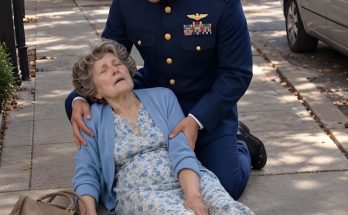
Eleanor struggling to breathe.
Gavin ordering me to keep driving.
And my father’s letter, waiting twenty-six years to reach me.
Then Sophie answered with words I knew I’d remember forever.
“Because you looked like you needed someone to.”
At last, I understood.
My life hadn’t truly changed when Gavin fired me.
It had changed several minutes earlier.
The moment I chose not to keep driving.