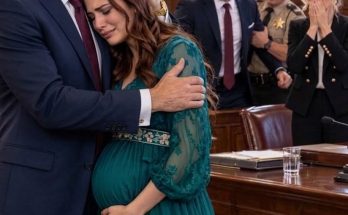
**Part 1**
My son’s wife moved into my house. On her very first day, she shouted, “This is my house now! Take your plate outside and eat with your friend!” She thought she had won. But then I just smiled, picked up the phone, and made one call that wiped the smile right off her face.
The dining room still smelled of rosemary, beef stew, warm bread, and candle wax when Linda made her announcement.
Dylan’s spoon stopped halfway to his mouth. Sarah’s nervous laugh disappeared. My son, Edward, stared down at the plate I had filled for him.
Linda pointed toward the back door as if she were dismissing a server.
I was sixty-eight years old, standing inside the Chicago brick house my late husband, Anthony, and I had bought on two teacher salaries. We had clipped coupons, skipped vacations, and driven the same rattling used car through four winters longer than we should have.
The mortgage was paid off. The property tax bills came in my name. The deed had never belonged to Edward—and it certainly did not belong to Linda.
But I had opened my door because my son called at 10:42 on a Tuesday and told me he had lost his job.
I gave him the entry code. I cleared out the guest room. I stocked Dylan’s favorite snacks and told Edward not to worry about rent until he could breathe again.
That first evening, I cooked the beef stew he used to beg for after soccer practice. I sliced warm bread, lit two candles, and set the table with the good china Anthony and I had received as a wedding gift.
By midafternoon, however, Linda had already started measuring my generosity like it was square footage she could claim.
The guest room was too small. The upstairs bathroom had terrible lighting. The closet space was unacceptable. Then she announced that she and Edward should have my bedroom because it “made the most sense.”
I said no.
She smiled as if she had heard, “Not yet.”
At dinner, Linda waited until everyone was seated before resting both hands beside her plate.
“I’m the one in charge of this house now,” she said.
Edward shifted in his chair but did not look at me.
Then Linda pointed toward the back door.
“Take your plate outside and eat with your friend.”
The insult hurt, but Edward’s silence hurt more.
For years, I had mistaken keeping the peace for protecting my family. I swallowed rude comments at holidays. I changed plans when Linda complained. I apologized first because it was easier than watching Edward feel caught between us.
But that night, as my son lowered his eyes while his wife tried to remove me from my own table, I finally understood the difference between peace and surrender.
I did not raise my voice. I did not list every sacrifice I had made for Edward. I did not remind him who had packed his lunches, signed forgotten permission slips, or sat through rain-soaked soccer games while Anthony worked late.
I simply smiled.
At exactly 6:48 p.m., I pushed back my chair and walked to the wall phone in the kitchen.
Linda leaned against her chair, looking pleased. She apparently thought I was calling a neighbor to ask whether I could finish my dinner somewhere else.
Edward finally lifted his head.
“Mom,” he said, “who are you calling?”
I dialed a number I had kept for years.
Gabriella answered on the second ring.
“Gabriella,” I said quietly, keeping my eyes on Linda, “it’s time.”
Linda’s confident expression tightened.
Then Gabriella asked me one question through the receiver—and when I answered yes, Edward pushed away from the table so quickly that his chair scraped across the hardwood floor.
“Mom.”
His face had gone pale.
I kept the receiver against my ear.
Gabriella repeated the question because she needed my answer clearly recorded.
“Do you authorize me to terminate Edward and Linda’s temporary occupancy permission and remove Edward as successor beneficiary of the house trust?”
I looked directly at my son.
“Yes.”
Linda stood.
“What house trust?”
Edward whispered my name.
Not Mom.
My name.
The one he used only when something had become serious enough to frighten him.
“Margaret.”
That was how I knew he understood exactly who Gabriella was.
Linda looked from him to me.
“What does she mean, successor beneficiary?”
Gabriella heard her voice through the receiver.
“I’ll prepare the notices tonight,” she said. “Do you want personal service tomorrow?”
“Yes.”
Edward stepped toward me.
“Please don’t.”
I turned my shoulder slightly away from him.
Gabriella continued.
“And Margaret?”
“Yes?”
“Do you also want me to suspend the authorization allowing Edward access to the property-management account?”
My eyes shifted to my son.
He froze.
I had almost forgotten that account.
Anthony and I created it after his first heart attack.
A modest reserve for taxes, roof repairs, furnace replacement, emergencies.
Edward had been added as an authorized signer five years earlier in case I was hospitalized.
I had never once checked whether he had touched it.
Until that moment, I had never thought I needed to.
“Suspend it.”
Edward closed his eyes.
Linda turned toward him.
“What account?”
Gabriella said she would call me in the morning.
I hung up.
For several seconds, nobody moved.
The candles continued burning.
The stew cooled.
Dylan, twelve years old and suddenly far too aware of the adults around him, stared at his father.
Sarah was Linda’s younger sister. She had come to help them move and had spent most of the afternoon carrying boxes upstairs.
Now she looked as though she regretted every one.
Linda recovered first.
“This is ridiculous.”
I returned to the table.
She laughed.
A thin, breathless sound.
“You’re throwing your own son and grandson onto the street because I asked you to eat outside?”
“No.”
I sat down.
“I’m ending permission for adults who entered my home this morning and announced by dinner that it belonged to them.”
“You invited us.”
“I did.”
“You said we could stay until Edward got back on his feet.”
“I did.”
Edward finally looked at me.
“And I meant that.”
My voice softened despite myself.
“I did not invite you to take mine out from under me.”
His face crumpled slightly.
Linda folded her arms.
“What exactly is this trust?”
I looked at Edward.
“You never told her?”
He shook his head.
Linda turned on him.
“Told me what?”
Anthony and I had placed the house into a revocable living trust seven years before he died.
I was the sole lifetime beneficiary and trustee.
After my death, Edward had been named to receive the house outright.
Not immediately.
Not now.
After me.
It had been Anthony’s idea.
He was the cautious one.
I was always the person who assumed love would make legal protections unnecessary.
“Your father wanted this,” I told Edward.
He looked down.
“I know.”
Linda’s face changed.
The confidence did not disappear completely.
It rearranged itself.
Calculation replacing certainty.
“So Edward still inherits it.”
“No.”
Her eyes snapped toward me.
“I just removed him.”
“You can’t do that.”
I almost smiled.
“That is what revocable means.”
The room became quiet.
Then Linda gave a small laugh.
“You’re emotional.”
Edward shut his eyes.
I noticed that.
She continued.
“You’re hurt because dinner got tense, and now you’re making legal decisions.”
“Tense?”
Sarah spoke for the first time.
Her voice was barely above a whisper.
“Linda, you told her to eat outside.”
Linda turned.
“Stay out of this.”
Sarah flinched.
I recognized the movement.
The tiny retreat.
The same one Edward had been making around his wife for years.
Linda looked back at me.
“We can discuss this tomorrow when everyone is calmer.”
“No.”
“Margaret—”
“No.”
The word did not come out loudly.
It didn’t need to.
“You will sleep here tonight because Dylan is here and it is late.”
Dylan looked at me.
I gave him a small smile.
“This is not your problem, sweetheart.”
His eyes filled.
Linda’s jaw tightened.
I continued.
“Tomorrow, you and Edward will make arrangements somewhere else.”
“What about school?”
“Dylan can stay with me temporarily if his parents agree and if he wants to.”
Edward looked up.
Linda’s voice sharpened.
“You’re not taking my son.”
“I did not say I was.”
I folded my napkin beside the plate.
“Notice how easy it is not to claim someone else’s family member as property.”
Sarah covered her mouth.
Edward looked toward the floor.
Linda’s face went red.
Then she did something that told me exactly how badly I had underestimated the situation.
She said:
“Fine. Then give us the money from the management account and we’ll leave.”
Edward’s head snapped up.
My stomach tightened.
“What money?”
Linda looked at him.
He stood.
“Linda.”
“What?”
“Stop.”
She stared.
He had rarely spoken to her that way.
“Why?”
“Because she doesn’t know.”
The entire room changed.
I looked at my son.
“What don’t I know?”
Edward’s breathing became shallow.
He sat down again.
For one terrible second, he looked eight years old.
The age when Anthony caught him lying about a broken basement window.
That same inability to meet my eyes.
I whispered:
“Edward.”
Linda slammed one hand against the back of her chair.
“We used some of it.”
My skin went cold.
“How much?”
Edward whispered:
“Mom.”
“How much?”
His mouth moved.
No sound.
Linda answered.
“Thirty-eight thousand.”
The candles seemed suddenly too bright.
I stared at my son.
The property account had contained just over fifty-two thousand dollars.
Anthony had built that reserve slowly.
Birthday money he never spent.
Tax refunds.
The proceeds from selling his restored 1968 Ford after his hands became too stiff to work on it.
Thirty-eight thousand.
Gone.
“For what?”
Edward pressed both palms against the table.
“The business.”
“What business?”
Linda laughed bitterly.
“His consulting idea.”
I looked at him.
“You told me you lost your job.”
“I did.”
“When?”
“Three months ago.”
The room went still.
My chest tightened.
“Three months?”
He had called me on Tuesday as though it happened that morning.
He had allowed me to empty closets, buy groceries, prepare a room, worry about him.
Three months.
Linda started speaking quickly.
“He got severance. We tried to make something work. It failed. We had expenses.”
“So you took money from my property reserve.”
Edward looked at me.
“I was going to replace it.”
The sentence was so familiar it almost made me tired.
Not angry.
Tired.
“When?”
He did not answer.
Linda did.
“When the house became ours.”
Nobody breathed.
Edward slowly turned toward her.
“What did you say?”
She realized too late.
Her mouth closed.
I leaned back.
“When the house became yours?”
Linda’s eyes moved toward the doorway.
Then toward the staircase.
Then back to me.
That was when I understood.
The bedroom measurements.
The closet complaints.
The certainty.
Not arrogance alone.
Expectation.
I stood.
“Gabriella is coming tomorrow.”
Edward rose too.
“Mom, please.”
“No.”
“There’s more.”
My hand stopped on the back of the chair.
Of course there was.
He rubbed his face.
“I need to tell you before she finds it.”
“What?”
“Linda had papers prepared.”
Linda’s expression hardened.
“Edward.”
He looked at her.
“No.”
The word shook.
But it came.
He faced me.
“She met with an elder-law attorney.”
My stomach turned.
“For what?”
He swallowed.
“To ask what would happen if you couldn’t manage the house anymore.”
Sarah whispered:
“Oh my God.”
Linda pointed at Edward.
“You were there.”
“I know.”
He looked at me.
“That’s why I have to tell her.”
My fingers tightened around the chair.
“Continue.”
Edward’s voice broke.
“Linda thought if we could show you were becoming forgetful, maybe the trust could be challenged or a successor trustee appointed.”
I could hear Anthony’s old wall clock ticking in the hallway.
One.
Two.
Three.
Each second louder than the last.
“Did you agree?”
Edward closed his eyes.
“I didn’t stop her.”
That answer hurt more than yes.
Because it was his answer to everything.
He did not insult me.
He did not demand my bedroom.
He did not call the attorney.
He simply stood beside the person who did.
Again.
And again.
And again.
Linda stepped forward.
“This is being twisted.”
Sarah stared at her.
“How?”
Linda turned on her sister.
“You have no idea what it’s been like.”
“No.”
Sarah’s eyes filled.
“I think I finally do.”
Linda laughed.
“You lived with Mom until you were thirty.”
“Yes.”
“And you still asked before moving furniture.”
That shut her up.
I looked at Edward.
“Go upstairs.”
“Mom—”
“Pack what you need for tomorrow.”
His shoulders collapsed.
“Where do we go?”
I looked at him.
“For the first time tonight, that is not my problem.”