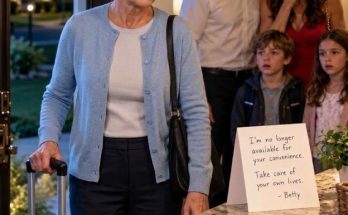
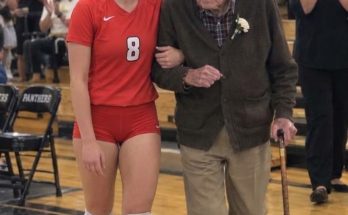
**PART 3**
The years that followed
brought gradual change.
Michael rebuilt his work life
with more honesty.
He repaid what he could.
He stopped treating every difficulty
as my responsibility.
Claire fulfilled the terms
of her legal resolution.
She remained polite
but distant.
We shared space
only for Lucy’s sake.
That arrangement was enough.
Lucy grew into a thoughtful young woman.
She applied to college.
She asked good questions.
She learned the difference
between help and dependence.
The Night Shift Fund expanded carefully.
Scholarships were awarded.
Emergency assistance reached workers
who would otherwise have lost housing
or abandoned training.
I insisted on transparency.
I remembered what it felt like
to count every dollar.
I would not allow this money
to become another hidden story.
On the second anniversary
of Edward’s death,
I visited his grave.
I carried yellow tulips.
I spoke to him
the way I once had
across our kitchen table.
I told him about Michael’s progress.
I told him about Lucy.
I told him about the fund.
I told him I had sold the old house.
Then I told him the hardest truth.
“I was angry with you
about the secrets.”
The wind moved through the trees.
“I still wish you had told me.”
A tear fell.
“But I know
you were trying to protect me.”
I looked at the sky.
“And I forgive you.”
The words came more easily
than I expected.
Not because everything had been perfect.
But because our marriage
had been real.
Imperfect.
Frustrating.
Beautiful.
And full of a love
we had not always known
how to express.
I left the cemetery lighter.
Living, I realized,
could honor him
as much as grief ever had.
That summer,
Lucy graduated from high school.
Michael, Claire, and I
sat together in the audience.
We were not the family
we once imagined.
But we were present.
When Lucy crossed the stage,
we all stood.
Afterward,
we took photographs.
Lucy hugged me hard.
“Grandpa would’ve cried.”
I laughed.
“He would’ve cried first.”
Michael smiled.
Claire nodded.
For a moment,
we shared something
that needed no argument.
Later, Michael invited me to dinner.
A simple restaurant.
Nothing fancy.
He paid the bill himself.
He had been saving.
That small act
moved me more
than any grand gesture could have.
Outside,
he walked me to my car.
“I know things
will never be exactly the same.”
“No,” I agreed.
“But that doesn’t mean
they can’t become good.”
I took his hand.
“I believe that.”
He hugged me.
Not desperately.
Not demanding.
Just holding me.
And for the first time
since the funeral,
I leaned into my son’s embrace
without fear
of what he might ask next.
“I love you, Mom.”
“I love you too, Michael.”
Nothing else needed saying.
One year later,
the Night Shift Fund
announced a permanent endowment.
At the annual gathering,
I spoke briefly.
I held up an old photograph
of Edward and me
outside our first house.
“When we bought that house,” I said,
“we had very little money.
We had a young son.
We had bills.
We had dreams.
And we had each other.”
I looked at the audience.
“Years later,
my husband became successful.
But I learned something important
after he was gone.”
I paused.
“Money can provide security.
It can pay for shelter.
It can open doors.
But money cannot teach someone
how to love.
And it cannot make someone
worthy of respect.”
I thought of the motel.
The cracked lamp.
The cold vending-machine dinner.
“Every person here
deserves dignity.
Not because of their bank account.
Not because of their job title.
Not because of what they own.
But because they are human.”
The room was quiet.
Then it applauded.
Rosa embraced me afterward.
“You did it,” she whispered.
I looked at the faces around us—
nurses, families, students, workers
who had found help
when they needed it most.
“No,” I said.
“We did.”
That evening,
I returned to the penthouse
just before sunset.
Anthony greeted me downstairs.
“Mr. Brooks would’ve been proud.”
“Thank you,” I answered.
Upstairs,
Lin had left fresh tulips
on the table.
A small note rested beside them.
Congratulations, Eleanor.
I smiled.
Then I walked to the terrace.
The sky was turning pink.
The river shimmered
between the buildings.
I sat in Edward’s rocking chair.
Beside it stood
my mother’s restored sewing cabinet.
Above the fireplace hung
our wedding portrait.
On the windowsill,
in a small glass box,
rested the brass key
Edward had pressed into my palm
three weeks before he died.
I looked at it
for a long time.
Such a small object.
Such a heavy responsibility.
That key
had not simply opened
a bank deposit box.
It had forced me
to open my eyes.
To see my family
as they really were.
To understand that love
without boundaries
could become surrender.
And to realize
that my remaining years
belonged to me.
My phone chimed.
A message from Lucy.
Grandma, are we still painting Saturday?
Of course, sweetheart.
Another message appeared.
Dad says he’s bringing cinnamon rolls.
I laughed.
Tell him to bring extra.
A moment later,
Michael sent a message.
Love you, Mom.
I stared at the words.
Then typed back.
Love you too.
I put the phone down.
There had been a time
when those words
were followed by requests.
By emergencies.
By guilt.
By the expectation
that I would give up
whatever I had
to prove I meant them.
Now they were simply words.
And they were enough.
The city lights came on.
One by one.
I leaned back
and closed my eyes.
For a moment,
I imagined Edward beside me.
Not as a ghost.
Not as a miracle.
Just a memory
of the man
who used to sit
across from me
at our kitchen table.
I could almost hear him.
“Ellie, did you remember to eat?”
I smiled.
“Yes, Edward.”
The breeze moved gently
through the terrace flowers.
“I remembered.”
The next morning,
I woke at 4:30.
Of course I did.
Some habits
are built into the heart.
I walked into the kitchen
wearing my old blue robe.
The apartment was quiet.
I filled the coffee machine.
Measured the grounds.
Poured the water.
Then stood by the window
while the first pale light
appeared over Manhattan.
I remembered the morning
after Edward’s funeral.
Claire’s angry face.
Michael’s silence.
The yellow sticky notes.
My small suitcase.
The motel.
The vending machine.
The fear.
I remembered
the woman I had been
when I whispered,
“Okay.”
She had thought
she was surrendering.
But she was really
walking toward the first decision
she had made
entirely for herself
in a very long time.
I poured my coffee.
Just one cup.
I carried it
to the rocking chair.
Outside,
the city was waking.
People hurried
toward trains and offices.
Some were heading home
from overnight hospital shifts.
Some were starting
the longest days of their lives.
Some were frightened.
Some were hopeful.
Some had no idea
how much their lives
could change
before sunset.
I watched them
with a tenderness
I had not felt
for a long time.
My husband had left me
twenty-eight million dollars
and a penthouse
high above New York City.
But the greatest gift
was not the fortune.
It was the chance
to understand
that my life
still had meaning
after loss.
That I could be generous
without being used.
That I could forgive
without forgetting.
That I could love my son
without sacrificing myself.
And that a woman
who had spent decades
caring for everyone else
was still allowed
to care for herself.
I took a sip of coffee.
It was warm.
Strong.
Exactly how I liked it.
On the table beside me
sat Edward’s final letter.
I touched the paper gently.
Then I looked
at our wedding photograph.
“We made it, darling,” I whispered.
Outside,
the sun rose
over the waking city.
My phone remained silent.
No demands.
No threats.
No frantic calls
asking me to rescue someone.
There was only
the soft hum of morning,
the scent of fresh coffee,
and the quiet certainty
that I was safe.
I thought about the house
I had once been forced to leave.
Then I looked around
the home I had chosen.
And I smiled.
Because at seventy-one,
after a lifetime
of giving everyone else
a place to belong,
I had finally discovered
something wonderfully simple.
I belonged to myself.
And this time,
no one could tell me
to pack my things
and disappear.
I was already home.