**Part 1**
The nurse kept the file against her chest as she stepped back into the room. She did not look at me first. She looked at my daughter.
“Doctor,” she said, “there’s one more person we need to call.”
My daughter’s face tightened. “Who?”
The nurse opened the chart again.
“Child Protective Services.”
For several seconds, nobody moved.
My daughter gave a short, disbelieving laugh. “For what? I signed the abandonment papers. The baby is not my responsibility anymore.”
The charge nurse answered before the doctor could. “Signing a surrender document does not permit a newborn to be left naked and unattended on a metal surface. We still have a duty to make sure he is safe, and we have to document the circumstances surrounding his care.”
My daughter’s eyes flicked toward me.
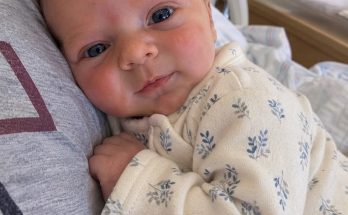
I was still standing beside the bassinet, watching the blanket rise and fall with my grandson’s breathing. The red markings that had made her recoil were still visible around his cheeks, neck, and shoulders, but the color had softened now that he was warm.
The pediatrician examined him again.
“His temperature is coming up,” he said. “His breathing remains stable. The markings appear consistent with a common newborn skin finding. We’ll continue monitoring him, but there is nothing here that supports the conclusion she made about him.”
My daughter crossed her arms.
“That’s not what I was told.”
The doctor looked at her. “By whom?”
She said nothing.
The nurse tapped the chart.
“That’s exactly the question we need answered.”
I thought back to the sentence she had spoken before any of us understood what was happening: She had already decided she did not want him. The marks had come afterward, almost like a reason she could point to when someone challenged her.
I turned toward her.
“You knew before you saw him.”
Her jaw clenched.
“No.”
“You did.”
“I was scared.”
“That isn’t the same thing.”
The charge nurse stepped between us before the argument could become another confrontation.
“Everyone needs to stay calm. We are going to deal with one issue at a time.”
She was right.
I had already lost control once. I could not undo what I had done to my daughter, and I knew there would be consequences for it. My anger had not protected my grandson as much as I wanted to believe. It had created another incident for the hospital to document.
So I stepped back.
Then the nurse pointed to a line in the chart.
“Your daughter spoke with staff about surrendering the baby before delivery.”
I stared at her.
“How long before?”
“Several days,” she said. “There were questions about whether she could leave the hospital without taking him, whether someone else could assume responsibility, and whether she could complete the necessary paperwork.”
My daughter shook her head.
“I was asking questions.”
“You were planning,” I said.
She finally looked at me.
“I didn’t know what I was going to do.”
The nurse did not argue with her. She simply continued reading from the record.
“There is also a note that you expressed concern about how the baby might look.”
My daughter went silent.
That was the first moment I understood that the red marks had not created the decision. They had merely given her something visible to blame.
The doctor adjusted the blanket around my grandson.
“Whatever fears you had before delivery, the baby is a patient now. He cannot speak for himself. We have to speak for him.”
My daughter stared at the floor.
Then the hospital social worker arrived.
She carried a folder and spoke in the same measured tone the nurses had used all morning. She asked my daughter questions about the surrender paperwork, the people she had spoken to, and what she intended to do next.
My daughter answered some questions and refused others.
Then the social worker turned to me.
“And you will need to speak with us as well.”
My stomach tightened.
I knew why.
The social worker had already been told what happened between me and my daughter. The hospital was not going to excuse my actions simply because I had been defending the baby.
“I understand,” I said.
My daughter looked at me with something that was not quite anger anymore.
“You really don’t care what happens to me.”
The words hurt because, for years, I had cared about almost nothing more than what happened to her.
“I care what happens to you,” I said. “That’s why this hurts so much.”
She looked away.
The pediatrician came back to the bassinet and lifted the blanket slightly.
My grandson stretched one tiny hand before curling his fingers again.
“He’s doing well,” the doctor said. “We’re going to keep him here for observation.”
I finally let myself breathe.
But then the social worker opened her folder.
“There is another issue.”
The room went quiet again.
My daughter looked up.
“What now?”
The social worker glanced at the nurse.
“The hospital received a call before the delivery.”
“From who?” I asked.
“Someone who was concerned about the baby.”
My daughter’s face changed.
Not confusion.
Recognition.
The social worker noticed it too.
“You know who I’m talking about?”
My daughter did not answer.
The nurse looked at the doctor, and the doctor looked at me.
I felt the floor seem to shift beneath my feet.
“Who called?” I asked.
The social worker hesitated before answering.
“Your daughter’s partner.”
My daughter suddenly stepped forward.
“No.”
The social worker held up a hand.
“He reported that he was worried about the baby’s safety and said he had reason to believe your daughter intended to surrender the child immediately after delivery.”
My daughter’s face drained of color.
“He wasn’t supposed to know.”
There it was.
The sentence she had been trying not to say.
I looked at her.
“Know what?”
She swallowed.
“He knew I was thinking about giving the baby up.”
The social worker nodded.
“He also said there was a family disagreement about who would care for the child.”
I frowned.
“What family disagreement?”
My daughter didn’t answer.
The nurse turned another page.
“There’s a second contact listed.”
My heart started beating faster.
“Who?”
She read the name.
It belonged to someone I had not heard from in years.
My daughter closed her eyes.
And suddenly the room made sense in a way it hadn’t before.
This wasn’t simply a frightened mother rejecting a newborn because of his appearance. There had been conversations before the birth, plans made before anyone saw the baby’s skin, and at least one person outside the room who had been worried enough to call the hospital.
But the biggest question was still unanswered.
Why?