**Part 3**
The divorce wasn’t easy after that.
Real life was less satisfying than movies.
There was no single dramatic speech that ended everything.
There were months of financial disclosures, appraisals, settlement offers, legal bills, and arguments about ordinary belongings.
Mark wanted the house.
I wanted my share.
He claimed the transfers to Linda repaid an old loan.
When asked for documentation, Linda produced a handwritten page supposedly dated four years earlier.
Rebecca noticed it listed an address Linda had not yet lived at when the paper was allegedly signed.
That alone proved nothing, but it justified deeper review.
Bank statements showed no matching loan entering our accounts.
What they did show was Mark sending Linda money shortly after quarterly bonuses, often on the same days he told me we couldn’t afford repairs or medical deductibles.
I remembered one winter when our furnace failed.
Mark claimed we couldn’t afford replacement, so I put $3,800 on my personal credit card.
Two days earlier, he had transferred $4,000 to Linda.
I sat in Rebecca’s office staring at the dates.
“I remember being cold,” I said.
Rebecca said nothing.
That was one reason I trusted her.
She never forced meaning onto facts.
Six months after I left, the house was appraised and eventually listed for sale under an agreement negotiated through our attorneys.
Mark resisted until he realized he couldn’t secure financing to buy out my share.
When the sign appeared in the yard, Teresa drove me past once.
I expected seeing the house to break something inside me.
Instead, I noticed details I had ignored for years.
The crooked gutter.
The worn patch beside the driveway.
Linda’s birthday balloons, faded and tangled in a maple tree months later.
“I used to think that place was my whole life,” I said.
Teresa kept driving.
“It was an address.”
That sentence stayed with me.
I found a one-bedroom apartment closer to work.
Beige walls.
Cheap cabinets.
A balcony overlooking a parking lot.
I used part of my hidden savings for the deposit and first month’s rent.
The first thing I bought was a secondhand dining table.
Not because I needed it.
Because I wanted somewhere to sit without serving anyone.
That first night, I ate takeout noodles there.
One container.
One fork.
No twenty-dish menu.
Nobody criticizing the salt.
Nobody ordering me back into the kitchen.
My sister, Emily, flew in from Denver the following weekend.
We had barely spoken during the final years of my marriage because Mark disliked her and always found reasons visiting her was “too expensive.”
When she saw me, she hugged me so tightly I almost dropped my keys.
Then she looked around.
“This is yours?”
“Rented.”
“I didn’t ask who owns the building.”
I smiled.
“Yes. It’s mine.”
Emily helped me buy curtains and a mattress.
She never asked why I had stayed so long.
She asked what I needed now.
That difference mattered.
At work, I stopped volunteering for every late assignment simply because I feared going home.
My supervisor, Daniel Cho, knew almost nothing about my marriage. When I explained only that I was going through a difficult divorce and occasionally needed time for court, he nodded and adjusted deadlines.
No interrogation.
No suspicion.
No punishment.
Ordinary kindness felt unfamiliar enough that I sometimes distrusted it.
Mark violated the no-contact order once.
Almost eight months after the birthday, I left a grocery store and found him beside my car.
He looked thinner.
His beard was longer.
For a moment, he seemed more exhausted than frightening.
“Claire.”
I stopped several yards away.
“You need to leave.”
“I just want five minutes.”
“You’re not allowed to contact me.”
He raised both hands.
“I’m not touching you.”
The old me might have heard that as evidence he was reasonable.
The new me heard what he actually meant.
He believed only physical contact crossed the line, not violating the court order.
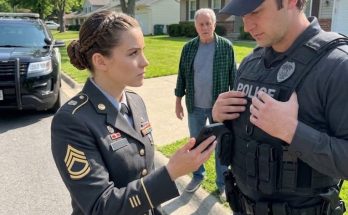
“I’m calling the police.”
His expression shifted.
“After everything I did for you?”
I pulled out my phone.
“You left me with the mortgage. You turned my mother against everyone. You made people at work think I’m some kind of monster.”
“I’m calling now.”
“You think Rebecca actually cares about you? You think Teresa cares? They’ll get tired of this.”
I dialed.
Mark left before officers arrived, but the store’s exterior cameras recorded the encounter.
The incident was documented.
Rebecca notified his attorney and the court.
He received a warning that another violation could bring harsher consequences.
Afterward, I sat in my car shaking.
I had always imagined courage meant no longer feeling afraid.
It didn’t.
I was terrified.
I called anyway.
The final settlement came eleven months after I walked out during Linda’s birthday.
The house sold. After paying the mortgage and closing costs, the remaining equity was divided under our agreement. Certain unexplained transfers became part of the negotiations, and Mark assumed several debts that mainly benefited him.
I kept my retirement account subject to the negotiated division, my car, my personal property, and enough proceeds to create an emergency fund larger than the original $6,000.
There was no jackpot.
No revenge fortune.
Only something more useful because it was real.
Solvency.
Mark signed without looking at me.
Linda didn’t attend.
When the judge finalized the divorce, I expected a rush of emotion.
Instead, I felt exhausted.
Rebecca closed her folder.
“That’s it.”
“That’s it?”
“That’s it.”
Eleven years reduced to signatures, stamped pages, and a case number.
Outside, beneath a bright Ohio sky, I called Emily.
“It’s done.”
She screamed so loudly I moved the phone away from my ear.
Teresa insisted on dinner.
“What do you want?” she asked.
I opened the menu.
For a moment, I remembered Linda’s handwritten list.
Twenty dishes.
Twenty-three guests.
One woman cooking until she vanished beneath everyone else’s demands.
“I want the burger,” I said.
“That’s all?”
“And fries.”
Teresa laughed.
“Wild.”
A month later, on my forty-third birthday, I invited six people to my apartment: Teresa, Emily, who flew in again, Daniel and his wife, Rebecca, and my neighbor Mrs. Greene, who had started leaving tomatoes outside my door every Sunday.
I made one pot of chili.
Emily brought cornbread.
Teresa brought a grocery-store cake.
Nobody complained.
At one point Rebecca looked around and said, “Do you realize this is the first time I’ve seen you host anything without standing up every thirty seconds?”
I looked down.
My bowl was still warm.
I had eaten while everyone else ate.
It felt ridiculous that something so small could matter so much.
After dessert, everyone left before ten.
I washed six bowls, switched off the kitchen light, and stepped onto the balcony.
My phone buzzed.
For a second, my body reacted before my mind caught up.
Then I looked.
Emily.
*Happy birthday. Proud of your boring chili.*
I laughed.
The next morning, an envelope arrived from a storage company containing the final inventory of several boxes left at the marital house.
At the bottom of one box, wrapped in an old dish towel, was Linda’s handwritten birthday menu.
I unfolded it on my dining table.
Twenty dishes.
A grease stain still marked one corner.
For several minutes, I considered throwing it away.
Instead, I placed it beside the police report and the original spreadsheet tracking the money.
Not as a shrine.
Not as a threat.
Simply as a record.
The birthday dinner had not been the worst thing that happened during my marriage.
It was only the final demand I obeyed.
I once believed leaving required one perfect act of courage.
Looking back, I realized I had actually left in pieces long before walking through the back door.
Every receipt I kept.
Every screenshot I saved.
Every twenty-dollar bill I hid.
Every date I recorded.
Every private admission that what was happening was not normal.
The physical exit took seconds.
Preparing took a year.
Rebuilding took longer.
On the first anniversary of Linda’s fifty-fifth birthday, I did something deliberately ordinary.
I went to work.
Came home.
Reheated leftover pasta.
Then sat at my secondhand table and paid my electric bill from my own bank account.
Nobody grabbed my hair.
Nobody told me to cook.
Nobody told me to get out.
There was no dramatic music.
No audience.
No final confrontation.
Just a quiet apartment in Columbus and a woman who finally understood that peace can look almost boring from the outside.
I had never wanted twenty dishes.
I wanted one life that belonged to me.
Now I had it.