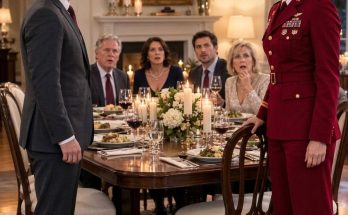
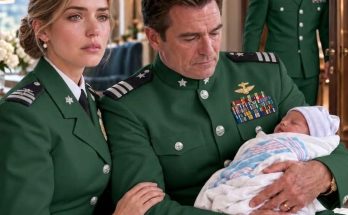
I stepped into my ex-husband’s family funeral with five children at my side, and the murmurs began before we even reached the gravesite.
Not because I had returned after ten years.
Because the second Grant Whitmore looked at my children, his entire face changed.
They were lined up beside me in black coats and polished shoes, all five of them trying to be brave in a place that felt too large and too cold for children.
Ethan stood closest to me because he was old enough to understand tension.
Noah kept glancing up at my face, searching for cues.
Luke was trying hard not to ask questions.
Rose held Emma’s hand the way I had taught her to when things felt uncertain.
And every one of them carried something of Grant in their face.
The same dark eyes.
The same sharp cheekbones.
The same mouth that went serious before it ever smiled.
I watched the recognition hit him in pieces, and for one suspended moment, even the funeral seemed to stop around us.
The Whitmore estate had not changed in ten years.
The stone church still stood at the edge of the family cemetery like a monument to power.
The hedges were still clipped with military precision.
The fountain near the drive still ran like money had never once run out in that family.
White flowers had been arranged everywhere for William Whitmore’s funeral—lilies, roses, hydrangeas—so many that the sweet smell sat heavy under the gray Georgia sky.
It should have felt solemn.
Instead, it felt like a courtroom before a verdict.
My black SUV rolled to a stop on the gravel just as the church bells began to ring.
I stepped out first, blue military dress uniform neat against the stormy light, medals catching for a second before the clouds swallowed the shine.
Years earlier, the Whitmores had dismissed me as if I were some temporary mistake their son had made.
I made sure they saw me clearly now.
Not because I needed their approval.
Because I wanted them to understand I had survived them.
Then the rear doors opened, and my children stepped out one by one.
The whispering started almost immediately.
Someone said, “Oh my God.”
Another voice, lower, said, “Look at them.”
I heard Grant’s name before I even looked toward the graveside.
I took my children’s hands and started walking.
I had not come to beg.
I had not come to ask for recognition.
And I had not come to fight over money, land, or legacy.
I came because William Whitmore was dead.
For all his sins of silence, for all the years he waited too long to do what was right, he had still been the only person in that family who ever looked at me and saw a human being instead of a problem.
When Grant divorced me, the Whitmores closed ranks around Vanessa and around the lie she fed them.
I was cut out so neatly it almost looked elegant from the outside.
Inside, it wrecked my life.
At the time, I was twenty-six, newly discharged from one assignment and preparing for another, exhausted, pregnant, humiliated, and so stunned by the speed of it all that I could barely think.
Vanessa had been my friend then, or what I thought was a
friend.
She knew where I kept my spare key.
She knew my deployment schedule.
She knew my marriage was straining under distance and family pressure and Grant’s constant need to please people who would never truly be satisfied.
She also knew exactly how to strike where I was weakest.
The lie that ended my marriage was simple, clean, and devastating.
She told Grant I had cheated.
Not just told him—she built evidence around it.
A hotel rumor.
A whispered sighting.
A story delivered with just enough grief and disgust to make it believable.
By the time I understood what had happened, he had already decided the truth without me.
He refused to hear my full explanation.
His mother froze me out.
The family attorneys prepared papers.
Vanessa stayed close to him through all of it with that careful expression of concern she wore like expensive perfume.
I still remember the day he left.
I was standing in our kitchen with one hand on the counter because I had been dizzy all morning.
He would not look me in the eye.
He told me he was done being humiliated.
I tried to tell him I was pregnant.
I got as far as, “Grant, there’s something you need to know,” and he cut me off.
“Whatever this is,” he said, “I’m not interested in another lie.”
Then he walked out.
After that, everything happened too quickly.
My posting changed.
My phone number changed.
The divorce became final.
I found out I was carrying not one baby, but twins.
Then later, after another chapter I had not planned for and another rare, terrible surprise that only medicine can explain, I found out I was carrying triplets.
Five children.
All his.
All mine.
All born into the silence he chose.
I raised them without a Whitmore dollar.
Military life is not soft on single mothers, and I will never pretend those years were easy.
There were months when I slept in fragments and learned to iron a uniform while rocking a child with my foot.
There were birthdays spent on base housing floors with store-bought cupcakes and construction-paper crowns.
There were school forms with blank spaces beside the word father because I refused to teach my children bitterness before they could spell it.
But we built a life.
A good one.
A disciplined one.
A warm one.
And I told them the truth in pieces as they grew old enough to hold it.
I never told them their father was evil.
I told them he had believed the wrong person at the worst possible time.
When William Whitmore first contacted me years after the divorce, I thought it was some cruel mistake.
The envelope had arrived at my old military address, forwarded twice before it finally found me.
Inside was a Christmas card in careful handwriting.
Savannah,
I hope you and the children are well.
There are things I should have questioned sooner.
That was all at first.
No apology.
No explanation.
Just enough to let me know someone in that family had begun to doubt the story they had swallowed.
After that, a letter came every year.
Always brief.
Always careful.
He never asked to see the children.
He never demanded anything from me.
Once, he enclosed a photograph of the estate at
Christmas and wrote, They should have known this place.
Another year he wrote, Regret is a long punishment.
I never responded.
Not because I had no words, but because I had too many.
Then, eight months before the funeral, another envelope arrived.
This one was heavier.
Inside were copies of documents.
A paternity report request form that had been started years earlier and never completed because no one had told Grant where to find me.
A note from William saying he had hired someone to review details from the time of my divorce.
And a single sentence underlined twice:
I know what was done to you.
That sentence sat inside me like a match waiting for air.
A month later, his attorney called.
He told me William was ill.
He told me William wanted certain records preserved.
He told me there was a hotel employee who had given a notarized statement years ago and that statement had been quietly buried when Vanessa realized it existed.
I listened without speaking for a full minute.
Then I said, “Send me copies of everything.”
He did.
The paternity testing had been easy once my children were old enough and the legal path was clear.
I never forced a confrontation.
I waited.
I held proof the way you hold a blade: carefully, and only for the moment it matters.
When William died, his attorney called again.
“There are things your children deserve to know,” he said.
“And things Mr.
Whitmore senior intended to correct.”
I looked at my children that night over dinner.
Ethan was helping Emma cut chicken into smaller pieces.
Rose was telling Luke his tie for the school concert had to be navy, not black.
Noah was laughing at something only half the table understood.
For one selfish second, I almost decided not to disturb the peace we had built.
Then I thought of the Christmas cards.
Of William dying with regret in his mouth.
Of five children with a grandfather in the ground and a father standing above it, still blind.
So I told them we were going to Georgia.
I did not tell them there would be a war waiting at the graveside.
Vanessa met us before the path to the family plots narrowed.
She looked exactly the way she had always looked—perfect in the expensive, studied way of women who understand the power of appearing untouched.
Black dress fitted at the waist.
Pearl earrings.
Hair pinned so precisely it barely moved in the wind.
Her smile landed on me first.
Then on my children.
And for the smallest fraction of a second, it faltered.
She recovered quickly.
“Well,” she said loudly, glancing at my uniform, “I guess the military doesn’t teach shame.”
My son Ethan tightened his grip on my hand.
I could feel his pulse in his fingers.
“Move,” I said.
Her eyes traveled over the children again.
This time slower.
Counting.
Comparing.
Calculating.
“Do you really expect anyone to believe this?” she asked.
“That they belong here?”
“They came to say goodbye.”
“To someone who isn’t their family.”
Before I could answer, Emma stepped forward half a pace.
She was the youngest, but she had inherited my calm at dangerous times.
“He was our grandfather,” she said.
The stillness that followed was total.
The minister stopped
turning pages.
A woman near the front lowered her handkerchief and simply stared.
One of Grant’s cousins actually turned all the way around to look at him.
And Grant turned too.
He had been standing near the coffin, shoulders heavy with grief, his black suit damp at the edges from the mist in the air.
At first his expression was merely annoyed by the interruption.
Then he saw Ethan.
Noah.
Luke.
Rose.
Emma.
I watched the change move through him.
Confusion first.
Then disbelief.
Then memory and math and instinct crashing together at once.
He knew.
He knew before any paper touched his hand.
Vanessa knew he knew, and panic flashed across her face so quickly most people would have missed it.
Then she made a fatal mistake.
She reached for Emma.
I caught her wrist before her fingers made contact.
“Don’t touch my child,” I said.
The silence changed shape after that.
It was no longer respectful or shocked.
It was alert.
Everyone around us understood that whatever this was, it had been alive for years.
Grant stepped toward me, eyes still locked on the children.
“Savannah,” he said, voice rough and low, “what is this?”
Inside my glove, my fingers tightened around the sealed envelope I had carried from the car.
A paternity report.
A hotel record.
A notarized statement.
Three things that would not care who was rich, connected, polished, persuasive, or loved.
Proof is not dramatic by itself.
It simply kills the lie in the room.
I looked at William’s grave.
Then at Grant.
Then at Vanessa.
“This,” I said, lifting the envelope where all three of them could see it, “is what you walked away from ten years ago.”
Vanessa’s entire body went rigid.
“Savannah,” she said, and for the first time in a decade there was real fear in her voice, “don’t.”
Grant turned to her.
Not all the way.
Just enough.
Enough to ask the question that cracked the day open.
“Why does she already know what’s in that envelope?”
Nobody breathed.
I broke the seal.
The first document was the paternity report.
I handed it directly to Grant.
He took it with fingers that were no longer steady.
His eyes moved across Ethan’s name first.
Then Noah’s.
Luke’s.
Rose’s.
Emma’s.
One legal line beneath another.
Probability of paternity: 99.99%.
The father identified: Grant Whitmore.
His aunt made a sound like she had been struck.
One of the men from the law firm took off his glasses and cleaned them, though there was nothing on them.
The minister closed his Bible.
Grant stared at the page so long I thought he might stop hearing the world entirely.
“That’s impossible,” Vanessa snapped.
I pulled out the second document and held it until Grant lifted his eyes.
Then I gave him the hotel record.
Ten years earlier, Vanessa had told him I had gone to a hotel to meet another man.
She had delivered the lie with enough detail that he never questioned where the detail came from.
What he never knew was that he himself had come to that same hotel through a private entrance after a fundraiser, meeting me there because we were trying—quietly, desperately—to save a marriage already straining under family interference and distance.
We had been there together.
The private guest
log required signatures for security.
His was on it.
Mine was on it.
The time stamps matched.
The room number matched.
No unnamed lover.
No betrayal.
Just a husband and wife having one last hidden night together while his family treated their marriage like a public inconvenience.
He looked at the page, then at me, then back at the page.
And I watched memory hit him like a blow.
“You told me she met another man there,” he said to Vanessa.
Vanessa lifted her chin.
She should not have spoken.
If she had stayed silent another thirty seconds, she might have preserved one corner of herself.
Instead she said, “She should have left with nothing.
I was fixing your life.”
Gasps moved through the graveside.
Not loud.
Worse than loud.
Personal.
Grant stared at her as if he no longer recognized her face.
I unfolded the third document.
The notarized statement came from the hotel manager William had privately paid to locate years after the divorce.
He had been on duty that night.
He stated, under penalty of law, that Vanessa had arrived earlier asking questions about my room, then later returned after Grant left.
He saw her speak to a member of Grant’s mother’s staff in the lobby.
He overheard enough to realize they intended to create the impression that I had been there with someone else.
When he understood what the lie had done, he wrote a statement.
Then it disappeared.
Or it was supposed to.
Attached to the back was the final Christmas card William had sent me before his health failed.
One line had been underlined in dark ink.
I know what was done to you.
Grant read his father’s handwriting and went white.
In that moment, grief entered the scene in a new shape.
It was no longer just grief for the father he had buried.
It was grief for ten lost years, for five children he had never held as babies, for every birthday he missed because he trusted the wrong woman and chose pride over one conversation.
He looked at Ethan first.
Then at Emma.
The smallest, softest movement passed through his face, and I knew exactly what it was.
He was imagining their lives without him.
Vanessa finally understood the ground had shifted beneath her.
“She trapped you,” she said sharply, taking one step forward.
“She waited for your father’s funeral to humiliate this family.”
I did not raise my voice.
“No,” I said.
“I came so my children could say goodbye to the only Whitmore who ever tried to correct the lie.”
That sentence landed harder than any shouting would have.
And then we heard another car.
Tires on gravel.
A dark sedan turning through the church drive.
The kind of car lawyers prefer when the weather is bad and the news is worse.
It stopped near the chapel steps.
William Whitmore’s attorney stepped out carrying a second sealed file.
He did not hurry.
Men like him never do.
He shut the door, adjusted his coat against the damp air, and walked straight toward us as if he had been expected in the center of a storm.
I saw Vanessa notice the label on the front of the file before anyone else did.
Her own name.
The color drained from her
face so completely that even the pearls at her ears seemed too bright for her skin.
Grant turned from the papers in his hand to the attorney approaching through the mist.
His jaw tightened.
My children clustered a little closer to me.
No one at the graveside moved.
The attorney stopped beside William’s coffin, looked at Grant, then at me, then down at the file he held.
“Mr.
Whitmore,” he said, voice calm and formal, “your father left instructions that this be opened only in the presence of your ex-wife and the parties named inside.”
Grant swallowed.
Vanessa whispered, “No.”
The attorney broke the seal.
And that was the moment the last lie finally ran out of room.
What followed was not explosive in the way movies promise.
No one screamed.
No one collapsed.
No thunder cracked over the grave.
It was quieter than that.
Crueler.
Cleaner.
The file contained copies of William’s private investigation notes, communications between Vanessa and one of Grant’s mother’s longtime employees, and proof that money had changed hands shortly before the divorce.
It showed planning.
Coordination.
Intent.
It showed that Vanessa had not merely repeated a rumor.
She had built one.
She had fed it to the family until it became more useful than the truth.
There was also something else.
A signed amendment to William’s will.
He had set aside a trust for my children.
Not as charity.
As acknowledgment.
As restitution.
Grant read the documents in silence.
His mother tried once to interrupt, but the attorney continued speaking over her in the same polite tone, which somehow made it worse.
He explained dates.
Transfers.
Witnesses.
Signatures.
He explained that William had discovered enough before his death to conclude that the divorce had been secured under false assumptions deliberately encouraged by Vanessa.
Then he handed Grant one final letter.
This one was written only to him.
Grant stepped away from the crowd to read it, but there was nowhere far enough to go.
Everyone could see the change in him line by line.
The man who had stood at his father’s grave as the unquestioned son and heir now looked like someone who had just discovered his own life had been edited by other hands.
When he came back, his eyes were red.
He did not look at Vanessa first.
He looked at me.
“I should have listened to you,” he said.
There are apologies you rehearse wanting for years.
Then they arrive, and all you can feel is how late they are.
I nodded once.
Not because that settled anything.
Because it was true.
Then he crouched in front of the children.
He was careful, as though sudden movement might frighten them away.
“I’m Grant,” he said, and his voice broke on the last word.
Ethan, oldest and most protective, did not answer right away.
He studied him the way I had taught all my children to study adults: not for charm, but for consistency.
“We know who you are,” he said.
It was such a simple sentence.
It nearly undid Grant where he knelt.
The burial itself happened after that, though I remember it only in fragments.
The minister resumed.
Rain finally began to fall in a fine gray sheet.
My children placed five white roses near William’s grave.
Rose cried quietly.
Noah stood very straight.
Emma whispered goodbye as if he might still hear her.
Grant stood behind them, not touching, not claiming, just witnessing the shape of what had been lost.
Vanessa left before the final prayer.
No one stopped her.
For a woman who had spent years controlling rooms, she had never looked smaller.
The consequences after the funeral came steadily.
The Whitmore family could not bury what William had documented.
Lawyers became involved.
Statements were revisited.
Vanessa’s social protection evaporated once it became inconvenient to defend her.
Grant’s mother, who had once treated me like an embarrassment to be removed, sent a letter I did not answer.
The trust was established exactly as William intended.
I accepted it for the children because it belonged to them, not because I needed peace with the past.
Grant asked, carefully and repeatedly, for chances he had not earned.
I did not make it easy for him.
He attended supervised visits first.
Then school events.
Then birthdays.
He learned Ethan liked order, Noah liked questions, Luke laughed in his sleep, Rose hated loud goodbyes, and Emma always noticed who was left out of a conversation.
He learned all of it late.
But he learned.
People sometimes ask whether I forgave him.
That is not the right question.
The right question is whether I let the truth stand where the lie once stood.
I did.
And in time, that changed more than revenge ever could.
Months after the funeral, we visited William’s grave again.
No crowd.
No attorney.
No performance.
Just me, the children, and Grant a few steps away holding a bouquet Rose had chosen.
The sky was clear that day.
Emma knelt to brush a leaf off the headstone.
Ethan read the inscription aloud.
Noah asked whether people can know they were wrong before they die.
Luke placed both palms on the cool stone.
Rose tucked a folded drawing at the base where only the family would see it.
Grant stood silent for a long time.
Then he said, “He tried to fix it in the end.”
I looked at the grave.
At the flowers.
At my children standing where they always should have been allowed to stand.
“Yes,” I said.
“He did.”
It did not give us back the ten years.
It did not erase labor pains borne alone or school recitals with one empty seat or the thousands of small decisions I made without the man who should have been there.
But it gave my children their names in the open air.
It gave the truth a place to stand.
And for the first time in a long time, the Whitmore estate no longer felt like the place where my life was broken.
It felt like the place where the lie finally ended. THE END