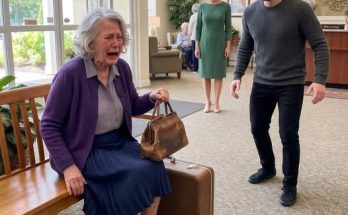
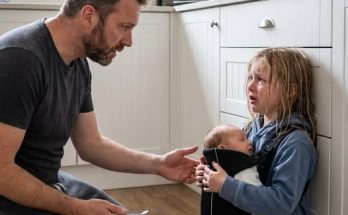
Two Months After My Divorce, My Ex-Husband Showed Up at My Door Begging for Help
Two Months After My Divorce, I Found My Ex-Wife Alone in a Hospital Hallway
Part 1
Two months after my divorce, I found my ex-wife sitting alone in a hospital hallway, and the second I realized it was her, something inside me broke.
I never thought I would see her in that condition.
She was wearing an old hospital gown, sitting quietly in the corner of the corridor, her empty eyes fixed on nothing. She looked weak, drained, and almost invisible to the people walking past her.
For a moment, I couldn’t even breathe.
It was Maya.
My ex-wife.
The woman I had walked away from only two months earlier.
My name is Arjun. I’m thirty-four years old, just an ordinary office worker trying to make it through an ordinary life.
Maya and I had been married for five years.
To everyone else, our marriage looked calm and steady. Maya was quiet, kind, and never the type to demand attention. But in her own gentle way, she made our home feel warm. No matter how awful my day had been, seeing her when I opened the door always brought me peace.
Like most couples, we had dreams.
A house of our own.
Children.
A little family filled with love, laughter, and comfort.
But after three years of marriage and two heartbreaking miscarriages, something between us slowly changed.
Maya became more withdrawn.
A sadness settled in her eyes, deep and constant, like a pain she had grown too tired to hide.
And I changed too.
I began staying at work later. I avoided difficult conversations. I buried myself in deadlines, meetings, and overtime because it was easier than facing the silence waiting for me at home.
Our small disagreements became routine.
They were never loud.
Never dramatic.
Just the quiet fights of two exhausted people drifting apart, neither of us knowing how to find our way back.
I won’t act like I was innocent.
I wasn’t.
One evening in April, after another pointless argument that left us both emotionally empty, I finally said the words we had both been too afraid to speak.
“Maya… maybe we should get a divorce.”
She stared at me for a long time.
Then, in a soft voice, she asked, “You had already decided before you said that, didn’t you?”
I had no defense.
All I could do was nod.
She didn’t scream.
She didn’t collapse.
And somehow, that hurt even more.
She simply lowered her eyes and started packing her things later that same night.
The divorce was completed quickly.
Too quickly.
Almost as if we had both been preparing for the end long before the papers were signed.
Afterward, I moved into a small rented apartment in Budapest and forced myself into a lifeless routine.
Work during the day.
A few drinks with coworkers.
Movies at night.
And silence everywhere in between.
There was no warm dinner waiting for me.
No familiar footsteps in the morning.
No soft voice asking, “Have you eaten?”
Still, I kept convincing myself I had made the right choice.
At least, that was the lie I chose to live with.
Two months passed that way.
I existed more than I lived.
Some nights, I woke up drenched in sweat after dreaming that Maya was calling my name.
Then came the day that changed everything.
I went to Semmelweis Clinic to visit my best friend Rohit after his surgery.
As I walked through the internal medicine ward, something in the corner of my vision made me stop.
Then I saw her.
Maya.
She was sitting silently against the wall in a pale blue hospital gown.
Her long, beautiful hair was gone, cut heartbreakingly short.
Her face was pale and hollow.
Dark shadows sat beneath her tired eyes.
An IV stand stood beside her chair.
I froze completely.
Questions slammed into me all at once.
What had happened to her?
Why was she in the hospital?
And why was she here alone?
I walked toward her slowly, my hands trembling.
“Maya?”
Her head lifted sharply.
For one brief second, shock flickered across her exhausted face.
“Arjun…?”
My chest tightened.
“What happened to you?” I asked, my voice unsteady. “Why are you here?”
She immediately looked away.
“It’s nothing,” she whispered. “Just some tests.”
I sat beside her and carefully took her hand.
It was ice cold.
“Maya… please don’t lie to me.”
I forced myself to swallow.
“I can see you’re not okay.”
For a few seconds, she said nothing.
Then finally, with tears gathering in her tired eyes, she began to tell me the truth.
Part 2
Maya did not speak at first.
She only looked down at our hands.
Once, that gesture had belonged to our marriage. Her fingers tucked inside mine. Her thumb brushing gently across my knuckles when I was angry, worried, or too proud to admit I was afraid.
Now her hand felt fragile.
Too light.
As if the woman I had known was slowly disappearing right there beside me.
“After the divorce,” she said quietly, “I didn’t know where to go.”
My stomach twisted.
I had assumed she had gone back to her cousin in Vienna. That was what she told me when she packed her clothes. She said she would stay with family for a while, find work, start over.
I had believed her because believing her made it easier for me.
“You didn’t go to Anika?” I asked.
She shook her head.
“She had just had her baby. I didn’t want to bring my sadness into her home.”
“Maya…”
“I rented a small room near Keleti Station,” she continued, her voice flat. “It was cheap. Not nice, but enough.”
A nurse pushed a cart past us. Somewhere down the hallway, a child started crying. A doctor called out a name I didn’t recognize.
The world kept moving.
Mine had stopped.
“I started getting tired,” Maya said. “At first, I thought it was stress. Then I started losing weight. I couldn’t keep food down. Some mornings, I couldn’t stand without feeling like the floor was moving.”
My throat tightened.
“Why didn’t you call me?”
Her eyes lifted to mine.
The look she gave me was not angry.
That was worse.
It was tired.
“You left, Arjun.”
The words struck harder than shouting would have.
“I know,” I whispered.
“No,” she said softly. “You don’t. You left before the divorce. The papers just made it official.”
I could not answer.
Because she was right.
Long before April, I had stopped being her husband in all the ways that mattered.
I had stopped sitting beside her after doctor appointments.
I had stopped asking whether she was sleeping.
I had stopped holding her when another pregnancy test came back negative.
I had turned my grief into distance and then blamed her sadness for the silence between us.
“Last month,” she said, “I fainted at work.”
“Work?”
“I got a job cleaning offices at night.”
My jaw tightened.
Maya had a degree in literature. She used to teach children English online. She loved books, soft music, and making tea with too much cinnamon.
The thought of her cleaning empty offices at midnight while I drank beer with coworkers made shame crawl under my skin.
“They brought me here,” she continued. “The doctors ran tests. Then more tests.”
Her voice began to tremble.
“And?”
She looked away.
“They found something.”
I felt cold all over.
“What?”
“Maya,” a voice interrupted.
We both turned.
A middle-aged doctor stood near us, holding a chart. His expression shifted when he saw me. Professional, cautious, but not unkind.
“I’m sorry,” he said. “I didn’t know you had company.”
Maya straightened a little.
“It’s fine, Dr. Kovács.”
The doctor looked at me.
“I’m Arjun,” I said quickly. “Her…”
I stopped.
Her what?
Husband?
No.
Ex-husband?
That sounded like a confession.
Maya answered for me.
“He’s family.”
The word nearly broke me.
After everything, after my cowardice, after I had abandoned her emotionally and legally, she still gave me that.
Family.
Dr. Kovács nodded.
“Maya, we need to discuss the next round of treatment. Your blood levels are still low, and I’m concerned about how your body is responding.”
Treatment.
The word landed like thunder.
“What treatment?” I asked.
Maya closed her eyes.
The doctor glanced at her, waiting for permission.
She gave the smallest nod.
Dr. Kovács looked back at me.
“Maya has an aggressive blood disorder. We are still evaluating the full picture, but she needs urgent care and continuous monitoring. She has already delayed treatment longer than she should have.”
I heard the words.
But for a few seconds, they made no sense.
Blood disorder.
Aggressive.
Urgent care.
Delayed.
My hand tightened around Maya’s.
“You knew?” I whispered.
She nodded.
“For how long?”
“Six weeks.”
Six weeks.
For six weeks, she had carried this alone.
For six weeks, I had ignored every memory of her.
For six weeks, she had walked through hospital doors, signed forms, endured needles, waited for results, and gone back to a rented room with no one beside her.
“Why didn’t anyone call me?” I asked, though I knew the answer before she spoke.
“Because I told them not to.”
I stared at her.
“Why?”
Her lips trembled.
“Because I was no longer your responsibility.”
The hallway blurred.
I bent forward, pressing my hand over my mouth.
The guilt came in waves.
I had wanted freedom.
She had needed someone.
I had wanted quiet.
She had been drowning in it.
I had wanted a life without pain.
She had been fighting for hers.
And I had not even known.
Part 3
Dr. Kovács gave us a small consultation room.
It had a round table, three chairs, a window facing the gray hospital courtyard, and a box of tissues placed neatly in the center like the hospital knew every conversation inside that room would eventually need them.
Maya sat across from me.
She looked embarrassed.
That was what destroyed me most.
Not frightened.
Not bitter.
Embarrassed.
As if being sick was somehow an inconvenience to me.
Dr. Kovács explained her condition more carefully. He avoided dramatic language, but every sentence carried weight. Maya needed treatment. She needed stability. She needed support. The next few months would be difficult, uncertain, and physically exhausting.
“There is a chance,” he said, “but she must not continue alone.”
The word chance stayed with me.
A chance was not a promise.
A chance was a door cracked open in a storm.
After the doctor left, silence filled the room.
Maya folded her hands in her lap.
“You don’t have to stay,” she said.
I stared at her.
“How can you say that?”
“Because guilt can make people do kind things for a few days,” she said. “But illness takes longer than guilt.”
I flinched.
She was not accusing me.
She was simply telling the truth.
“Maya,” I said, “I failed you.”
Her eyes filled.
“We failed each other.”
“No,” I said. “You were grieving. You were hurting. I should have stayed close. Instead, I made you feel like your sadness was a burden.”
She lowered her eyes.
“I wasn’t easy to live with.”
“You were heartbroken.”
“So were you.”
“Yes,” I admitted. “But I turned my heartbreak into cruelty.”
She looked at me then.
A tear slipped down her cheek.
“You never shouted,” she whispered. “That was the hard part. If you had shouted, I could have shouted back. But you just disappeared. You were sitting in the same room, sleeping in the same bed, eating the same dinner, and still somehow you were gone.”
My chest ached.
“I know.”
“Do you?” she asked.
Her voice cracked for the first time.
“Do you know what it felt like after the second miscarriage? I woke up at night and touched my stomach even though there was nothing there anymore. I kept thinking maybe if I had rested more, eaten better, prayed harder, wanted the baby differently, something would have changed.”
“Maya…”
“And you were hurting too. I saw it. But every time I reached for you, you pulled away. So I stopped reaching.”
She wiped her cheek quickly.
“I told myself you needed space. Then I told myself you needed time. Then one day I realized you needed a life without me.”
I shook my head.
“No. I was a coward.”
“You were tired.”
“I was selfish.”
“You were human.”
“No,” I said, my voice breaking. “Do not forgive me so quickly. I don’t deserve that.”
She gave a faint, heartbreaking smile.
“Forgiveness is not always for the person who receives it, Arjun.”
That was Maya.
Even sick, even abandoned, even wounded by me, she still spoke like someone trying to understand the person who had hurt her.
I stood abruptly because I could not sit still under the weight of it.
“What do you need?” I asked.
She looked confused.
“What?”
“Your room. Your bills. Your treatment schedule. Your medications. Everything. Tell me what you need.”
Her face closed.
“No.”
“Maya—”
“No,” she said again, firmer this time. “You cannot walk in here, discover I’m sick, and decide to become a hero.”
The words stopped me.
“I’m not trying to be a hero.”
“Then what are you trying to be?”
I had no immediate answer.
A husband?
I had given that up.
A friend?
I had not acted like one.
A good man?
I wasn’t sure I was one anymore.
Finally, I said the only honest thing I could.
“I’m trying not to run away again.”
Her expression changed.
The anger faded first.
Then the fear showed underneath it.
“I am scared,” she whispered.
I moved back to the chair slowly.
“I know.”
“No, Arjun. I am really scared.” She pressed a shaking hand to her mouth. “I wake up every morning wondering if this is the day my body gives up. I sit in waiting rooms and watch families hold each other. Mothers, husbands, sisters, friends. And I tell myself I can handle it alone.”
Her voice broke.
“But I can’t.”
I reached for her hand again.
This time she let me take it.
“I’m here,” I said.
She looked at me with wet, exhausted eyes.
“For how long?”
The question cut me open.
I deserved it.
“For as long as you let me be.”
Part 4
That evening, I did not visit Rohit.
I called him from the parking lot and told him something urgent had happened. He joked weakly that I sounded like someone had stolen my soul.
He was closer to the truth than he knew.
Then I went to Maya’s rented room.
It was on the third floor of an old building with cracked stairs, thin walls, and a hallway that smelled of damp coats and fried onions. Her room was small enough that I could stand in the center and almost touch both walls.
A narrow bed.
One chair.
Two bags of clothes.
A kettle.
A stack of medical papers arranged with careful neatness on the windowsill.
And beside the bed, in a shoebox, the life we had lost.
Ultrasound photos.
Hospital bracelets.
Two tiny pairs of white baby socks.
A folded list of names.
I stood frozen.
Maya noticed and turned away quickly.
“I should have thrown those out.”
“No,” I said, my voice barely working.
She sat on the edge of the bed.
“I couldn’t.”
I picked up one of the socks. It was impossibly small.
“We never talked about them,” I whispered.
“I tried.”
“I know.”
“No,” she said quietly. “You don’t know that either. I tried in small ways because I was afraid big ways would scare you. I left the ultrasound picture on the dresser. You put it in a drawer. I mentioned planting something in memory of them. You said the landlord wouldn’t allow changes to the garden. I asked if we could go away for a weekend after the second loss. You said work was too busy.”
Each memory returned like a blade.
I had not meant to be cruel.
But neglect does not need intention to wound.
“I thought if I didn’t look at the grief,” I said, “it would pass.”
“And did it?”
I looked at the socks in my hand.
“No.”
She nodded slowly.
“Me neither.”
That night, I moved her things out of that room.
She argued at first. She said she could manage. She said I was overreacting. She said my apartment was too far from the clinic.
I listened.
Then I told her the truth.
“My apartment has a clean bed, hot water, and space for your medicine. You can hate me from there if you want, but I am not leaving you in this room.”
She stared at me for a long time.
Then her shoulders dropped.
She was too tired to fight.
By midnight, Maya was asleep in my bed.
I sat on the sofa in the living room and stared at the closed bedroom door.
The apartment looked different with her there.
Not happier.
Not healed.
But alive.
The next morning, I called my boss and requested extended leave. When he hesitated, I told him I would resign if necessary. Maybe the old Arjun would have chosen work. Maybe the old Arjun would have balanced meetings with hospital visits and called that effort.
But something in me had shifted.
I had already lost my marriage by choosing the easier thing.
I would not lose Maya’s life the same way.
Over the next week, our days became hospital days.
Blood tests.
Consultations.
Medication charts.
Insurance calls.
Forms.
Waiting rooms.
So many waiting rooms.
Maya handled pain quietly, which somehow made it harder to watch. She apologized to nurses when needles bruised her arms. She thanked doctors who delivered frightening updates. She smiled at children in the ward even when she could barely stand.
One afternoon, I found her sitting by the window in the treatment room, looking at a little girl across the hall. The child was wearing a yellow hat and holding a stuffed rabbit.
Maya’s face had gone still.
I knew that expression.
It was the look she wore when grief came too close.
I sat beside her.
“Do you want to talk?”
She shook her head.
So I did not push.
After a while, she whispered, “I used to imagine our daughter with your eyes.”
My throat closed.
“I imagined a son with your stubbornness.”
A faint laugh escaped her.
“Poor child.”
For the first time in months, we smiled at the same memory.
Then she cried.
And this time, I did not freeze.
I did not leave the room.
I did not hide inside silence.
I held her while she cried for the babies we lost, for the marriage we broke, for the body that had betrayed her, and for the future she was afraid she would never reach.
Part 5
News travels strangely after divorce.
When my mother heard Maya was staying at my apartment, she called me immediately.
“Arjun, what are you doing?” she demanded.
I stood in the kitchen, lowering my voice so Maya would not hear from the bedroom.
“She’s sick.”
“I understand that, but you are divorced.”
“She has no one here.”
“That is sad,” my mother said, “but you cannot destroy your life because of guilt.”
I closed my eyes.
There it was.
The same practical cruelty that people often mistake for wisdom.
“I destroyed enough already,” I said.
My mother sighed. “People will talk.”
“Let them.”
“What if she becomes dependent on you again?”
“She is fighting for her life, not asking me to buy her jewelry.”
“Arjun—”
“No,” I said, surprising myself with the force in my voice. “I left her when she needed me. I will not discuss this like she is a problem to manage.”
For a few seconds, my mother was silent.
Then she said, softer, “Do you still love her?”
I looked toward the bedroom door.
Maya was asleep after another exhausting treatment. On the table beside her were three bottles of medicine, a glass of water, and the small notebook where she wrote symptoms because she did not want to forget anything during doctor visits.
Did I still love her?
The answer had been living inside me long before I had the courage to face it.
“Yes,” I said.
My mother breathed out slowly.
“And does she love you?”
That question hurt more.
“I don’t know.”
After I hung up, I found Maya awake.
She was sitting up in bed, looking toward the window.
“You heard,” I said.
“Some.”
I sat in the chair beside her.
“I’m sorry.”
“For what?”
“For making your illness a family debate.”
She studied me quietly.
“Your mother is not wrong to worry about you.”
“Yes, she is.”
“No,” Maya said. “She is your mother. She remembers what you looked like after the miscarriages too.”
I looked down.
“Why do you keep protecting everyone?”
“I’m not.”
“You are. Even now.”
She smiled faintly.
“Maybe I’m just tired of anger.”
But anger came anyway.
Not hers.
Mine.
It came two days later when I discovered the medical bills she had hidden in a folder beneath her clothes.
The amount was terrifying.
Some had been covered.
Many had not.
There were late notices. Payment plans. Handwritten calculations in Maya’s neat script.
She had been choosing between rent, food, and treatment.
I found her in the bathroom brushing her teeth, her hand gripping the sink for balance.
“Why didn’t you tell me?”
She saw the papers in my hand and went pale.
“Arjun—”
“No. Why?”
“Because I didn’t want your money.”
“This is not about pride.”
“It is about dignity,” she snapped.
It was the sharpest I had heard her voice since finding her.
“I lost my marriage. I lost my home. I lost my health. I was not going to stand in front of you with a bill in my hand like some abandoned woman begging to be rescued.”
I stepped back.
Her words echoed in the small bathroom.
Then her anger collapsed into tears.
“I have so little left that feels like mine,” she whispered.
The papers lowered in my hand.
I understood then.
Helping someone is not always simple.
Sometimes help feels like love.
Sometimes it feels like control.
Sometimes it reminds them of everything they no longer have.
I put the bills on the counter.
“Then we do this differently,” I said.
She wiped her face.
“How?”
“We make a written agreement.”
She blinked.
“What?”
“I’ll pay what needs to be paid now. You can repay me later if you want. Or not. You decide. I won’t use it to pressure you. I won’t mention it in fights. I won’t act like it gives me rights over your life.”
Her expression softened, but suspicion remained.
“And if I say no?”
“Then I’ll still drive you to appointments. I’ll still cook. I’ll still sleep on the sofa. I’ll still stay.”
“Why?”
“Because love should not disappear just because a court stamped a paper.”
She stared at me.
For a moment, I thought she would turn away.
Instead, she began to cry again.
But this time, she reached for me first.
Part 6
Treatment changed Maya.
Some days, she looked stronger.
Other days, she could barely lift a spoon.
There were mornings when she woke up hopeful, making plans for small things like walking to the corner bakery or watching a movie without falling asleep halfway through. Then by afternoon, fever or nausea would drag her back into bed.
I learned the language of illness.
Not from books.
From watching her.
I learned which silence meant she was peaceful and which silence meant she was hiding pain.
I learned how to warm blankets in the dryer.
I learned that hospital coffee tasted like punishment but she liked the smell anyway.
I learned to carry crackers, ginger candy, bottled water, tissues, phone chargers, insurance documents, and the little blue scarf she wore when the air conditioning made her shiver.
I learned how many ways a person can say “I’m fine” when they are not fine at all.
One night in September, everything nearly ended.
Maya developed a fever that rose too fast.
At first, she insisted it was nothing. By then, I knew better. Her hands were trembling, her skin burning, her breathing too shallow.
I drove her to the emergency entrance through heavy rain.
The city lights blurred across the windshield.
She leaned against the passenger window, barely conscious.
“Maya,” I kept saying. “Stay with me.”
Her eyes fluttered.
“I’m tired.”
“No,” I said sharply. “You can be tired tomorrow. Not now.”
At the hospital, nurses rushed her behind double doors.
I was left outside with her scarf in my hands.
For three hours, no one gave me a clear answer.
Those were the longest hours of my life.
I paced until a security guard told me to sit.
I sat for seven seconds and stood again.
Rohit arrived around midnight, still moving carefully from his own surgery recovery.
He handed me a coffee.
“You look terrible,” he said.
“I feel worse.”
He sat beside me.
“I didn’t know you were still this in love with her.”
I stared at the floor.
“Neither did I.”
“That’s not true,” he said.
I looked at him.
Rohit leaned back, tired but steady.
“You talked about her even when you pretended not to. You compared every silence to hers. You kept the mug she hated because she bought it during your first winter here. You avoided the Indian grocery store because the owner always asked where she was.”
I swallowed hard.
“You noticed all that?”
“You were the only one who didn’t.”
The doors opened before I could answer.
Dr. Kovács stepped out.
I stood so quickly the coffee spilled onto my hand.
“She is stable,” he said.
I closed my eyes.
Stable.
Not healed.
Not safe forever.
But stable.
It was enough to make my knees weaken.
“You can see her for a few minutes.”
Maya looked impossibly small in the hospital bed. Tubes ran from her arm. Her face was pale, her lips dry.
But her eyes opened when I sat beside her.
“You came,” she whispered.
I almost laughed and cried at once.
“Where else would I be?”
She watched me carefully.
“Before, you would have gone home.”
The truth hurt.
“Yes,” I said.
Her fingers moved weakly over the blanket.
I took her hand.
“I’m sorry,” I whispered.
“You keep saying that.”
“I’ll probably keep saying it for the rest of my life.”
Her tired eyes filled with something I could not name.
“Arjun?”
“Yes?”
“If I don’t make it…”
“No.”
“Listen to me.”
“No,” I said again, shaking my head.
Her grip tightened with surprising strength.
“If I don’t make it, I don’t want you to live like a ghost. I already watched you do that once.”
I bowed my head over her hand.
“Please don’t ask me to imagine a world without you.”
“I have to,” she whispered. “Because I am living inside that fear every day.”
I looked up at her.
Tears slid down my face before I could stop them.
“I love you,” I said.
The words came out broken.
Too late, maybe.
Too small, maybe.
But true.
Maya stared at me.
Her lips trembled.
Then she closed her eyes, and one tear slipped sideways into her hair.
“I know,” she whispered.
Part 7
Maya survived the night.
Then another.
Then a week.
Recovery did not come like sunlight bursting through clouds. It came slowly, unevenly, almost shyly.
A better blood result.
A full bowl of soup.
A walk down the hospital corridor without stopping.
A joke.
A complaint about my terrible folding skills.
A morning when she asked for tea before I offered it.
Each small thing became sacred.
In October, Dr. Kovács told us the treatment was working better than expected.
Maya listened without reacting at first.
I thought she had not understood.
Then her hand flew to her mouth.
“Working?” she asked.
“Yes,” the doctor said, smiling for the first time in weeks. “We still have a long road ahead. But this is good news.”
Good news.
The phrase felt almost unfamiliar.
Outside the clinic, Maya stood under a row of yellow trees and cried into her scarf.
This time, they were not only tears of fear.
I did not touch her immediately.
I had learned something by then.
Love is not only holding on.
Sometimes love is giving someone enough space to stand.
After a moment, she turned and leaned into me.
I wrapped my arms around her carefully.
“We’re not done,” she whispered.
“No,” I said. “We’re not.”
That winter, she moved from my bedroom to the small spare room we created from the storage space. It was her decision.
“I need to know I’m not here only because I’m sick,” she said.
So we painted the room warm cream. We bought a narrow bookshelf from a secondhand shop. She placed her novels there, along with the shoebox of baby memories.
Not hidden.
Not displayed like a shrine.
Just present.
Part of our story.
We started therapy in November.
At first, it was awkward.
Two divorced people sitting on a gray sofa, trying to explain how love had become grief and grief had become distance.
Our therapist, Elena, asked hard questions.
Not cruel questions.
Necessary ones.
“What did you need from Arjun that you never asked for clearly?”
“What did you punish Maya for without admitting it?”
“What did the miscarriages take from each of you?”
“What are you trying to rebuild: a marriage, a friendship, or forgiveness?”
Some sessions left us quiet for days.
Some opened doors we had nailed shut.
I admitted that after the miscarriages, I had felt useless. Maya’s pain had been physical and visible. Mine felt selfish by comparison, so I buried it. Then I resented her for reminding me of what we lost.
Maya admitted she had believed my distance meant she was defective. As a wife. As a woman. As a mother who never got to hold her children.
When she said that, I broke down in the therapist’s office.
Not politely.
Not quietly.
I wept with my face in my hands while Maya sat beside me, stunned.
“I never thought you were defective,” I said. “Never.”
“But I did,” she whispered.
Elena handed us tissues.
“Then that,” she said gently, “is where you begin.”
We did not fall back in love quickly.
That only happens in movies.
In real life, love returned through dishes washed without being asked.
Through medication alarms.
Through honest apologies.
Through boundaries respected.
Through nights when we talked instead of turning away.
Through mornings when Maya laughed and the sound made the apartment feel less haunted.
By Christmas, she was strong enough to walk along the Danube with me.
Snow fell lightly over the city.
The Parliament building glowed across the river like something from another life.
Maya tucked her gloved hand into my arm.
“Do you ever wish we could go back?” she asked.
“To before the divorce?”
“To before all of it.”
I thought for a moment.
“Yes,” I said. “But I don’t think we would know what to do differently unless we remembered this pain.”
She nodded.
“I miss who we were.”
“I do too.”
“But I don’t want to become those people again.”
I looked at her.
“Neither do I.”
Part 8
In February, nearly ten months after our divorce and eight months after I found Maya in the hospital hallway, Dr. Kovács used the word remission.
He said it carefully.
Not like a victory parade.
More like placing a candle in a dark room.
Maya had to continue monitoring. There would be tests, follow-ups, and years of caution ahead. But the immediate danger had passed.
For a long moment, neither of us spoke.
Then Maya laughed.
A small, stunned laugh.
I had not heard that sound in so long that it felt like spring arriving early.
After the appointment, we went to a café near the clinic. Maya ordered hot chocolate. I ordered coffee I barely touched.
She looked healthier now. Still thin. Still tired sometimes. Her hair had begun growing back in soft dark waves around her face.
She caught me staring.
“What?”
“Nothing.”
“You always say nothing when it’s something.”
I smiled.
“I’m just grateful.”
She looked down at her cup.
“Me too.”
Outside, people hurried past the window, wrapped in coats, living ordinary lives. Once, ordinary had bored me. Now it looked like a miracle.
Maya stirred her hot chocolate slowly.
“Arjun,” she said.
I knew from her tone that something important was coming.
“Yes?”
“I don’t want to go back to what we were.”
“I know.”
“And I don’t want you to think my surviving means I owe you a marriage.”
My chest tightened, but I nodded.
“I don’t.”
She searched my face.
“I mean it. You helped me. You stayed. You changed in ways I didn’t expect. But I need my choice to be mine. Not illness. Not guilt. Not fear. Mine.”
I reached across the table, palm open, not grabbing.
She looked at my hand.
Then she placed hers over it.
“I love you,” I said quietly. “But I understand.”
Her eyes softened.
“I love you too.”
The words stopped my breath.
“But love is not enough by itself,” she continued. “We know that now.”
“Yes,” I said. “We do.”
“So if we try again, we do it slowly. No pretending. No silence. No hiding grief until it poisons everything.”
“No running,” I said.
“No running,” she agreed.
We did not remarry that spring.
People expected us to.
My mother hinted. Rohit joked. Even Anika, who finally learned everything and cried for half an hour on video call, asked whether we were planning a second wedding.
But Maya and I were no longer interested in performing happiness for other people.
We rebuilt quietly.
She moved into a small apartment two streets away from mine in May. I hated carrying her boxes there, but I understood why she needed it.
Independence was part of her healing.
Every Wednesday, we had dinner together.
Every Friday, we went for a walk unless the weather was cruel.
Every month, we attended therapy.
Some nights, she stayed at my apartment.
Some nights, I stayed at hers.
Some nights, we went home separately and trusted that love did not have to be proven by fear.
A year later, on the anniversary of the day I found her in the hospital hallway, Maya asked me to meet her at a small garden behind the clinic.
I arrived carrying two cups of tea.
She was standing beside a young magnolia tree.
At its base were two small white stones.
No names.
Just two stones.
My throat tightened.
“When did you do this?” I asked.
“Last week,” she said. “I asked the hospital foundation. They allowed it.”
I stepped closer.
For our babies.
For our grief.
For the versions of us who did not know how to survive losing them.
Maya took one cup from my hand.
“I don’t want them hidden in a shoebox anymore,” she said.
I nodded, unable to speak.
We stood there for a long time.
The magnolia leaves moved gently in the wind.
Finally, Maya reached into her coat pocket and pulled out a small envelope.
“What is that?” I asked.
She handed it to me.
Inside was a photograph.
Not of us from the past.
Not a wedding picture.
Not a memory of who we had been.
It was a photo Rohit had taken two weeks earlier during a picnic by the river. Maya was laughing at something I had said. I was looking at her like she was the only person in the world.
On the back, she had written:
Not the same love. A better one.
My hands shook.
“Maya…”
She looked nervous now.
“I’m not asking for a big wedding. I’m not asking for promises we don’t understand. I’m asking if you want to keep choosing this. With me. Properly. Slowly. Honestly.”
I looked at the woman before me.
My ex-wife.
My family.
My greatest regret.
My second chance.
“Yes,” I said.
Her eyes filled.
“Yes?”
“Yes,” I repeated. “Every day I have left.”
We remarried six months later in a small ceremony near the Danube.
No grand hall.
No hundreds of guests.
Just close friends, family, Dr. Kovács, and Elena, who cried more than anyone expected.
Maya wore a simple ivory dress and a soft scarf over her shoulders. Her hair had grown to her chin. She looked beautiful, but not in the delicate way people mean when they are afraid to call a survivor strong.
She looked alive.
When it was my turn to speak my vows, I did not promise never to fail her.
That would have been a lie.
Instead, I promised never to disappear inside my failure again.
I promised to speak when grief frightened me.
I promised to listen when her silence had meaning.
I promised to hold joy carefully and pain honestly.
Maya squeezed my hands.
When she spoke, her voice trembled, but did not break.
“I once thought love was staying because life was easy,” she said. “Now I know love is choosing truth when life becomes unbearable. I choose you, Arjun. Not because we forgot what happened, but because we remember and still believe something beautiful can grow from what broke.”
Three years have passed since that day.
Our life is not perfect.
Maya still goes for checkups. Every appointment brings a shadow of fear. Every blood test makes my heart beat differently until the results arrive.
We never had biological children.
For a while, that truth hurt too much to touch.
Then one autumn afternoon, Maya came home from the school where she had started teaching again and told me about a boy named Daniel who always stayed late because home was complicated.
That conversation became another.
Then another.
Two years later, we became foster parents.
Not because we were trying to replace what we lost.
No child should ever carry that burden.
We did it because our home had survived sorrow and still had room for love.
Daniel was eleven when he first came to stay with us. Suspicious, quiet, always hungry but too proud to ask for food. Maya understood him immediately. She never forced affection. She simply left snacks where he could find them and books beside his bed.
One night, after three months, I passed his room and heard him ask her, “Are you going to send me away if I mess up?”
Maya’s answer was soft.
“No, sweetheart. People are not disposable because they are hurting.”
I stood in the hallway, unable to move.
Years earlier, she could have said those words to me.
Maybe, in some way, she was.
Daniel is fourteen now. He calls Maya “Mom” when he is sleepy and pretends not to notice. He calls me “Arjun” in public and “Dad” when he needs something fixed.
Our apartment is louder than it used to be.
Messier.
Warmer.
There are shoes by the door, school papers on the table, Maya’s tea mugs everywhere, and laughter in rooms that once held only silence.
Sometimes, I still think about that hospital hallway.
I think about how close I came to walking past without looking.
How close I came to living the rest of my life believing divorce was the end of our story.
But life is strange.
Sometimes love dies because people stop choosing it.
Sometimes love survives, wounded and waiting, until people become brave enough to choose it differently.
I found Maya when she was almost invisible to the world.
But the truth is, she found me too.
She found the man I had buried under fear, pride, and regret.
She found him broken.
She found him ashamed.
She found him late.
But not too late.
And every morning now, when I wake before her and hear her breathing softly beside me, I understand something I should have known long ago.
A home is not a place where nothing painful happens.
A home is where pain is no longer faced alone.
That is what Maya gave me.
That is what I almost threw away.
And that is what I spend every day choosing, protecting, and never taking for granted again.