The ER Doctor Thought I Was Just Another Patient—Until He Opened My Tactical Jacket
By the time the ER doctor unzipped my tactical jacket, my sister had already told the triage nurse twice that I was the kind of person who made everything about herself.
That would have been funny if I had not been trying so hard not to black out.
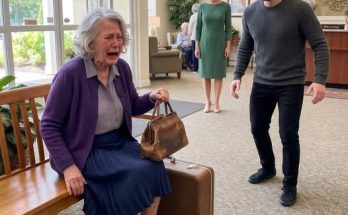
I was folded forward in a plastic chair under fluorescent lights, one hand pressed against my abdomen, the other gripping the edge of the seat hard enough to make my knuckles ache.
Jessica stood over me in a cream sweater and expensive boots, her face sharpened by annoyance instead of concern.
She looked less like a sister bringing someone to the hospital than a woman returning a defective purchase.
‘She does this every time something important happens for me,’ she told the nurse.
‘Please don’t bump someone actually sick because she wants attention.’
The nurse gave me a quick glance, then looked down at her clipboard again.
Families lie for each other all the time.
They also lie against each other.
In that moment, I could see which version of me Jessica had handed the room.
Then my mother arrived and made it worse.
Elaine Hale walked into the ER like she was entering a meeting she was already late for.
Her lipstick was perfect.
Her phone was still in her hand.
She listened to half a sentence about imaging and immediately said, ‘We are not agreeing to a bunch of expensive tests.
My other daughter’s wedding is in three weeks, and I will not have this family derailed by theatrics.’
The doctor who had just stepped into triage looked from her to me.
His face stayed professionally neutral, but his eyes paused on the way I was sitting, protecting my left side.
‘What surgery did you have?’ he asked me.
‘Abdominal repair,’ I said, forcing the words past dry lips.
‘Ten days ago.
I lifted something.
Something tore.’
My mother laughed once, a hard little sound.
‘If she had surgery ten days ago, do you really think she’d be hauling boxes? She came home unannounced and immediately started trying to ruin Jessica’s week.’
That part was true in one narrow, ugly sense.
I had come home unannounced.
But not because I wanted a scene.
Officially, I was on medical leave.
Unofficially, I had been erased.
The mission had gone wrong in a place I still cannot name.
There had been a road, a convoy, a flash that split the night in half, and the blunt force of my own body hitting dirt after I shoved another soldier out of the blast line.
By the time I woke in a military hospital, my abdomen had been opened and put back together, a drain had been stitched in place, and a major from my unit had told me, with tired eyes, ‘Your paperwork is sealed.
Your name isn’t on anything public.
Recover quietly.’
Recover quietly.
That was how I ended up turning into my parents’ driveway just before noon without calling first.
There were two catering vans outside.
A tent was rising over the backyard.
White flowers climbed the porch rails.
For a second, still fogged with pain medication and too little sleep, I forgot the date.
Then I remembered.
Jessica’s wedding.
I sat behind the steering wheel for an extra minute, breathing
shallowly while the stitches along my abdomen pulled tight beneath the binder.
I had almost kept driving.
But some stubborn, humiliating part of me still believed home might feel like home if I just walked in the door.
It didn’t.
My mother was issuing instructions in the kitchen.
My father, Robert, was arguing with a vendor on speakerphone about a champagne wall.
Jessica stood in the center of the living room in a white robe while three bridesmaids hovered around her with steamers and garment bags.
She looked at me first.
‘Oh.
You’re here.’
No hug.
No relief.
No surprise.
Just irritation that the scenery had shifted.
‘I got leave,’ I said.
‘You could have warned us.’
My mother turned, glanced at the duffel on my shoulder, and said, ‘We don’t have a guest room, Morgan.’
That was my welcome home.
Maybe if I had been stronger, I would have turned around then.
Maybe if I had not spent years learning to shrink inside my own family, I would have told them exactly what the last ten days had looked like: drains, fevers, blood tests, antiseptic, and the humiliation of needing help to stand.
Instead, I did what I had always done with them.
I minimized myself.
Jessica pointed to boxes by the stairs.
‘Take those up, please.
Shoes, crystal, welcome gifts.
Be careful.’
I picked up the first box.
It was heavier than it looked.
By the time I reached the upstairs landing, sweat had started under my jacket.
I came down, took the second, and felt a sharp pull beneath my ribs.
On the third trip, something shifted low and hot across my abdomen, the sort of wrongness your body recognizes before your mind can name it.
I set the box down and braced a hand on the wall.
Jessica glanced up from her phone.
‘Are you seriously stopping already?’
‘I think something tore,’ I said.
She rolled her eyes.
‘Naturally.
Right when something matters to me.’
I remember the silence after that.
Not compassion.
Just irritation, suspended for one second because I had broken the rhythm of her day.
‘I need the hospital,’ I said.
My father exhaled through his nose like I had announced a parking ticket.
My mother looked offended.
Jessica grabbed her keys with a muttered curse and drove me to the ER in dead silence, except for one furious question at a stoplight.
‘Can you at least not make this a whole thing?’
Pain does strange things to time.
The drive felt both instant and endless.
I remember the cold air when the automatic doors opened.
The smell of bleach.
The way Jessica spoke for me before I could get a full breath.
And now, in triage, the consequences of that were hardening around me.
The doctor crouched slightly so he could look at me instead of through me.
‘Ms.
Hale, I need to examine you.’
I tried to reach for the zipper of my tactical jacket, but my fingers were shaking.
The pain had turned from sharp to deep and spreading.
‘I’ve got it,’ he said.
He pulled the jacket open.
Everything changed.
The white abdominal binder under my shirt was soaked a dull, ugly red.
The drain bulb taped along my ribs was half full of dark blood.
Gauze had come
loose near the incision line, and the faint medicinal smell beneath the iron scent of blood told its own story.
Tucked inside the inner pocket of my jacket, where I had shoved it so my mother would not ask questions the moment I walked in, was the sealed military discharge packet from the hospital.
Jessica’s voice disappeared mid-breath.
My mother’s face went blank.
The doctor did not waste a second.
‘Trauma bay, now.
IV access.
CBC, type and cross, CMP, lactate.
Get imaging ready.’
Suddenly everyone was moving.
A nurse cut my shirt away.
Another hung fluids.
Someone peeled the packet from my pocket and handed it to the doctor.
He skimmed the first page while they rolled my chair back.
The line that made his jaw tighten was highlighted in yellow.
POST-OPERATIVE ABDOMINAL VASCULAR REPAIR.
NO LIFTING.
IMMEDIATE IMAGING IF PAIN RETURNS OR DRAIN OUTPUT INCREASES.
He looked up.
‘Who had her lifting boxes?’
No one answered.
Jessica started crying first, and even then it sounded offended.
‘She didn’t tell me it was like that.’
‘I said something was wrong,’ I whispered.
The doctor looked at her, then at my mother.
‘You were told enough to bring her here.
You should have listened sooner.’
By the time they got me to imaging, the room had taken on the dreamlike quality that comes with blood loss.
Lights were too bright.
Voices felt both near and far.
I remember a scan, cold contrast in my vein, and a nurse pressing my shoulder when I tried to sit up.
Then I remember hearing the doctor say, ‘Possible internal bleed.
She’s going to surgery.’
That was when fear finally cracked through my training.
I had dealt with gunfire, smoke, screaming civilians, and the clean, clinical horror of field medicine.
But there is something uniquely destabilizing about realizing you might die not because of the original injury, but because the people you went home to treated your pain like an inconvenience.
They were wheeling me toward the operating room when the charge nurse pulled the rest of the contents from my jacket pocket: my dog tags, a folded unit patch stiff with old blood, and an emergency contact card with one number circled in red.
The doctor read it and told her, ‘Call now.’
I did not see who arrived before they put me under.
I learned that part later.
The surgery lasted just under two hours.
A stitch line inside my abdomen had reopened when I carried the boxes, and the drain had started filling faster because I was bleeding and developing an infection around the repair site.
According to the surgeon, another hour or two at home might have pushed me into septic shock.
While I was in the operating room, Captain Adrian Reed came to the hospital.
Reed was the kind of man who never looked wrinkled, never looked surprised, and somehow made every room colder by standing in it.
He was in dress uniform because that was how the military does damage control in civilian spaces: polished, controlled, terrifyingly calm.
He found my family in the waiting room.
Later, a nurse told me Jessica was still in her robe under a coat, as if she had expected to be in and out of the ER before the cake tasting.
My
mother was trying to explain to hospital administration that there must be some misunderstanding.
My father had gone quiet in that brittle way men do when they realize facts are about to outrank pride.
Captain Reed introduced himself, showed identification, and asked one question.
‘Who delayed treatment for Sergeant Morgan Hale?’
My mother apparently tried the same tone she used on everyone else.
‘We didn’t know it was serious.’
Reed’s answer was ice.
‘She came home with a visible drain, recent surgical paperwork, and a post-operative brace.
A child could have known it was serious.’
Jessica began crying harder.
‘She always hides things from us.’
‘No,’ Reed said.
‘You people ignore them.’
Then, because some truths cannot stay buried once the blood is visible, he told them enough to end the fiction they had been living in.
I had been injured shielding another member of my team during an overseas extraction.
The surgery was not minor.
The leave was not optional.
My record was restricted because of the nature of the mission, not because I was a quitter or a liar or ‘between jobs,’ as Jessica had once joked to her friends.
The nurse who told me this part admitted she almost felt bad for my mother when Reed finished.
Almost.
Because my mother’s first response was not grief.
It was, ‘Will she be able to talk about any of this publicly? We don’t need gossip before the wedding.’
When Jessica’s fiance, Evan, arrived with a garment bag and a worried face, he heard that sentence with his own ears.
That was the beginning of the end of their wedding, though none of them knew it yet.
I woke up late that night to the steady beep of monitors and a throat that felt scraped raw.
My abdomen burned with the deep, dense ache of fresh surgery.
For a few disorienting seconds I thought I was back overseas.
Then I saw Captain Reed sitting in the corner chair, sleeves crisp, hands folded, looking completely out of place beside a cup of hospital coffee.
‘You lived,’ he said.
I tried to laugh and failed.
‘Ringing endorsement.’
He stood and came closer.
‘The surgeon said you were lucky.
Another hour and we’d be discussing next-of-kin paperwork.’
I closed my eyes.
Not because of the pain.
Because I knew, with a clarity colder than anger, that if I had stayed in that house any longer my family would have let me deteriorate as long as it did not interfere with floral deliveries.
Reed must have seen something on my face, because his voice softened by a degree.
‘I can have your emergency contact changed tonight.’
I looked at the ceiling.
‘Do it.’
He nodded once.
‘Already done.’
The next morning my parents asked to come in.
I should have said no.
I know that now.
But old habits die slower than blood does.
My father entered first, shoulders hunched in a way I had never seen.
My mother followed with a bouquet from the hospital gift shop, which somehow made it worse.
Jessica stayed near the door, pale and puffy-eyed, still managing to look irritated that the world had turned without her permission.
My mother set the flowers down carefully.
‘Why didn’t you tell us it was that bad?’
I stared at her.
There are questions so dishonest they sound ridiculous the moment they hit the air.
‘I said I needed the hospital.’
‘You didn’t explain,’ she whispered.
‘I came home wearing a tactical jacket over a surgical binder with a drain clipped to my ribs.’
No one spoke.
Jessica folded her arms.
‘You always shut us out, Morgan.
You make it impossible to know what’s real.’
That hurt more than I expected, maybe because it was so familiar.
The family script.
If I spoke, I was dramatic.
If I stayed quiet, I was secretive.
No version of me ever qualified as deserving.
‘You looked at me and saw a problem,’ I said.
My voice was weak, but it did not shake.
‘Not a daughter.
Not a sister.
A problem standing too close to your wedding centerpieces.’
My father’s face crumpled at that, and for a second I saw genuine shame.
But shame is not the same thing as repair.
Jessica’s mask broke next.
Not into remorse.
Into panic.
‘Evan isn’t answering me,’ she blurted.
‘He heard Mom in the waiting room and now he’s not answering.
Please tell him I didn’t mean any of it.’
I almost laughed.
There I was, tubes in my arm, fresh stitches in my abdomen, and Jessica still needed the moment bent back toward her.
It was the purest thing she had ever shown me.
Pure selfishness, undiluted.
‘No,’ I said.
She stared at me.
‘You’re really going to do this now?’
‘I am doing exactly what you did yesterday,’ I said.
‘I am deciding which emergencies matter to me.’
Captain Reed stepped in before the argument could stretch any further and told them visiting hours were over.
My mother tried to protest.
My father murmured my name.
Jessica started crying again.
None of it moved me.
Evan came that evening when they were gone.
He stood awkwardly in the doorway with no flowers and no script.
He looked like a man who had watched a curtain fall in the middle of a play and discovered the set behind it was made of rot.
‘I heard enough yesterday,’ he said quietly.
‘I don’t think I ever really knew her.’
I believed him.
Or at least I believed he had not known the full extent of it.
‘The wedding is off,’ he said after a pause.
‘For now.
Maybe for good.’
I watched his face as he said it.
He was grieving something real, even if it was only the illusion he had agreed to marry.
‘I’m sorry,’ I said.
He gave a tired smile.
‘I think you were the one who almost died.’
After he left, I lay awake listening to the machine beside my bed and thinking about all the little rehearsals that lead to one final performance.
The eye rolls.
The jokes.
The way my mother’s mouth tightened whenever I needed anything inconvenient.
The way my pain had always been treated as suspicious unless it served someone else’s story.
That was the biggest red flag, I realized.
Not the wedding.
Not the hospital.
The years of training that taught me to expect nothing and call that love.
I was discharged five days later, not to my parents’ house but to a furnished recovery apartment arranged through the military.
Reed had already had someone pick up
my duffel bag.
The rest of my things from my parents’ place fit into two cardboard boxes and one black trunk.
That was its own answer.
My father called three times in the first week.
I didn’t answer.
My mother sent long messages about misunderstandings, stress, family pressure, and how nobody could have known.
Jessica sent one shorter text: I hope you’re happy.
That one, at least, was honest.
A month later, when I could finally walk without holding my side, I met my father for coffee in a place with too much sunlight and uncomfortable chairs.
He looked older than he had six weeks earlier.
Smaller somehow.
‘I failed you,’ he said before I even sat down.
He meant it.
I could see that.
But I had learned something important in the hospital: sincerity is not the same thing as safety.
A person can regret the wound and still not be someone you should hand the knife back to.
So I listened.
I let him apologize.
I let him cry once, quietly, into a paper napkin he kept folding smaller and smaller between his fingers.
Then I told him I was not ready to forgive him, and that I did not know if I ever would be.
He nodded like a man accepting a sentence he had written himself.
As for my mother, she sent a Christmas card with both our names preprinted inside, as if branding could restore a relationship.
I threw it away unopened.
Jessica moved out of state after the wedding collapsed.
The last I heard, she was telling people ‘family issues’ ruined everything.
Maybe that was the closest she would ever come to the truth.
My own life got quieter after that.
Quieter can feel empty at first.
Then it starts to feel like peace.
I went back to physical therapy.
I healed.
I stopped apologizing for needing help.
I changed every emergency contact form in every system that mattered.
When my unit cleared me for limited duty, Reed handed me the paperwork and said, ‘This time, choose your people carefully.’
I did.
Sometimes, usually late at night, I still think about the exact moment in triage when the doctor opened my jacket and the room finally believed me.
It should not take visible blood for a family to recognize pain.
It should not take a near-death moment for love to become obvious by its absence.
But that day gave me one thing I could not have found in my parents’ house, or in Jessica’s shadow, or inside all the years I kept making myself small enough to fit their comfort.
It gave me the truth.
And once you see that clearly, the real question is not whether they are sorry.
It is whether you would ever be willing to go back to a place where your suffering had to prove itself before anyone called it real.