I Was 9 When My Mom Told Me She Couldn’t Handle Me Anymore—Then She Walked Away
“Hi,” she said, standing on my porch with a grocery bag full of store-brand cookies and my exact eyes in a stranger’s face. “You have to help me.”
That was the first thing my mother said to me after twenty years.
I’ll tell you what she wanted. But first you need to understand what it does to a child when a mother says *temporary* and means *gone*.
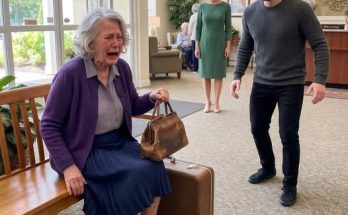
I was nine when she sat me down at the edge of a cracked vinyl chair in an office that smelled like dust and lemon cleaner. There were two women there with folders on their laps and careful voices. My mother wouldn’t look at me straight. She kept fixing the strap of her purse, over and over, like that was the real emergency.
She said, “I just can’t handle you right now.”
Not *I’m sick*. Not *I’m in danger*. Not even *I’m sorry*. Just that she couldn’t handle me anymore, like I was a bill she couldn’t pay.
Then she told me it was temporary.
I believed her because I was nine and she was my mother and children are stupidly loyal in the beginning. I thought maybe a week. Maybe two. I packed my red sweatshirt and my school notebook and waited to be brought home.
Two years later, on her birthday, I used my allowance to buy a card with yellow flowers on the front. I wrote carefully so she’d see I had gotten older, gotten neater, gotten easier maybe. I wrote: *Happy Birthday Mom. I miss you. I’m being good. Love, Emily.*
It came back unopened.
Red stamp across the front. *Return to sender.*
I remember holding it in the social worker’s office and trying not to cry because by then I had already learned crying made adults look tired. I asked if she moved. The social worker said yes, and when I asked if she left an address, the woman just shook her head.
Then I asked the question I already knew not to ask.
“Will she come back?”
The social worker didn’t answer. She just looked at me with that soft, finished sadness adults get when they know something and hate that you’re about to know it too.
By thirteen, I stopped asking.
I was in my third foster home by then. I learned to keep my socks together, not to get attached to dogs, and never leave anything important where another kid could take it. I stopped making up stories about why my mom left. I stopped pretending there was some dramatic reason that would make it noble. No secret illness. No court case. No accident. Just me, not being keepable.
That thought sits deep once it settles in. Even when your life gets better, it stays like a small stone in your shoe.
Mine did get better, eventually.
Not all at once. Not in some movie way.
I married a good man named Daniel who asks before touching my coffee mug because he knows I hate when people move my things. We have two kids. A loud kitchen. Laundry always half-done. Tiny fingerprints on the fridge. The ordinary life I used to imagine other people got by default.
I was twenty-nine the day she showed up. It was a Sunday. My daughter was in the living room building a crooked tower of blocks, and something was burning just slightly in the oven because I had forgotten the garlic bread.
Then came the knock.
I opened the door and there she was.
Older, of course. Smaller somehow. Her hair was thinner, dyed too dark at the roots. But her eyes were mine. Or maybe mine were hers. That was the first thing that made my stomach turn.
She lifted the grocery bag a little, like she had brought something meaningful instead of clearance-bin cookies.
“Hi,” she said. “You have to help me.”
No apology. No *Emily*. No *I’ve thought about you every day*. Straight to need.
I just stared at her.
Then she said, “Your brother is sick.”
The world did that strange slow thing it does when your body hears something before your brain can sort it. I remember the screen door tapping once against the frame. I remember my daughter laughing in the other room. I remember thinking, absurdly, that I needed to turn the oven off.
“My what?”
“Your brother,” she said again. “He’s seventeen. His name is Noah. He needs a bone marrow transplant, and they said family members should be tested first. I tried other people. We… we ran out of options.”
We.
Such an easy little word.
Daniel had come up behind me by then. I could feel him there without looking. Solid. Quiet.
My mother kept talking. About doctors, percentages, time. Her hands were shaking. I should tell you that. She wasn’t calm. She wasn’t smug. She was scared.
But scared for someone else. Not for what she had done to me.
I asked the only thing that mattered.
“How did you find me?”
She looked down. “Online first. Then records.”
Records.
Like I was paperwork. Like I had been a file before I was a daughter and now I was a file again.
I stepped outside and closed the door partway behind me.
“You left me,” I said. My voice came out low and weirdly steady. “You left me with social workers and disappeared. I sent you a birthday card when I was eleven.”
Her face changed then. A little. Not enough.
“I know,” she said quietly.
That stopped me cold.
“You know?”
She nodded, eyes filling up. “I got it.”
I think that was the moment I truly stopped being her child.
Because for twenty years I had built this tiny merciful lie inside myself—that maybe she never got it, maybe it was lost, maybe some clerk sent it back, maybe she didn’t know I was still reaching. But she did know. She got it and sent nothing.
“I didn’t know what to say,” she whispered.
I laughed. Just once. Ugly sound.
“You didn’t know what to say to an eleven-year-old who wrote ‘I’m being good’?”
She flinched. Good. I wanted her to.
Then came the excuses. Bad relationship. No money. Shame. She thought I was “doing well” where I was. She didn’t want to “disrupt” my life later. Every sentence had that same slippery shape: regret without responsibility.
Finally she said it. “Please. He’s innocent.”
And that was the problem.
He was.
I wanted to slam the door. I wanted to tell her that whatever happened next belonged to her, not me. I wanted, very badly, to be cruel in a way that felt mathematically fair.
Instead I said, “Leave me the hospital information.”
She started crying harder, thanking me, reaching like she might touch my arm. I stepped back.
“Don’t,” I said.
That night I barely slept. Daniel lay awake next to me, warm hand on my back, not pushing. Just there. I kept seeing the returned birthday card. Then I kept seeing some seventeen-year-old boy I had never met, sick in a bed, carrying my blood without my history.
I got tested three days later.
I told myself I was doing it for him, not her, and that was true. But another truth sat beside it: a piece of me wanted proof that I was not the thing she had been. That I could be asked for mercy and still know the difference between justice and collateral damage.
I was a match.
A strong one.
The hospital arranged a meeting with Noah because he’d asked for it. I almost said no. Then I saw him.
He had my chin. Her nervous hands. A baseball cap pulled low and skin that looked too pale for seventeen. He said, “I didn’t know about you until last month,” before either of us sat down. “She told us you were… gone.”
Gone.
I actually smiled at that, because if I didn’t, I was going to throw something.
We talked for twenty minutes. About almost nothing. School. His dog. How hospital pudding is somehow both too thick and too watery. He never defended her. Never asked me to forgive her. Before I left he said, very quietly, “I’m sorry.”
I donated.
It hurt less than I expected physically and more than I expected in every other way. My mother tried to thank me in the recovery room. I told her, “This was for him.”
She nodded like she understood, though I’m not sure she ever really understood anything that wasn’t happening directly to her.
Noah got better slowly. Then all at once, the way people sometimes do. Six months later he sent me a photo of himself standing outside, squinting in sunlight, holding up two fingers like a peace sign. On the back he wrote, *Still here. Thanks.*
I keep that one.
As for my mother, she called a few times after. Once on my birthday. Once at Christmas. Once to say she thought maybe we could “start over.”
That was never going to happen.
You can build a relationship with a stranger. You can even build one with a person tied to you by blood and damage. But you cannot start over with the woman who taught you what abandonment feels like before you were old enough to spell it.
So I didn’t.
I wrote her one letter. Not cruel. Not warm either. I told her I was glad Noah was recovering. I told her I hoped she would be honest with him in ways she never was with me. And I told her not to come to my house again.
Then I signed just my first name.
Not *your daughter*. Not *love*. Just the name I kept, the one I built a life under, the one she walked away from and found again only when she needed something.
She never came back after that.
Noah and I still talk sometimes. Not often. Enough.
And every now and then, when one of my kids calls from the other room—just “Mom!” for something small, a snack, a lost shoe, a bad dream—I answer right away.
Not because I’m perfect.
Just because I know what silence can do.
Sources