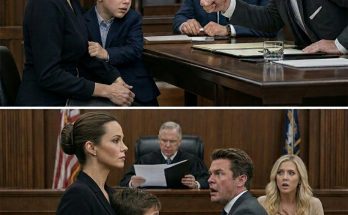
The Security Footage Revealed a Terrifying Family Secret That No One Was Meant to See.
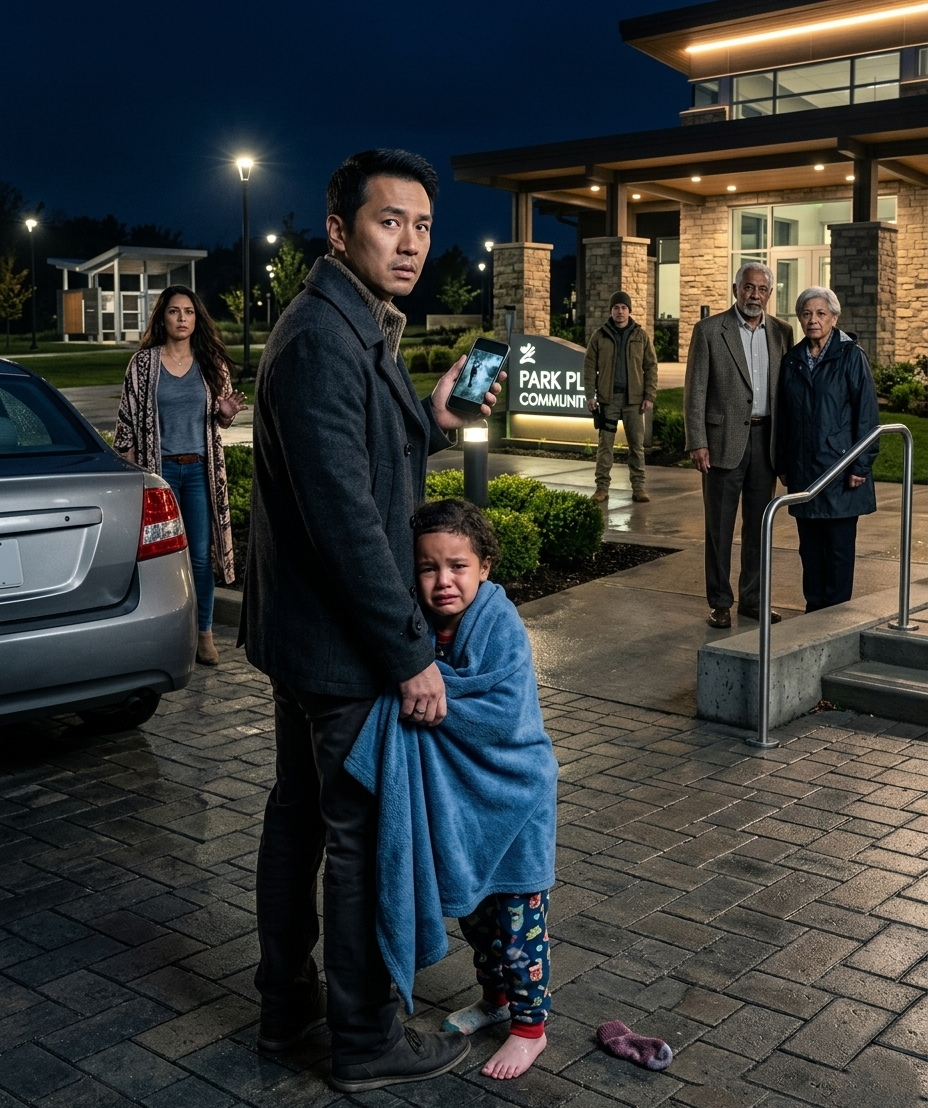
My son cried the entire drive to his grandmother’s house.
Not the dramatic kind of crying kids do when they want a toy or refuse a nap.
Not the exhausted whining that fades once the scenery changes and the body gives up.
This was something else.
It was thin at first.
Then desperate.
Then raw.
“Daddy, please don’t leave me here.”
He said it from the back seat in a voice so small it barely seemed to belong to a five-year-old.
Each time he repeated it, it sounded weaker, like he was already losing hope that I would listen.
Beside me, my wife Marsha stared through the windshield as if none of it mattered.
“You’re treating him like a baby,” she said.
“He knows exactly what he’s doing.”
I glanced at Owen in the mirror.
His cheeks were soaked.
His little hands were twisted around the seat belt buckle so tightly his knuckles were pale.
“Maybe we should wait,” I said.
“He’s clearly upset.”
Marsha let out a tired breath.
“He’s upset because you encourage this.
My mother is not going to hurt him.
She’s going to give him rules for one weekend, which is more than you ever do.”
That landed where she meant it to.
I teach psychology at the community college.
My whole professional life revolves around behavior, emotional development, the way fear shows up before language catches up to it.
I knew that.
I taught that.
I had spent years telling students that children often communicate distress through patterns adults dismiss.
And still, in that car, I let myself be talked out of what I knew.
Maybe he was overtired.
Maybe he was feeding off tension between Marsha and me.
Maybe I was overreacting because my own father had been harsh and I was determined not to become him.
That is the thing no one tells you about failing your child.
It rarely feels like cruelty in the moment.
It feels like uncertainty.
Fatigue.
Compromise.
A dozen excuses dressed up as reason.
When we turned onto Sue Melton’s street, Owen stopped crying.
That scared me more than the tears.
He went completely silent and pressed himself against the far side of the car seat as Sue’s house came into view.
The place was neat to the point of discomfort.
Trimmed hedges.
White porch rails.
No toys.
No wind chimes.
No softness anywhere.
Sue was already outside waiting.
She stood on the porch with her back straight, hands folded in front of her, expression unreadable.
She didn’t wave.
She simply watched us pull in the way a person watches an appointment arrive.
When I opened Owen’s door, he grabbed my wrist with both hands.
“Please,” he whispered.
“Please don’t make me stay.”
My chest tightened so hard it actually hurt.
I crouched so I was eye level with him.
“It’s just for the weekend, buddy.
I’ll pick you up Sunday.”
“Promise?”
“I promise.”
His lip trembled.
“Don’t let Grandma lock me in.”
I froze.
But only for a second.
Marsha was already climbing out of the passenger seat.
“He says ridiculous things when he’s upset,” she said sharply.
“Come on, Owen.
Enough.”
I should have stopped everything right there.
Instead, I looked at him and asked the worst possible question.
“Lock you in where?”
He dropped his
eyes immediately, as if he regretted saying anything at all.
Sue stepped down from the porch.
“William, he was put in the laundry room once for a five-minute timeout because he threw a toy at my lamp.
That’s what this is about.
Marsha already explained it to me.”
Her tone was calm.
Almost amused.
Marsha gave me a look that said do not start.
And because I was standing in the middle of a family dynamic that seemed older and sharper than me, because I suddenly felt like the outsider in my own son’s life, because I didn’t want to be the dramatic one again, I made the choice that would replay in my head for months.
I pried Owen’s fingers off my wrist.
I kissed his forehead.
And I left him there.
The drive home felt wrong in a way I couldn’t settle.
Every few minutes I looked at my phone.
No messages.
No pictures.
No update.
Just silence.
At 6:47 p.m., Marsha finally texted.
Staying for dinner.
Stop worrying.
He’s fine.
I stared at the words for a long time.
He’s fine.
That sentence should have calmed me.
Instead it made me more uneasy.
People don’t usually send reassurance unless they feel the need to control a narrative.
At 8:30, my phone rang from a number I didn’t know.
“Is this William Edwards?” a woman asked.
Her voice was low and tight, like she was trying not to alarm someone in the room with her.
“Yes.”
“My name is Genevieve.
I live next door to Sue Melton.
Your son ran into my yard ten minutes ago.
He was barefoot and crying so hard he could barely speak.
He’s hiding under my bed right now and won’t come out for anyone but his dad.”
Everything inside me dropped.
I was already grabbing my keys before the call ended.
The drive back is a blur in my memory.
Streetlights.
Red lights I barely remember stopping for.
My hands locked around the steering wheel.
One thought pounding louder than all the others.
You left him.
Genevieve met me at the door before I even knocked.
She was in her sixties maybe, gray hair pulled back, cardigan thrown over pajamas.
The look on her face was enough to tell me this wasn’t some childish misunderstanding.
She brought Owen out wrapped in a blanket.
He launched himself at me so hard I nearly lost my balance.
“Daddy,” he gasped.
I held him and felt the violent shaking in his body.
Not sniffles.
Not tantrum aftershock.
Full-body tremors.
His teeth clicked together.
One of his socks was gone.
His feet were cold.
I kept saying, “I’ve got you, I’ve got you, I’ve got you,” because I didn’t know what else to say to a child I had just taught not to trust his own fear.
Genevieve waited until Owen buried his face in my neck.
“Before you go over there,” she said quietly, “you need to see this.”
She held up her phone.
It was security footage from the side of her house, timestamped 8:12 p.m.
The camera showed Sue’s back porch and part of the yard between her place and Genevieve’s.
The image was grainy but clear enough.
First, the back door flew open.
Then Owen stumbled out barefoot into the dark.
Not
playing.
Not sneaking.
Running.
He was crying so hard his whole body pitched forward with each step.
He looked over his shoulder once, then ran harder.
A second later Sue appeared in the doorway.
She didn’t look frightened.
She looked angry.
She marched down the steps, pointing toward the house.
Even without sound, her posture was unmistakable.
Go back inside.
Owen shook his head and backed away.
Then Marsha stepped into frame behind her mother.
She wasn’t rushing to him.
She wasn’t shocked.
She crossed her arms.
And then, in a movement so small I almost missed it, she reached forward and shut the back door behind Owen.
Closed it.
On her own crying child.
I replayed that second three times because my mind refused to accept it.
Genevieve touched the screen and switched to another clip from a front camera.
This one showed Owen darting around the side of the house, slipping on wet grass, scrambling up, then sprinting into Genevieve’s yard.
Behind him, Sue came as far as the property line and stopped.
She didn’t chase him farther.
She just stood there.
Watching.
“By the time I opened my door, he was screaming, ‘Don’t make me go back in the dark room,’” Genevieve said.
“I asked him where his parents were, and he said, ‘Daddy doesn’t know.’”
I couldn’t breathe for a second.
I looked down at Owen.
“What dark room?”
He pressed closer into me and whispered, “The little room downstairs.
Grandma said if I cried, nobody would come.
Mommy said I had to be brave.”
Genevieve’s living room seemed to tilt.
I looked at the woman standing in front of me, a stranger who had protected my son more in ten minutes than I had all day, and I felt something in me split open.
“Did this happen before?” I asked him.
He nodded against my shoulder.
“When?”
“The other sleepover,” he whispered.
“When you were at your school trip.”
I looked at Marsha’s text messages again.
Staying for dinner.
Stop worrying.
He’s fine.
The lies were suddenly visible everywhere.
Last spring, when I had attended a three-day conference in Chicago, Marsha had taken Owen to her mother’s for one night.
When I came home, he had been clingy for a week.
Nightmares.
Bedwetting after months without accidents.
Marsha said he had caught a stomach bug and gotten overtired.
I had believed her because I wanted peace.
I had let the easy explanation win.
Not this time.
I asked Genevieve if she would stay with Owen for a few minutes while I went next door.
She looked at my face and shook her head.
“No,” she said.
“You don’t leave him again tonight.
Call the police first.”
It was the clearest thing anyone had said to me all day.
So I did.
Two officers arrived within fifteen minutes.
One stayed with Genevieve and Owen while the other took my statement outside under the porch light.
I showed him the video.
I told him exactly what Owen had said.
I told him about the comment in the driveway, the warning I’d ignored, the previous behavioral changes.
He didn’t interrupt me once.
Then he and his partner walked next door.
Sue opened the door before they knocked twice.
Even from Genevieve’s porch I could see the outrage written
across her face.
Marsha appeared behind her, pale and rigid.
The officers spoke to them for several minutes before one asked if they could enter the house.
Sue resisted.
The officer said something firm.
She stepped aside.
I stayed where I was because Owen had both fists twisted in my shirt and every time I shifted, he panicked.
Twenty minutes later, one of the officers came back out and asked if I would speak with them privately.
Genevieve watched Owen while I stepped onto the sidewalk.
“There is a small storage room in the basement,” the officer said.
“Bolt on the outside of the door.
No interior knob.
There’s a child’s blanket in there and a plastic stool.”
I stared at him.
The officer continued carefully.
“Your wife says it was used as a calm-down space.
Your mother-in-law says children need consequences.
Your son’s statement doesn’t match theirs.”
“Of course it doesn’t,” I said, and my voice came out shaking.
“He’s five.”
The officer held my gaze.
“That is exactly why we’re taking this seriously.”
What followed moved both too fast and too slowly.
More questions.
More notes.
A child services call.
A recommendation that Owen not return to that home under any circumstance while an investigation was opened.
Marsha tried to speak to me before I left.
“William, please, let me explain.”
I turned around and saw her standing under her mother’s porch light, her face washed out and strange.
She looked less like the woman I married than like a daughter who had never really left that house.
“Explain what?” I asked.
“That he begged me not to leave him and you still brought him here? That you knew exactly what he meant when he said don’t lock me in?”
Her mouth trembled.
“It wasn’t like that.”
“Then tell me what it was like.”
She glanced at the officers.
At her mother.
Back at me.
And that was when I knew the truth was uglier than denial.
Because she was still afraid of Sue.
Not protective.
Afraid.
“My mother used it on me,” she said at last, so quietly I nearly missed it.
“When I panicked.
When I cried too long.
When I talked back.
She said it helped me regulate.”
The words fell into the night like stones.
I looked at Sue.
She didn’t look ashamed.
She looked offended.
“It was never abuse,” she snapped.
“It was discipline.
Children today are weak because parents coddle them.
Marsha turned out fine.”
I almost laughed at the insanity of that sentence.
Turned out fine.
The woman beside her had just admitted she was so conditioned by her childhood that she had delivered her own terrified son into the exact same hands and called it structure.
“No,” I said.
“She didn’t.”
Marsha started crying then.
Silent tears at first, then the kind that break through a person against their will.
She covered her mouth with both hands as if she could shove them back inside.
“I thought…” She stopped, swallowed, tried again.
“I thought maybe if he got used to it, he wouldn’t be scared the way I was.
I thought maybe I was making it bigger in my head.”
I closed my eyes.
There are moments when rage and grief become almost identical.
This was one of them.
“You
watched him beg me in the car,” I said.
“You watched him shake.
And instead of protecting him, you protected what happened to you.”
She crumpled at that, because it was true.
The officer stepped in and said that was enough for the night.
He was right.
Nothing useful was going to happen on that porch.
I took Owen home.
Genevieve gave me her number and offered to send the footage directly to the investigators.
Before I put Owen in his car seat, he caught my sleeve.
“You came back,” he whispered.
I had never hated myself more than I did in that moment.
“I should have listened the first time,” I said.
He studied my face with the solemn exhaustion only children can carry, then nodded once and leaned back.
At home, I slept on the floor beside his bed.
Every hour or so he woke with a start and checked that I was there.
Each time I told him the same thing.
You are safe.
The next morning, I called a lawyer before I called anyone else.
Temporary separation papers were filed within the week.
Child services interviewed Owen with a specialist present.
They interviewed me.
Then Marsha.
Then Sue.
The footage mattered.
The bolt on the outside of the basement door mattered.
The old blanket and stool mattered.
Most of all, Owen’s fear mattered, because once someone finally listened, his memories began to come out in small, heartbreaking pieces that fit together too well to ignore.
He talked about being left in the little room until he stopped crying.
About scratching at the door.
About hearing his mother’s voice upstairs and thinking she would come get him, then realizing she wasn’t coming.
Sue insisted it was all exaggerated.
The authorities did not agree.
Sue was barred from unsupervised contact while the investigation continued.
Marsha moved in with her sister and started trauma therapy after admitting she had spent most of her life calling her own terror normal because naming it would have destroyed the foundation she was raised on.
Months later, in mediation, she looked at me across a conference table and said, “I don’t expect forgiveness.
I just need you to know I see it now.”
I believed that she saw it.
I did not believe seeing it erased what it had done to our son.
Owen started play therapy twice a week.
At first, every dollhouse scene ended with one tiny figure shutting another in a closet.
Then, slowly, the stories changed.
Doors opened.
Someone came back.
Someone listened.
The first time he spent a full night in his own bed without waking up screaming, I sat alone in my kitchen and cried harder than he had in the back seat that day.
Not because everything was fixed.
Because it wasn’t.
But because healing had finally begun in the exact place the damage had started: with one person believing him.
I still think about the drive to Sue’s house more often than I want to admit.
About the mirror.
About Owen’s voice.
About how close love can stand to truth and still fail it if fear, pride, or old family habits get in the way.
People ask me now how I missed it.
The honest answer is that I didn’t miss it.
I doubted it.
And sometimes that is the more dangerous thing.
Because the clearest warning in our family wasn’t hidden in a basement room or caught by a security camera.
It was sitting in the back seat, begging me not to leave.
The part I still turn over in my mind is the one no court can fully settle: whether Marsha was more guilty for what she allowed or more broken by what she survived first.
I know what Sue did.
I know what my son endured.
But some nights I still wonder which wound is harder to forgive—the cruelty that starts the damage, or the silence that passes it on.