They Thought I Got Nothing—My Mother Even Smirked at the Will Reading… Then the Second Envelope Changed Everything.
Written Out at Grandma’s Will Reading, I Heard My Mother Smirk—Then the Second Envelope Opened the Real Inheritance
By the time Harold Mercer lifted the second envelope, my mother’s smile had already done what it had been doing to me for thirty-three years—turning air into something I had to fight to breathe.
The conference room was too bright for mourning.
Sunlight poured through four tall windows on the fourth floor of Mercer & Pike, striping the polished table in pale gold. Outside, Asheville traffic rolled past as if nothing had happened, as if my grandmother hadn’t been buried two days earlier under a white April sky, as if the world had not gone noticeably dimmer with Eleanor Whitaker gone from it.
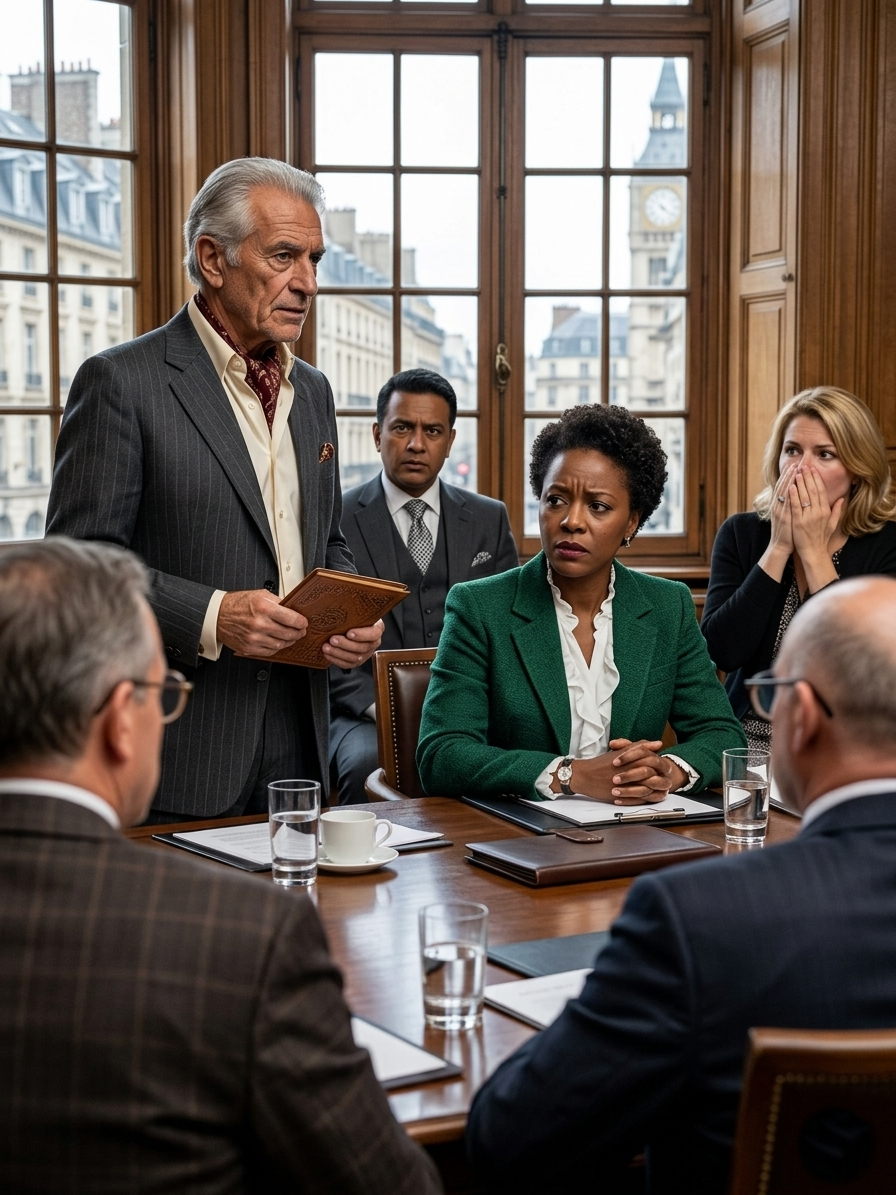
There were fourteen people in the room, just as the letter from the firm had specified.
My mother, Vivian Hale, sat directly across from me in cream silk and pearls, back straight, ankles crossed, expression composed enough for church. Beside her sat my younger sister, Audrey, who looked almost bored. My stepfather, Mason, kept checking his watch. My aunt Linda and uncle Ray were there, along with their grown children, Derek and Hannah. Rosa Delgado, Grandma’s longtime housekeeper, sat near the end of the table with her hands clenched in her lap. Len Foster, Grandma’s bookkeeper of nearly twenty years, sat beside her. Dr. Joanne Patel was there too, and Pastor Miles Turner from First Baptist. At the head of the table sat Adam Pike, the younger attorney from the firm, the one with polished shoes and a careful voice.
And in the far corner, almost out of the light, sat Harold Mercer.
He was silver-haired, heavy-browed, and so still he looked like part of the furniture until he moved. He had been my grandmother’s lawyer for as long as I could remember, though he’d stepped back from most of the daily work years ago. He didn’t look at anyone much. He just sat with a plain legal envelope on his lap and watched the room as if he had already seen how the scene ended.
Adam Pike cleared his throat and began to read.
I had not expected much. Not really. My mother had spent years making sure I never expected much from this family.
But I had loved my grandmother fiercely, and she had loved me in that steady, practical, unmistakable way that made people like my mother deeply uncomfortable. Grandma Eleanor had never been extravagant with affection. She was not the kind of woman who kissed every cheek or called everyone honey. She had built a real estate business from two rental houses and a bookkeeping notebook after my grandfather died at fifty-two. She believed in clean ledgers, strong coffee, and saying exactly what you meant. When I was nine, she taught me how to make biscuits and balance a checkbook in the same afternoon. When I was sixteen, she told me, “Never let the loudest person in the room decide what’s true.” When I was twenty-five and crying in my car after my fiancé left, she handed me a box of tissues and said, “Good. Better now than after a mortgage.”
She was not sentimental. She was reliable.
And because she was reliable, I thought I knew one thing for certain:
Whatever happened in that room, she would not have left me feeling like a stranger.
Then Adam Pike read the will.
It was all very formal at first. Specific bequests. Jewelry. A donation to First Baptist. Twenty thousand dollars to Rosa. Fifteen thousand to Pastor Miles’s food pantry. A few pieces of artwork to Aunt Linda. Then the real estate holdings, the brokerage accounts, the remaining cash reserves, and the proceeds of the eventual sale of my grandmother’s house on Elk Mountain Scenic Highway.
The total estimated value of the estate, Pike said, was approximately $2.3 million.
My pulse started to hammer in my throat.
Then he read the final distribution.
Forty percent to Vivian Hale, daughter.
Thirty-five percent to Audrey Hale, granddaughter.
Ten percent each to Linda and Ray.
Five percent to Derek and Hannah, split equally.
And to my eldest granddaughter, Claire Whitaker…
He paused.
I stopped breathing.
“…I leave no further provision.”
No further provision.
The room made a tiny, shifting sound—fabric, breath, chair legs, surprise carefully swallowed.
For one wild second I thought maybe there had been a page skipped. A line lost. A clerk’s mistake. I looked at Adam Pike. He was staring down at the paper with professional blankness.
My face went hot, then cold.
No one spoke.
Then my mother leaned back in her chair, folded her hands, and smiled at me with almost tender calm.
“You were always her least favorite,” she said.
Not loud. Not dramatic.
Just clear enough for every person in that bright room to hear.
Audrey’s mouth twitched.
My aunt Linda looked down instantly, as if the grain of the table had suddenly become fascinating. Rosa made a sound under her breath, something between protest and pain. Dr. Patel turned her head sharply toward my mother. Pastor Miles went still.
And I—
I just sat there.
Because when the cruelest thing anyone has ever said to you arrives in the exact tone you’ve heard all your life, it does not always land like a slap. Sometimes it lands like confirmation. Sometimes it slides into an old wound and finds the shape waiting for it.
I was ten the first time my mother told me I should be grateful anyone put up with me.
I was fourteen the first time she said I made everything difficult by existing.
I was nineteen when she told my boyfriend at Thanksgiving that I was “sensitive, dramatic, and not built for real life.”
I was twenty-six when she said, in my grandmother’s kitchen while washing crystal glasses after Easter dinner, “You know Mama only babies you because you’re weak.”
And now, at thirty-three, with my grandmother barely in the ground, she looked at me in a sunlit law office full of witnesses and tried to reduce my entire relationship with the one person who had ever truly seen me to a single sentence.
You were always her least favorite.
My eyes burned, but I refused to cry there. Not in front of Audrey. Not in front of Mason, who had once told me I should smile more at family events if I wanted people to stop finding me “cold.” Not in front of the cousins who only called when someone was sick or dead.
I pushed my chair back an inch.
“I’d like a copy,” I said, and my voice sounded nothing like mine. “Of the will.”
Adam Pike nodded once.
Before he could speak, a second voice cut across the room.
“No,” said Harold Mercer from the corner. “Not yet.”
Every head turned.
He stood slowly, one hand resting on the back of his chair before he straightened to his full height. He was well into his seventies, but there was nothing fragile about him. He walked to the table with the calm of a man stepping onto a stage he had been built for.
On the envelope in his hand, in my grandmother’s distinctive upright handwriting, were the words:
TO BE OPENED ONLY IF CLAIRE IS EXCLUDED OR PUBLICLY INSULTED DURING THE READING
The silence that followed was unlike any silence I had ever heard.
It was not grief.
It was not surprise.
It was the sound of a room realizing it had wandered into machinery already in motion.
My mother’s expression changed first, though only slightly. The smile stayed, but it tightened around the edges.
“What is that?” she asked.
Harold Mercer laid the envelope on the table with two fingers.
“That,” he said, “is why Eleanor Whitaker told me seven years ago that I was not to retire before she did.”
Adam Pike looked startled. “Mr. Mercer, I wasn’t aware there was another—”
“You were not meant to be,” Harold said, not unkindly. “Mrs. Whitaker was very specific.”
He looked around the room, then at me.
“Claire,” he said, and for the first time since the reading began, someone in that room sounded like they were speaking to a human being and not a line item, “your grandmother anticipated this exact circumstance in the spring of 2019.”
My mother let out a short laugh. “This is ridiculous.”
Harold ignored her. He broke the seal.
Inside was a folded letter, a smaller sealed packet, and a flash drive attached to a white tag.
Harold unfolded the letter first.
“This statement,” he said, “is signed by Eleanor Whitaker, witnessed by two attorneys, notarized, and accompanied by a physician’s certification of full mental competence. It is dated May 14, 2019.”
Dr. Patel spoke for the first time. “That’s my signature on the certification.”
I stared at her.
She gave me the smallest nod.
Harold began to read.
If this letter is being opened, then either Claire has been cut out of my estate, publicly demeaned at the reading, or both. If so, it means the people I expected to behave badly have behaved exactly as expected.
No one moved.
Let me be plain, because plain speech is the only useful kind. Claire Whitaker was never my least favorite anything. She was the child who sat with me after her grandfather died when the casseroles stopped coming. She was the only one who asked how I was feeling before asking what needed signing. She was the one who noticed when bank statements stopped matching. She was the one I trusted.
The words hit me so hard I had to grip the arm of my chair.
Harold continued.
Seven years ago, I learned that certain members of my family believed they could manage my old age better than I could. By “manage,” I mean isolate, pressure, intercept correspondence, and help themselves to money they had not earned. I decided then that if they intended to make a performance of my death, I would make arrangements of my own.
My mother sat up straight. “This is absurd.”
Harold kept reading.
The will just read aloud is not the instrument that controls the bulk of my estate. It is an earlier document I instructed to be read first under supervision. My actual estate plan, prepared with Harold Mercer, transferred my major assets into the Eleanor Whitaker Living Trust on May 21, 2019. The trust has since been amended three times, most recently last year. If this second envelope is open, it means the conduct clause has been triggered, and the final amendment must now be enforced in full.
Adam Pike had gone pale.
My sister Audrey whispered, “Mom?”
Vivian rose halfway from her chair. “No. Sit down,” she snapped—not to Harold, but to Audrey.
Harold opened the smaller packet and removed a bound document with tabs.
“This,” he said, “is the final amendment to the trust. Dated November 3 of last year. Properly executed. Witnessed. Filed. Recorded where required.”
He turned to the relevant page.
“Upon the triggering of the conduct clause,” he read, “all distributions previously designated to Vivian Hale and Audrey Hale are revoked. Any direct or indirect interest in the trust property by those parties is terminated. Successor trustee and principal beneficiary becomes Claire Elise Whitaker.”
The room stayed perfectly still.
Then Harold added, “In common language: Claire inherits the estate.”
No one breathed.
Not me. Not my mother. Not Audrey. Not Adam Pike.
The only sound was the faint buzz of fluorescent lights.
Then my mother’s chair scraped back hard enough to make Rosa flinch.
“That’s impossible,” she said. “She can’t do that after the fact.”
“She did not do it after the fact,” Harold said. “She did it seven years ago, and she documented every step.”
My mother’s face had gone a shade I had only seen once before—when my father finally walked out and told her he was tired of being measured and found lacking in his own house.
“No,” Vivian said again, but now it sounded less like certainty and more like prayer.
Harold held up the flash drive.
“Mrs. Whitaker also left a video statement, account records, copies of returned mail, caregiver logs, security footage summaries, and a memorandum prepared by a forensic accountant. She instructed me to share portions of those materials with everyone present if the conduct clause was triggered.”
Mason stood. “Now hold on—”
“No,” Dr. Patel said sharply. “Let him continue.”
I turned to look at her again, and suddenly a dozen things I had half-noticed over the past few years rearranged themselves in my head.
The way Dr. Patel had once asked me in the hallway of Mission Hospital, when Grandma had sprained her wrist, whether I had been seeing much of her lately. The way Grandma had started saying, “Write down dates, sweetheart,” whenever my mother wasn’t in earshot. The way Rosa had pressed a paper bag of lemon bars into my hand after one Thanksgiving and whispered, “Come when she tells you, not when your mother does.”
Seven years.
Seven years of something happening under the surface while I stood there thinking I was losing ground.
Harold nodded to Adam Pike. “There’s a laptop in the conference credenza. Please connect the drive.”
Adam obeyed in the stunned, automatic way of a man who has stopped pretending he is in charge of the room.
A moment later, the screen on the wall flickered to life.
And there she was.
My grandmother filled the frame in a navy cardigan and pearl earrings, sitting in her sunroom with the blue hydrangeas blooming behind her. Her posture was straight. Her eyes were clear. She looked exactly as she always had when she was about to say something inconvenient and necessary.
“If you’re watching this,” she said on the screen, “then Vivian has shown her whole backside in public again.”
A strangled noise came from my sister. Pastor Miles closed his eyes for a second, like he was trying not to smile at church.
Even then—especially then—my grandmother could still command a room.
She looked into the camera with brisk affection.
“Claire, darling, I hope you are sitting down. If not, go ahead and do that now, because your mother is probably standing, and she gets even taller when cornered.”
A shocked laugh escaped me before I could stop it.
Grandma’s expression softened.
“I know what you have been told,” she said. “Some of it for years. Some of it recently. I know because I kept records when I began to suspect my calls were not always reaching you and your letters were not always arriving. Once I knew, I kept more records.”
The video cut briefly to scanned envelopes—unopened letters to me marked RETURN TO SENDER in red, though I had never moved. Birthday cards. Christmas cards. One envelope in my grandmother’s handwriting addressed to my apartment in Charlotte, never delivered.
My stomach dropped.
Grandma resumed.
“In 2019,” she said, “I discovered three things within one month. First, money was being moved out of my accounts under descriptions like household reimbursement, medical transport, and emergency repairs that I had neither approved nor benefited from. Second, Vivian had obtained access to my mail and was redirecting certain correspondence. Third, Audrey, with the enthusiasm only a bored adult child can have, was helping her.”
Audrey jerked upright. “That is not true.”
“Sit down,” Harold said.
For the first time in my life, Audrey actually did.
The video continued.
“I did not confront them immediately,” Grandma said. “When a person thinks you are old and sentimental, there is no need to correct them before the paperwork is ready.”
On the screen appeared documents. Ledger entries. Bank transfers. Copies of checks. Len Foster’s name on review forms. Dates circled. Amounts highlighted.
Len cleared his throat, not looking at anyone. “Mrs. Whitaker requested a full audit in 2019. Quietly.”
My mother turned toward him, fury blazing through her composure. “You had no right.”
Len met her eyes. “It was her money.”
That single sentence landed with more force than a scream.
Harold spoke over the ringing silence. “The forensic review identified just over four hundred and twelve thousand dollars in improper transfers or benefits over six years. Some were repaid partially. Many were not. Mrs. Whitaker chose not to pursue criminal action during her lifetime.”
“Because she knew it would destroy the family,” Pastor Miles said quietly.
“Because she was merciful,” Rosa corrected, and her voice shook. “Not because they deserved it.”
I looked at Rosa. She was crying now, openly and angrily.
On the screen, my grandmother folded her hands.
“I considered cutting Vivian off immediately,” she said, “but I know my daughter. She is most dangerous when frightened and underfunded. So instead, Harold and I put everything in order. The house. The accounts. The lake cabin. The municipal bonds. The sale proceeds from the commercial lots. All into trust. We revised the trust after every new attempt at interference.”
Another document appeared: THE ELEANOR WHITAKER LIVING TRUST.
Then another page with the words CONDUCT CLAUSE in bold.
Grandma’s recorded voice continued.
“If the person reading this is Claire, here is the simple version: I was never fooled about you. I knew you loved me. I knew why you stopped showing up after certain phone calls. I knew because Rosa heard some of them, and because by then Harold had already engaged a private investigator who informed me that Vivian was telling people I did not wish to see you while telling you I was tired or away or confused.”
The room tilted.
I remembered every turned-away visit. Every text with no reply. Every Christmas when Grandma’s present arrived with no note and I assumed she was slipping away from me. Every moment I had lain awake wondering whether I had failed her, whether maybe my mother had been right and I was too much work, too emotional, too bruised by life to keep anyone’s love for long.
All of it, rerouted by someone else’s hand.
I put my fingertips to my mouth and tasted salt.
On the screen, Grandma leaned closer.
“You were never abandoned by me,” she said. “You were obstructed from me.”
My mother made a sound like something tearing.
“Turn it off,” she said. “Turn this off right now.”
“No,” I said.
Everyone in the room looked at me.
It was the first full word I had spoken since Harold opened the envelope.
My voice steadied as it came out.
“No. Let it play.”
Grandma nodded on the screen as if she had heard me across time.
“Good,” she said. “That’s the girl I raised part-time behind her mother’s back.”
Even Adam Pike let out a tiny involuntary exhale.
Then the video changed.
The next section was less personal, more surgical.
Copies of text messages. Security footage stills from the front porch showing me arriving and being turned away while my grandmother sat visible through the back sunroom window. A recorded phone call in which Vivian told a friend, laughing, that I “would cry for a week” when I learned I wasn’t getting “a dime.” Another where Audrey said, “She’s still pathetic enough to think Grandma loved her best.”
The words should have humiliated me. Instead they had the strange cleansing effect of sunlight on mold. Once rot is exposed, it stops pretending to be part of the structure.
Then came the final part of the video.
Grandma sat a little straighter, her expression sober.
“I do not mind being underestimated,” she said. “In business, it has often been useful. In family, it is dangerous. So here is the trap, because apparently I had to build one.”
Even Harold’s mouth twitched at that.
“I instructed that an earlier document be read first if Vivian insisted on a formal gathering after my death. I assumed she would. She does enjoy an audience when she thinks she has won. If Claire were quietly included and treated decently, Harold was authorized to leave well enough alone, and certain limited distributions to Vivian and Audrey would remain. If Claire were excluded or publicly mocked, all such distributions would terminate immediately. The moment they could not resist cruelty, they would answer for it.”
Vivian slammed her hand on the table. “This is insane!”
“No,” Dr. Patel said. “It’s thorough.”
Grandma’s video played on.
“Further, if either Vivian or Audrey attempted to occupy, sell, pledge, remove, or encumber any trust property after my death under the mistaken belief that it was theirs, Harold was instructed to notify the court and release the accounting file.”
Harold looked up from the screen.
“I have done so,” he said.
This time, the room did not go silent.
It erupted.
My mother started speaking so fast her words tangled.
“You set this up—this old man—Claire, you think this means she loved you? This is manipulation. She was sick. She was bitter. Harold, you senile bastard, I will have you disbarred—”
“Vivian,” Uncle Ray snapped, and I nearly turned from the shock of hearing anyone in the family contradict her out loud. “Stop.”
Audrey stood, face white. “Mom, did you know about the calls? The recordings?”
My mother wheeled on her. “Sit down and shut up.”
Mason rose too, but not to defend her. To put distance between himself and the table.
Rosa stood from her chair, hands trembling. “Mrs. Whitaker sat in that sunroom and cried after Miss Claire left some of those days. She cried because she knew what had happened and she was waiting for Mr. Mercer to finish the papers. You told her you were protecting her. You lied.”
“Rosa,” Vivian hissed, “you were paid to clean.”
“And I stayed because somebody had to care whether she ate lunch,” Rosa shot back.
Something inside me shifted then—not explosively, but with the heavy certainty of an internal lock sliding open.
All my life, I had believed survival in my family meant endurance. Take the hit. Stay polite. Don’t provoke. Leave early if you can. Cry in the car. Make yourself smaller. Reduce the damage.
But my grandmother had not endured them quietly.
She had studied them. Documented them. Outlasted them.
And suddenly I understood what she had been trying to teach me every time she made me save receipts in labeled envelopes, every time she made me repeat dates back to her, every time she said, “Truth is strongest when it’s organized.”
Harold lifted one hand and, astonishingly, the room settled enough for him to continue.
“There is more,” he said.
My mother laughed wildly. “Of course there is.”
“There is,” he repeated. “Mrs. Whitaker’s final amendment names Claire Whitaker not only as principal beneficiary, but as successor trustee and sole decision-maker regarding the Whitaker residence, the Blue Creek cabin, the bond portfolio, the commercial sale reserve account, and the contents of the house, with the exception of specific items already bequeathed.”
He looked directly at me.
“In addition, Claire, your grandmother left you a personal letter. That one is not for public reading unless you choose otherwise.”
He slid a second envelope across the table.
My hands shook as I picked it up.
The paper was thick, cream-colored, and sealed with the little pressed-E sticker Grandma used on birthday cards. Seeing that nearly undid me more than the video had.
I slipped my finger beneath the flap.
Inside was a four-page handwritten letter.
I read the first line and had to blink hard.
My dearest Claire, if you are opening this in front of those people, then I was right and you may take one full minute to enjoy that before you feel guilty about it.
A laugh broke out of me then—wet, startled, half sob and half disbelief.
It changed the room.
Because that laugh was not the sound of a woman being erased.
It was the sound of one being returned to herself.
I took a breath and kept reading, not aloud at first. The words moved under my eyes in Grandma’s precise blue-ink script.
She wrote that she had regretted not confronting my mother harder when I was a child. She wrote that by the time she fully grasped how Vivian weaponized love and scarcity, some of the damage in me had already been done. She wrote that she had always admired that I stayed kind anyway, though she hoped I would eventually discover the difference between kindness and surrender.
She wrote that the white china in the dining room cabinet was ugly and I should sell it.
She wrote that the rosewood desk in her study had a false bottom and I should look there before Audrey did.
She wrote that the house had never felt as alive as it did when I sat barefoot on the kitchen counter eating peach slices while she made pie crust.
And near the end she wrote:
You were not my least favorite. You were the child I worried about most because you were the one they targeted most efficiently. There is a difference. I am sorry I did not say that plainly sooner.
My vision blurred completely.
Harold cleared his throat gently. “Claire, there is also a final instruction regarding occupancy of the residence.”
I folded the letter carefully, buying myself a second to breathe. “What instruction?”
He opened another page.
“Vivian Hale and Mason Hale have thirty days to vacate the guest cottage on the Whitaker property.”
The room went very still again.
My mother stared at him. “Excuse me?”
“The cottage,” Harold said, “belongs to the trust. Mrs. Whitaker permitted you to live there under a revocable license agreement. That agreement terminated at her death unless renewed by the successor trustee.”
He looked at me, and now every eye in the room did too.
I had forgotten how to swallow.
Mason’s face drained of color. “Vivian.”
“What?” she snapped.
“You told me the cottage was ours.”
“It was going to be!”
“It was never hers,” Harold said. “Nor yours.”
Audrey looked from one face to another like the floor had dissolved under her chair. “Mom… the refinance. You said Grandma signed off.”
Harold said, “She did not.”
For the first time, genuine fear crossed Audrey’s face. Not outrage. Not embarrassment. Fear.
Because now the trap was no longer abstract. It was not just love lost or pride wounded. It was addresses. Bank records. Signatures. Possible fraud. Thirty days. Locks. Deeds. Courts.
My mother had built her life on making other people doubt their footing.
Now the room had tilted under her instead.
She pointed at me with a rigid, shaking hand. “Don’t you dare enjoy this.”
I looked at her, really looked at her.
Not as the weather system I had been raised under. Not as the authority in the room. Not as the person whose approval, withheld often enough, had once seemed like oxygen.
Just a woman in pearls who had mistaken cruelty for strategy and entitlement for inevitability.
“I’m not enjoying it,” I said.
My voice came out calm.
“I’m understanding it.”
That landed harder than anything else I could have said.
Harold gathered the documents methodically. “Copies of the trust amendment and notice to vacate will be provided to counsel for all interested parties. Copies of the evidentiary packet have already been delivered to the probate court under seal, per Mrs. Whitaker’s instructions.”
My mother sank into her chair as though her bones had loosened.
Adam Pike, who had not spoken in several minutes, said quietly, “Mrs. Hale, I’d strongly recommend you retain independent counsel.”
“I already had counsel,” she snapped, glaring at Harold.
“No,” Harold said. “You had assumptions.”
For a moment I thought she might throw something. Instead she turned to me with sudden, terrible softness—the same softness she had used every time she wanted me to doubt my own memory.
“Claire,” she said, “you know how dramatic your grandmother could be. She always played favorites to punish me. This is just one last performance. Don’t let that old man turn you against your own mother.”
That almost got me.
That was the line she had used all my life. Not denial. Not apology. Reframing. If she could drag the moment back into emotion, subjectivity, family pain, then facts might blur again. She had lived in blur for years. Blur was her native climate.
But my grandmother had spent seven years clearing the glass.
I turned to Rosa. “Did she leave the hummingbird feeder schedule in the kitchen drawer like always?”
Rosa blinked, startled by the question. “Yes.”
I nodded.
Then I looked at Harold. “Did Grandma renew Rosa’s housing stipend in the trust?”
He flipped a page. “She did. Lifetime, if Rosa wishes.”
Rosa covered her mouth and started crying harder.
I looked at Len. “And the college scholarship fund she talked about for the county girls’ trade program?”
Len gave me a watery smile. “Fifty thousand initial funding. From the bond income.”
I closed my grandmother’s letter and placed it on the table.
Then, finally, I looked back at my mother.
“That’s the difference between you and me,” I said. “The first thing you thought about was what you could take. The first thing Grandma thought about was what needed protecting.”
My mother’s face hardened into something flat and ugly.
“You think you’ve won,” she said.
I surprised myself by answering honestly.
“No,” I said. “I think she did.”
After that, the room fractured into practicalities.
Numbers. Deadlines. Copies. Advisories. Harold asked if I wanted a short recess before reviewing the trustee materials. I said yes, then no, then yes again. Dr. Patel pressed a bottle of water into my hand. Pastor Miles asked if I wanted him to stay. I did. Rosa hugged me so fiercely I nearly lost my footing.
My mother left first.
Not dramatically. No overturned chairs. No final curse.
She just stood, gathered her handbag with stiff precision, and walked out without looking at anyone. Audrey went after her, then stopped at the doorway and turned back toward me.
I braced myself.
But what she said wasn’t an insult.
It was, “Did you really not know?”
The question stunned me.
I stared at her.
“No,” I said.
Audrey’s face crumpled in a way I had never seen before. For a fleeting second she looked not cruel or entitled, just hollowed out by the realization that she had let my mother tell her the story of our family for so long she had never once checked whether it was true.
Then she left too.
Mason hesitated longest. “Claire,” he said, rubbing the back of his neck, “I didn’t know about the trust.”
“That sentence has been carrying a lot of people for years,” I replied.
He had the decency to look ashamed.
When the room had emptied down to Harold, Adam, Rosa, Len, Pastor Miles, and me, I sat back down and let the shock finally arrive in full.
It did not feel like triumph.
It felt like grief finding a second shape.
Because buried under the relief—the immense, dizzying relief of knowing my grandmother had not rejected me—was a harsher truth: she had spent the last seven years of her life preparing for her own family to prove her right about them after her death.
There was something unbearably lonely in that.
Harold seemed to understand. He sat across from me, loosened his tie a fraction, and said, “She didn’t enjoy any of this, you know.”
“I know,” I whispered.
“She enjoyed being correct,” he said. “That is not the same thing.”
That sounded so much like her that I laughed through the tears on my face.
Rosa brought me a tissue. “She made me promise not to interfere at the reading.”
“She made all of us promise,” Pastor Miles said.
I looked up. “All of you knew?”
“Not everything,” Dr. Patel said from the doorway—she had come back in quietly and still held her car keys. “Enough to understand she was protecting you.”
Len nodded. “She told me if the room got ugly, it would mean the audit had not been ugly enough.”
That was my grandmother too.
I spent the next two hours going through papers.
Trust schedules. Property summaries. Insurance notes. A handwritten inventory of sentimental items. The house on Elk Mountain. The Blue Creek cabin. Two brokerage accounts, one municipal bond ladder, a reserve account from the sale of three downtown parcels, and a small but healthy LLC that still held mineral rights on land my grandfather had bought decades earlier and forgotten to sell. Not glamorous money. Careful money. Patient money. The kind my grandmother respected.
The total value, once everything was tallied properly, was slightly more than the number Adam Pike had first read.
Closer to $2.6 million.
But by then I understood the number mattered less than the proof.
Proof that I had not imagined the distance.
Proof that love had existed even when access had not.
Proof that my mother’s voice was not the official version of my life.
By the time I left the office, the sun had shifted west over Asheville, and my legs felt strange under me, as if I had crossed a state line internally and my body had not caught up.
I did not go to my apartment in Charlotte.
I drove straight to my grandmother’s house.
The front gate stood open. Dogwoods flamed pale pink along the drive. The main house sat exactly where it had sat all my life—white-painted brick, black shutters, wide front porch, the old brass knocker shaped like a fox.
For years, coming here had felt like entering neutral territory in a war nobody admitted was happening.
That afternoon, it felt like crossing into a country I had nearly been tricked out of inheriting.
Rosa met me at the door with my grandmother’s house keys already in her palm.
“She said you’d come today,” Rosa said.
I stared. “She what?”
Rosa smiled sadly. “Not exactly today. She just said, ‘When Claire finally gets this place back, she’ll come before dinner and stand in the foyer like she’s waiting for permission.’”
I let out a breath that almost became a sob.
“Well,” Rosa said, placing the keys in my hand, “don’t.”
So I didn’t.
I walked in.
The house smelled like lemon oil, old books, and the faint trace of my grandmother’s gardenia hand cream. Late sunlight slanted across the Persian runner in the hallway. The grandfather clock ticked steadily. Nothing in the room knew she was gone except me.
I stood in the foyer with the keys cutting into my palm and let myself cry properly for the first time since the funeral.
Not the tight, angry tears of humiliation.
Not the shocked tears of revelation.
Just grief.
Deep and plain.
I cried for the years stolen by manipulation. I cried for the letters never delivered. I cried because my grandmother had gone to war in a cardigan with binders and notarizations because the people who should have loved her best kept trying to corner her into dependence. I cried because she had won, yes—but she had had to plan for this at all.
When I was done, Rosa handed me a fresh glass of iced tea exactly the way Grandma would have done: no fuss, no pity, just something cold and sweet because a body can only withstand so much in one day.
Then I went to the study.
The rosewood desk stood under the front window, polished to a dark shine. I knelt, found the hidden latch exactly where Grandma’s letter said it would be, and eased open the false bottom.
Inside lay three things.
A ring box.
A manila folder.
And a folded recipe card.
The ring box held my great-grandmother’s sapphire ring, the one Audrey had begged for since she was fifteen. Tucked beneath it was a note:
For the granddaughter who understands that real value is rarely loud.
I laughed again, helplessly.
The folder held copies of family photographs I had assumed were lost: me at six in red rain boots beside Grandma’s tomato plants; me at twelve holding a fish at Blue Creek; me at nineteen in nursing-school scrubs, exhausted and grinning, with Grandma on the porch behind me like a general inspecting the troops.
And the recipe card, in Grandma’s hand, read:
Peach Cobbler—use less sugar than the recipe says because Americans are reckless about dessert. Also: lock the back gate after the Hales move out.
I sat there on the study rug laughing until it tipped back into crying.
The next few weeks were ugly in the practical ways family disasters usually are.
My mother hired a litigation attorney from Charlotte and contested the trust amendment on grounds of undue influence, diminished capacity, and coercion. Audrey signed onto the challenge, then backed off when she realized the accountant’s file included her Venmo transfers, texts, and messages about “bleeding the old dragon slowly.” Mason separated his finances from my mother’s within ten days.
The court, however, had little appetite for drama where paperwork was concerned.
Harold had everything.
Every amendment. Every witness affidavit. Annual competency letters from Dr. Patel. Audit records from Len. Notes from the private investigator. Even photographs of unopened mail found in a locked drawer in the cottage my mother occupied. By the second hearing, the judge looked less irritated than bored, which turned out to be much worse news for my mother than anger would have been.
Bored judges do not get dazzled.
They read.
And because they read, facts won.
The challenge failed.
The license on the guest cottage terminated. My mother was ordered out. She missed the deadline by four days and discovered that my grandmother, once again, had planned ahead: the locksmith had been prepaid.
Through Harold, I arranged exactly one concession. Mason could collect his personal tools and clothes with notice. Audrey could retrieve her childhood keepsakes from the attic if accompanied by Rosa or me. My mother could have nothing removed from the main house without written approval and inventory.
She called me twelve times the day the order came through.
I answered the thirteenth, not because I owed her anything, but because I wanted to hear what she sounded like now that consequences had entered the room.
“Claire,” she said, and her voice was soft again, frayed now instead of polished, “we are still family.”
I leaned against the kitchen counter where Grandma used to roll pie dough.
“No,” I said. “We are related.”
She inhaled sharply, as though I had slapped her.
“You always wanted this,” she said. “You always wanted to make me the villain.”
I looked around the kitchen—the iron skillet hanging above the stove, the blue bowl full of lemons, the little scratch on the cabinet from when I had rammed it with a toy truck at age four and cried harder than the damage deserved.
“No,” I said. “I just finally stopped auditioning to be the daughter who forgives you before you stop hurting her.”
She was silent.
Then she said, with a bitterness so pure it was almost clarifying, “You sound just like her.”
I smiled though she couldn’t see it.
“Thank God,” I said, and hung up.
Summer came to the mountains in slow green layers.
I moved into the main house in June, though I kept my apartment in Charlotte for three more months until the shape of my life settled around the new reality. I did not turn the place into a museum. My grandmother would have hated that. I repainted the back bedroom, replaced the upstairs carpet, and sold the hideous white china exactly as instructed. I funded the Whitaker Girls Trade Scholarship before Labor Day, with Len’s help. Rosa stayed in the carriage apartment and finally took Sundays off. Pastor Miles’s pantry received the first annual trust distribution in September. I restored the Blue Creek cabin deck and spent one whole weekend there alone, listening to the creek and understanding silence in a new way.
Not all endings announce themselves with doors slamming.
Some arrive as the absence of dread.
The first Thanksgiving without my mother in my field of vision was the calmest holiday meal I had ever eaten.
Rosa roasted the turkey. I made Grandma’s cornbread dressing. Pastor Miles came by with pecan pie. Dr. Patel stopped in after her shift at the hospital. Len brought wine and spent twenty minutes arguing with Rosa about whether gravy counts as a beverage in the South. At sunset, we sat on the porch wrapped in throws and watched the sky turn copper over the ridge.
No one criticized how much I ate.
No one corrected the way I laughed.
No one told me I was too sensitive, too dramatic, too much.
It felt almost suspicious.
Then it felt holy.
In December, Audrey wrote to me.
Not a text. Not a lawyered email. An actual letter, mailed to the house in a blue envelope with too much postage, as if she weren’t sure one stamp could carry the weight of what she wanted to say.
She did not apologize well. I don’t think she had ever learned how.
But she did say, I believed what was easiest because it benefited me.
That was more honesty than I had expected.
I wrote back three weeks later.
I said I was not ready for closeness. I said accountability would have to arrive before sentiment. I said she might begin by volunteering at the food pantry her grandmother funded, every Saturday for six months, with no photos and no speeches.
She did it.
Sometimes repair begins in acts too small to impress anybody but large enough to alter character.
As for my mother, I saw her only once more that first year.
It was in late March, nearly eleven months after the reading. I was leaving the courthouse after signing final trustee papers related to the last property transfer. She stood across the street in a camel coat, looking older than I had ever seen her, though maybe not older—just uncovered.
For a second I thought she might cross to me.
She did not.
We stood on opposite sidewalks while downtown traffic moved between us. Then she lifted her chin in the same familiar way, turned, and walked toward the parking deck without a word.
I watched her go and felt… not triumph.
Not forgiveness.
Just completion.
That night I sat in my grandmother’s sunroom with her final letter on my lap and reread the paragraph I had nearly memorized by then.
Kindness is not the same thing as surrender. Love is not proven by how much mistreatment it can absorb. Keep records. Trust patterns. Leave when required. Stay when chosen. And for heaven’s sake, Claire, do not let Vivian take the sterling serving spoon. It was my mother’s and she never deserved it.
I laughed out loud in the empty room.
Then I looked around and realized it wasn’t empty at all.
Not really.
Because the house still held her order, her humor, her stubborn sense of justice. The scholarship had already funded two welding certifications and one HVAC apprenticeship. Rosa had planted new hydrangeas by the side gate. The pantry had expanded. The Blue Creek cabin had hosted my first truly peaceful Fourth of July in memory. I had started inviting people into spaces I used to defend.
My grandmother’s money had not made me rich in the way the world advertises wealth.
It had done something better.
It had secured room for truth.
And sometimes that is the only inheritance that matters.
On the first anniversary of the will reading, I gathered fourteen people for dinner in the house.
Not by accident.
Rosa noticed the number immediately and laughed until she had to sit down.
We ate peach cobbler after the meal, with less sugar than the recipe said because Grandma was right and Americans are reckless about dessert. After coffee, I brought out the old silver tray and set the sapphire ring in its velvet box at the center of it, not as a display of victory, but as a reminder.
Objects tell stories, but only if the right people keep them.
Before everyone left, I stepped onto the porch alone for a minute. The night air smelled like cut grass and rain. Somewhere down the hill, a car door shut. The porch boards creaked under my bare feet.
For years, I had imagined justice as something loud.
A scene. A confession. A collapse dramatic enough to balance the scale.
But standing there in the quiet, I understood my grandmother had built something smarter than spectacle.
She had built proof.
She had built protection.
She had built a future in which the people who lied the loudest no longer controlled the family story.
And she had left that future to me.
Back in the sunroom, propped inside the frame of one old photograph, was the smallest note in her hand. I had found it only that morning while dusting.
It said:
Being underestimated is useful, Claire. Let them lean in close while the trap closes on the wrong people.
I smiled into the dark.
In the bright room where my mother had tried to erase me, she had thought silence meant she had won.
But silence, I had learned, is not always surrender.
Sometimes it is a hinge.
Sometimes it is a ledger waiting to be opened.
Sometimes it is the precise, patient sound a trap makes just before it snaps shut.
THE END