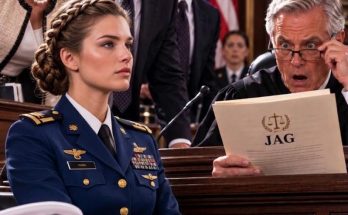
I read those accusations in silence.
For years, my family had dismissed my accomplishments.
Now they were prepared to damage my reputation to obtain money.
I hired an independent probate litigator named Rebecca Hart.
I didn’t represent myself.
My military legal experience did not make me a specialist in Virginia estate litigation, and I wanted someone who could evaluate the case objectively.
Rebecca reviewed the petition.
Then she asked me a simple question.
“Did you participate in preparing the will?”
“No.”
“Were you present when it was signed?”
“No.”
“Did you tell your grandmother whom to include?”
“No.”
“Did you receive copies before her death?”
“No.”
She nodded.
“Then we’ll focus on the evidence.”
Over the following weeks, we gathered records.
Grandma’s attorney provided the estate-planning file through the appropriate process.
It showed that Grandma had met with him privately.
He’d documented her reasons for revising her estate plan.
She’d discussed her assets.
Identified her relatives.
And explained what she wanted.
Her medical records from the relevant period contained no indication that she lacked the ability to understand those decisions.
That didn’t automatically settle the dispute.
But it gave us substantial evidence.
The hearing was held in a Virginia circuit court.
I arrived early.
I wore a simple dark suit.
No jewelry beyond my wedding band.
No uniform.
No military insignia.
I placed my folders neatly on the table.
Then I waited.
My parents entered with their attorney.
Christopher and Vanessa followed.
Mom looked at me and scoffed.
Dad shook his head.
“She doesn’t deserve a penny,” he said loudly.
Several people turned.
I remained silent.
When Judge Whitmore entered, everyone stood.
The proceedings began.
My parents’ attorney argued that Grandma had been vulnerable.
He suggested I’d used my legal training to manipulate her.
He claimed I’d isolated her from the family.
Then he questioned my judgment and emotional stability.
Rebecca objected to unsupported characterizations.
The judge reminded counsel that allegations required evidence.
Still, my parents looked confident.
Their attorney continued.
“Your Honor, Ms. Bennett’s professional background has been deliberately obscured.”
Judge Whitmore examined the documents.
He turned several pages.
Then stopped.
He looked at my sworn declaration.
“Wait a moment… you’re JAG?”
I stood.
“Yes, Your Honor. I’m an active-duty Army colonel serving as a judge advocate.”
Dad’s expression changed.
Mom leaned forward.
Christopher stared.
The judge reviewed the declaration.
“You’ve practiced military law for more than fifteen years?”
“Yes, Your Honor.”
“And you currently hold senior legal advisory responsibilities?”
“Yes.”
He nodded.
“Your professional qualifications don’t establish the validity of a will. But the court will not treat unsupported allegations about your competence as proven facts.”
I sat.
I didn’t smile.
The point wasn’t that being a colonel made me incapable of wrongdoing.
It didn’t.
The point was that my parents had made sweeping accusations without knowing even the most basic facts about my life.
Rebecca stood.
“Your Honor, we’d like to address the claim that Colonel Bennett controlled the preparation of her grandmother’s estate documents.”
The judge nodded.
Rebecca introduced Jonathan Pierce’s records.
The private meetings.
The execution formalities.
The contemporaneous notes.
And the information documenting Grandma’s understanding of her estate.
Then she presented a memorandum from a meeting held six months before Grandma’s death.