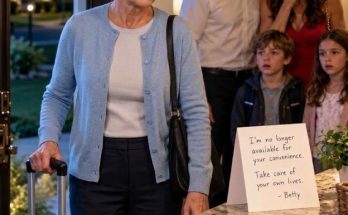
**Part 2**
I woke before dawn anyway.
My body expected lunch boxes,
missing shoes,
a load of laundry
waiting in the washer.
Instead, there was pale light
across an unfamiliar quilt.
I lay still
and listened to birds outside.
My first feeling was relief.
The second was guilt.
I had brought the envelope
with me in my handbag.
I took it out
and spread its contents
across the bed.
There was a brochure
for a small apartment building
near the library.
A list of monthly expenses.
A copy of my bank statement.
And a photograph of Frank,
taken during our last trip
to Lake Erie.
He was standing ankle-deep
in gray water,
holding his shoes in one hand,
laughing because a wave
had soaked his trousers.
I had kept that photograph facedown
in my bedroom.
Looking at it meant remembering
how easily a whole life
could become a before and after.
But the papers had been there
for months.
I had priced apartments.
I had counted my savings.
I had even spoken
to the building manager.
Then Sophie had broken her arm.
Daniel had taken on overtime.
Emily had a difficult stretch at work.
Each time, I had told myself
to wait another month.
The children needed me.
That much was true.
I had mistaken it
for the whole truth.
Downstairs, Marlene was making coffee.
She glanced at the envelope
in my hand.
“You’ve been planning,” she said.
“I’ve been thinking.”
“That’s usually how it starts.”
She poured two cups.
I told her about the dinner.
Then I told her
about the years before it.
How Emily would leave
a grocery list on the counter
without asking whether I had plans.
How Daniel would promise
to handle school pickup,
then call from work
because something had come up.
How I had stopped volunteering
at the library on Thursdays
because no one remembered
that I had ever done it.
Marlene listened.
When I finished,
she asked one question.
“What do you want this morning?”
It was harder to answer
than anything else she’d asked.
I looked through the window
at her little backyard.
An empty bird feeder hung
from a branch.
“I want to talk to Daniel,”
I said.
“But I don’t want
to go back today.”
“Then tell him that.”
Daniel arrived at ten.
Marlene let him in
and went out to buy bread,
though her breadbox was full.
He looked tired.
His white shirt,
the one I had ironed,
was wrinkled at the sleeves.
He sat opposite me
at the kitchen table.
For a moment,
we regarded each other
like strangers trying to remember
where they had met.
“Are you all right?” he asked.
“Yes.”
“We were worried sick.”
“I told you I was safe.”
“After we found your key
in a glass.”
His voice rose,
then he caught himself.
“Mom, what happened?”
I had imagined saying
many things to him.
Some of them were sharp.
Instead, I asked,
“Did you know Emily told me
to heat up your leftovers?”
His eyes dropped.
“I saw the message.”
“And the dinner?”
“She said you didn’t want
to come out with us.”
I felt the old urge
to make excuses for him.
He had been working.
He had trusted his wife.
He had seen me smile
through a thousand ordinary days.
But he had also seen me
fold his shirts,
cancel appointments,
and eat standing up
because the family had already finished.
“I asked what time we were leaving,”
I said.
“She told me it was just you.”
Daniel rubbed his forehead.
“I didn’t know that.”
“I believe you.”
He looked relieved.
I wasn’t finished.
“I also believe you didn’t ask.”
He sat back.
Outside, a car door closed.
Someone called to a child
across the street.
Daniel turned toward the sound.
“When Dad died,” he said,
“I thought being with us helped.”
“It did.”
“You seemed happy with the kids.”
“I was.”
“Then why didn’t you say something?”
“I did.”
He looked at me.
“Last winter,” I said,
“I asked to keep Thursdays free.”
He remembered slowly.
“That was for the library.”
“You said Emily had meetings.”
“We thought you could switch days.”
“I couldn’t.
They needed me on Thursdays.”
Daniel said nothing.
“In March, I asked
whether you could arrange
after-school care twice a week.
You told me it was expensive.”
“It is.”
“So is giving up my life.”
He flinched.
I had never spoken
to my son that way.
The sight of his face
made me want to soften.
I held the edge of my cup
until that feeling passed.
“I love Noah and Sophie,” I said.
“I will always love them.
But I cannot be the answer
to every problem in your house.”
Daniel stared at the table.
“How long are you staying here?”
“Until my apartment is ready.”
“You got an apartment?”
“I’ve applied for one.”
He looked up sharply.
“Mom.”
“I can afford it.”
“That’s not what I meant.”
“I know.”
For a while,
neither of us spoke.
Then he told me
what had happened
when they came home.
Noah had asked
if I was angry with him.
Sophie had asked
whether I was ever coming back.
Those questions went straight through me.
“I’ll call them today,” I said.
“They shouldn’t have to guess.”
Daniel nodded.
“I’m sorry about dinner.”
I waited.
He looked at his hands.
“And I’m sorry
I let you become
the person who handled everything
because I knew you would.”
That apology reached me.
It did not repair everything.
It gave us somewhere honest
to begin.
Before he left,
I told him I would collect
the rest of my things
when the children were at school.
He offered to help.
“I’d like you there,” I said.
“But I’ll decide what comes with me.”
He nodded again.
At the door, he stopped.
“Emily wants to talk to you.”
“I’ll talk to her.”
“Today?”
“When I’m ready.”
He accepted that.
It was a small thing.
It was also the first time
in a long while
that my answer had been enough.
I called the children after lunch.
Noah answered on speakerphone.
Sophie was close enough
that I heard her breathing.
“Grandma?”
“I’m here, sweetheart.”
“Dad said you’re at Marlene’s.”
“I am.”
“Did we do something bad?”
“No.
Neither of you did.”
There was a rustle.
Sophie must have taken the phone.
“Are you coming home?”
I looked at the apartment brochure
on Marlene’s table.
“I’m going to live
in a place of my own.”
Sophie went quiet.
“Will it have room for us?”
“Yes.”
“Can I bring my drawing stuff?”
“Please do.”
“What about our Friday pancakes?”
“We’ll talk with your parents
about Fridays.”
I wanted to promise immediately.
I wanted to spare her
every uncertain feeling.
But promises had helped build
the life I was leaving.
So I told her the truth.
“I don’t know the schedule yet.
I know I’ll see you.”
Noah came back on.
“Do you still want
my science fair volcano?”
“Of course.”
“I can make it
at your new place.”
“I’d like that very much.”
When the call ended,
I cried so hard
I had to sit down.
Marlene came in
with the bread she hadn’t needed.
She put it away
and sat beside me.
Neither of us spoke
until I could breathe normally.
The next afternoon,
Daniel texted that Emily
would be home from work
after five.
I chose four.
The children were at school,
and Daniel met me at the door.
The house looked almost unchanged.
The sign-up sheet remained
under the crooked magnet.
The chicken tray
had disappeared from the rack.
My glass had been washed
and put back in the cupboard.
I noticed its absence
as keenly as I had noticed
the key standing inside it.
Upstairs, I packed my books,
a few pieces of jewelry,
and the blue blanket
Frank’s mother had made for us.
Daniel carried two boxes
to my friend’s car.
Then he returned
and stood in my doorway.
“What about the sewing machine?”
“It’s mine.
I’ll come back for it.”
He wrote it down
on his phone.
That small act
nearly undid me.
He was listening
instead of assuming.
In the hallway,
I paused by the wall
where the children’s heights
had been marked in pencil.
Noah’s first line
was barely above my knee.
Sophie’s name leaned sideways
because she had insisted
on writing it herself.
I touched the latest marks.
Daniel stayed quiet.
“I hope you don’t paint over these,”
I said.
“I won’t.”
I believed him.
As I reached the stairs,
the front door opened.
Emily came in carrying
a cardboard drink holder
and her work bag.
She stopped when she saw me.
Her expression changed
from surprise to caution.
“I didn’t know you were coming.”
“I’m taking my things.”
She looked at Daniel.
He didn’t speak for me.
Emily set the drinks down.
“I’ve been trying to call.”
“I saw.”
“I wanted to explain.”
I waited.
She glanced toward the boxes.
“The dinner got out of hand.
My mother invited my sister,
and then the team joined us.
There were already too many people.”
“You knew the children were going,”
I said.
“Of course.”
“And your mother.”
“Yes.”
“But there wasn’t room for me.”
Emily crossed her arms.
“That’s not what I meant.”
“It’s what you told me.”
She drew a breath.
For a moment,
I thought she might apologize.
Instead, she said,
“You could have told me
you were this upset.
Leaving without warning frightened everyone.”
“You told me where to eat,”
I said.
“Then you told me what to eat.
You didn’t ask how I was.”
Her face reddened.
“It was one text.”
“It was.”
I picked up my handbag.
“That’s why I answered it.”
Daniel stepped forward.
“Emily, Mom asked about dinner.
You told me she didn’t want to come.”
“I thought she’d be more comfortable
staying in.”
“You could have asked her,” he said.
Emily looked between us.
I could see her trying
to decide whether to argue.
Finally, she sat down
on the bottom stair.
Her shoulders sagged.
“I was selfish,” she said.
It came out quietly.
“My promotion was the first thing
that felt entirely mine
in a long time.
I wanted a perfect night.
I should have included you.”
I leaned against the railing.
“I would have celebrated with you.”
“I know that now.”
“You knew it before.”
She looked at the floor.
“Yes.”
That answer mattered more
than an elaborate explanation.
I told her congratulations.
I meant it.
I also told her
that I was moving out.
Her head lifted.
“Because of me?”
“Because I need my own life.”
She pressed her lips together.
“We rely on you.”
“I know.”
“We can’t arrange everything overnight.”
“I know that too.
Daniel and I can discuss
a short transition.
I won’t leave the children
without someone to pick them up.
But you must arrange care.
And ask before making plans
that depend on my time.”
Emily nodded slowly.
“I’m sorry about the text.”
I thanked her.
Then I carried
the last small box downstairs.
That evening,
Daniel sent a calendar.
He and Emily had listed
every school pickup,
appointment, and activity
for the next four weeks.
They had marked
the days they could cover.
They had contacted
an after-school program.
For the first time,
I could see in writing
how much of their schedule
had lived inside my head.
I offered two pickup days
during the first week.
One during the second.
After that,
I would visit the children
because I wanted to,
with plans made together.
It was difficult
to press send.
It was harder
to leave the message alone
when Daniel replied,
We’ll make it work.