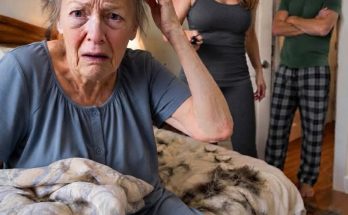
“What is so damn funny?” Alyssa snapped, her smugness evaporating into a defensive snarl.
I looked directly at my father, a man suffocating under the delusion of his own brilliance, and then at my sister, a woman convinced she had achieved a permanent victory.
“I was just wondering who in the world would be dumb enough to buy it,” I said, my voice barely above a whisper.
My mother hovered nervously in the dining room archway, wringing a dish towel, while my father’s brow furrowed into a deep shape. They processed my words as sheer malice, viewing me as a bitter widow lashing out at an innocent investor who had done nothing but write a check, believing the tragedy had shriveled my heart to make me small and venomous.
Crucially, they did not ask the one single question that might have offered them salvation, neglecting to ask what I knew that made me so calm.
I did not offer the answer, but consumed my pot roast and complimented my mother on the seasoning, because I am still my mother’s daughter, and the armor of good manners is always the final thing to crack.
During the dark, silent drive back to my apartment, I tapped the screen of my phone to illuminate the calendar application, and on the grid for the twenty-fifth of February, I typed two words: Her Closing.
I did not need to scream or draft a master plan, but merely needed to wait for the Ohio dirt to keep an appointment it had scheduled years before any of us sat down to that pot roast.
The following morning, at exactly nine o’clock, I phoned my father to make a singular demand, requiring the physical paperwork including the legally binding settlement statement, the closing disclosures, and most importantly, the document that gave him the delusion that he possessed the legal authority to sign a deed in my name.
He attempted to stonewall before passing the receiver to my mother, who deployed a trembling voice to inform me that I was disrupting the family peace.
“I will continue to disrupt the peace with escalating hostility until the settlement statement is in my hands,” I calmly stated over the line.
The lethal drop in my vocal register must have been unprecedented, because a heavy, stunned silence fell over the line.
Forty-eight hours later, when I let myself into their kitchen, a manila folder was positioned perfectly square in the center of the oak table, placed exactly the way a coward leaves a confession in hopes that the paper will absorb the fallout so they do not have to look you in the eye.
I did not bother removing my coat, but stood over the table and flipped the cover open.
The Fairwood cottage had sold for one hundred and eighty-two thousand dollars in cash.
I stepped back, my lungs seizing, because I knew that acreage and the structural integrity of those walls down to the millimeter, as calculating that exact math is how I pay my mortgage. Assuming the earth beneath it was stable and the footings were anchored in compliance with the laws of physics, that cottage was worth a minimum of two hundred and eighty thousand dollars on the open market, making it a solid hundred thousand dollars more than the insult Raymond had accepted.
He had fire-sold it for cheap, as-is, with a twenty-one day close.
“You didn’t sell it, Dad,” I said to the empty kitchen, though I knew he was lurking in the den listening. “You dumped it in an alley for a hundred grand under market, so why did you do that?”
He shuffled into the kitchen, wearing a patronizing scowl on his face.
“We did it to secure a fast close,” my father said slowly, as if addressing a child. “Your sister was facing a hard deadline with her builder, and this buyer offered liquid cash while waiving all contingencies, making it a clean and rapid transaction.”
In the appraisal business, fast is the most astronomically expensive word in the vocabulary, because the only individuals who purchase properties rapidly for cheap while waiving their right to an inspection are individuals who are absolutely convinced they are ripping you off. And the earth beneath that cottage had spent a decade teaching my husband that no one rips off the ground out there, because the earth always collects its tax while merely delaying the invoice.
I flipped to the second document, and my stomach plummeted as the final piece of the sinister puzzle snapped into place.
It was a formal Gift Letter.
It stated that my parents were gifting one hundred and four thousand dollars toward the down payment of Alyssa’s half-million-dollar home, and it was notarized with both of their signatures, legally swearing that this was a bona fide gift with no expectation of repayment.
I performed the brutal arithmetic aloud, forcing the numbers to hang in the air of their kitchen.
“The sale netted roughly one hundred and seventy thousand after the broker took his cut,” I stated coldly. “One hundred and four thousand went directly to the bank to secure Alyssa’s loan, so where is the remaining sixty-odd thousand?”
“It went to closing costs for the new build,” my father mumbled, looking down at the linoleum floor. “Appraisal fees, title insurance, and Alyssa needed to order some custom furniture to fit the dimensions of the new living room.”
“You retained nothing,” I whispered, realizing the trap they had blindly constructed for themselves, with no safety net, no escrow holdback, and no emergency reserve. They had cannibalized the entirety of my dead husband’s labor and injected every last penny into the drywall of my sister’s vanity project.
“It is family capital, Sabrina,” my father boomed, trying to reclaim his authority.
And the terrifying reality was that he believed it, as Raymond genuinely viewed all assets belonging to his offspring as a communal fund over which he reigned, to be redistributed whenever he deemed a family member in need. My marriage, my grief, and Wyatt’s death were merely line items on a spreadsheet he was rebalancing.
“It was Wyatt’s home,” I fired back.
“It was a rotting asset sitting empty!” he countered loudly.
Then my index finger found the line I had been dreading, where on the warranty deed beneath the seller’s execution line, was Raymond’s signature, with printed words beside it that made the bile rise in my throat indicating he acted as attorney-in-fact for Sabrina Cole.
“You forged my consent,” I breathed, entering that eerie, weightless space you reach when you have bypassed fury and entered sheer shock. “You used a Power of Attorney form.”
“It is explicitly stated in the document you signed before you fled,” my father said, puffing his chest out as if vindicated. “You wrote to handle the property, which is the legal phrasing, and liquidating an asset is a form of handling.”
Before I boarded the plane to Florida, I had signed a generic, one-page document so my father possessed the authority to call a plumber if the water heater ruptured in January, or pay the municipal tax bill if it arrived while I was away.
Handling a home and assassinating it are two entirely different verbs, yet never in my darkest nightmares did I imagine a court of law would interpret those three words as authorization to pawn my deceased husband’s house and launder the funds into my sister’s checking account.
Raymond was going to learn the difference, but I was not going to be the one to teach him.
“Is Alyssa’s closing still set for the twenty-fifth?” I asked, placing my hand on the doorknob.
My mother, hovering near the refrigerator, nodded frantically in her eagerness to end the confrontation. “Yes, the loan is through underwriting and everything is perfect!”
“Excellent,” I said softly.
I did not issue a threat, but merely collected the numbers in my head alongside the terrifying certainty that my father had constructed my sister’s entire financial future on a foundation he had stolen without ever bothering to check if it could bear the load.
Chapter 4: The Architecture of Panic
Later that week, I made a covert phone call to Georgia, feeling unproud of the espionage, though survival rarely allows for clean hands.
“Georgia, has the new owner changed the deadbolts yet?” I inquired over the phone.
“Men in a rush never bother with the trivial details,” she scoffed, and I could hear the satisfaction in her tone, as Georgia harbored a deep disdain for men in a rush. “There is still a spare brass key buried under the dead fern on the left, right where Wyatt always hid it, because that flipper boy has not done a single thing except drill a lockbox to the door and vanish.”
The dead fern that my father neglected had become the exact instrument of my salvation.
I drove out on a bruised, purple Tuesday afternoon, finding the spare key precisely where she promised, feeling it freeze against my thumb as I slipped inside the desecrated house. It felt like trespassing in a graveyard where someone had stolen the headstones, seeing the rooms half-staged with cheap furniture while our actual lives were boxed up and shoved into the garage to make the space palatable for buyers.
I walked straight to the kitchen, gripped the handle of the drawer by the stove, applied the specific upward jerk that Wyatt always used, and watched it surrender.
There it was.
I sat down at the scarred oak table where we had eaten hundreds of silent, peaceful dinners, and I opened my husband’s notebook in the fading winter light.
It was not a ledger of hardware store receipts, but a medical chart for the earth, with the earliest entry dating back to 2020. It contained a meticulously sketched diagram of a hairline fracture at the western footing, complete with microscopic measurements inked in his blocky print, tracking the progression of the settling clay year after year like an oncologist tracking a slow-moving tumor.
“March: Fracture widened an eighth of an inch. Not yet. Save more first,” I read aloud to the empty room. “October: Soil stable. Good winter. Spring: Seepage detected at south corner. It’s the uncompacted fill. Always the fill.”
Taped to the crinkled pages were faded photographs showing a leveling tool pressed against crumbling concrete, and a yardstick plunged into muddy water in a space that should have been bone dry.
He had known about it all along, fighting this invisible war completely alone for years while never burdening me with the terror, and sitting there in the dust, I understood why. I would have panicked and demanded we sell, but he absorbed the anxiety so I could sleep soundly in a house I believed was impenetrable, acting not out of neglect, but serving as its hospice nurse to figure out how to perform a miracle.
Folded in the center of the notebook was a formal letterhead containing a structural engineer’s preliminary assessment from 2021, and I read the damning paragraph until the words blurred.
“Severe differential settlement at the west and south footings, consistent with expansive soils and inadequate historic fill,” the report stated clearly. “Full underpinning advised to prevent progressive structural failure, with an estimated cost of remediation at seventy thousand dollars, compounding with delay.”
Tucked behind the report was a bank envelope with one word written across it in heavy pencil: FOUNDATION.
Inside were deposit slips showing twenty dollars here and a hundred dollars there, and I tallied them up as my hands vibrated uncontrollably.
There was eighteen thousand dollars saved. He had been secretly stockpiling cash from every side job, bleeding himself dry to finance a seventy-two thousand dollar miracle, only to die exactly fifty-four thousand dollars short of the finish line.
I dropped my head onto the oak table and finally wept until my ribs ached and I gasped for air.
I was not crying over the stolen real estate or the equity, but because my family had spent two years deriding this house as a useless shack, a burden, and a dilapidated anchor dragging me down, when in reality it was the most profound, agonizing love letter ever authored. It was written in concrete measurements and drugstore photos by a man who loved me enough to hold the earth up with his bare hands so I would not feel it shaking.
I flipped to the final page and saw one sentence pressed so violently into the paper that the lead had snapped.
“Fix it right before I let anyone else in, because she deserves a house that holds,” he had written.
My father had let a stranger in anyway.
I sat in the dark until the cold seeped into my marrow, and as the tears dried on my face, the fragments of the situation fully assembled themselves in my mind. The buyer, a local flipper named Trevor Ross who ran an outfit called Ross Homes, had purchased a property sitting on top of a major geological disaster while waiving his right to an inspection.
He was going to discover the truth, not because I was going to tip him off, but because the Fairwood clay was going to introduce itself to him the exact same way it had introduced itself to Wyatt.
When a flipper realizes he has bought a compromised house, he does not mourn, but sues.
The pressure campaign from my family commenced exactly fourteen days before Alyssa’s scheduled closing, beginning not with overt threats, but with the weaponized application of concern.
My mother initiated the assault with a late-night phone call, deploying her trembling voice designed to make you feel like a terrible person for withholding whatever she was demanding.
“I just lie awake staring at the ceiling, thinking about your sister,” my mother sighed heavily into the receiver. “Those two precious babies are living out of boxes, renting like destitute college students, while you have your lovely, secure apartment and the memories of Wyatt, which are far more valuable than timber and drywall, so just be fair to Alyssa, Sabrina, as that is all a mother asks.”
She wielded the concept of memories as if it were a lucrative trust fund I had inherited, suggesting that my grief made me wealthy enough to absorb the financial ruin they had orchestrated.
“I hear you, Mom,” I said, using a neutral phrase that committed to absolutely nothing before ending the call.
The following afternoon, my father utilized text messaging, which was his preferred medium for delivering harsh words because text does not expose a wavering voice.
“Wyatt is gone, Sabrina, and hoarding a vacant property will not bring him back,” his text message read. “It is time to step aside and allow your sister to experience her future.”
He was factually correct that retaining the house would not bring back a dead man, but his assumption about why I was holding onto it was a projection. I was not pretending my husband was alive, but protecting the final act of devotion he had performed. I did not reply, but watched the screen and realized with relief that my pulse had not elevated a single beat.
The psychological pressure peaked when my mother arrived at my apartment unannounced, clutching a baked cake like a Trojan Horse, sitting at my small dining table to weaponize her own past.
She recounted the abject poverty of her childhood, recalling the winters the gas company severed the heat and watching her own mother count sticky pennies to decide if they could afford a loaf of bread, twisting her thin gold wedding band relentlessly as she spoke.
“I swore to God I would never let my daughters lay awake hyperventilating over money the way I did,” my mother whispered, a genuine tear escaping her eye. “I just needed to know that at least one of my girls was safe, and that Alyssa had a fortress that could not be repossessed.”
For ten seconds, I saw the terrified little girl trapped inside the controlling parent, feeling the ancient pull to surrender and carry the weight so she could sleep.
Compelling as a person’s trauma may be, it does not obligate you to set yourself on fire to keep them warm.
She sensed my hesitation, misread it as giving in, and reached too far.
“If you truly loved this family,” she said, her voice dripping with soft venom, “you would not force us to beg on our knees, because you have always been our strong one, Sabrina, so do not quit being strong right when your sister needs you to save her.”
There was the leash they always used.
I stood up, walked to the counter, and flipped the switch on the electric kettle, feeling a firm resolve form inside my chest as the suffocating knot of guilt that had lived there since childhood suddenly unspooled.
“I will think about it, Mom,” I said while handing her a plate.
She walked out the door victorious, utterly oblivious to the fact that she had just permanently severed the last thread tethering me to her.
Two days later, the earth finally spoke.
Georgia called me, breathless with excitement over the phone.
“Honey, there are three Ross Homes trucks idling in the dirt out here,” Georgia reported quickly. “And that flipper boy is standing on the asphalt screaming into his cell phone so loudly the neighborhood dogs are barking about a foundation issue.”
Trevor Ross’s crew had finally opened the hatch.
They had discovered the subterranean moisture and the compromised footing, leading Trevor to do what he should have done before signing the deed by hiring an emergency structural engineer named Dana.
Georgia had cornered a contractor by the fence line and extracted the information, reading it to me off a napkin.
“Severe differential settlement, full underpinning required immediately, with an estimated cost of seventy-two thousand dollars,” she read carefully.
Then came the crucial detail.
“This asset should not have transferred title without formal disclosure of the catastrophic defect,” she added.
A professional with a state-certified stamp had just validated Wyatt’s notes from five years prior, with the only difference being that Wyatt had loved the woman inside the house enough to save for the cure, whereas Trevor Ross was a greedy buyer now holding a property with serious issues.
Trevor Ross wanted his one hundred and eighty-two thousand dollars back immediately, and he sent his corporate attorney to deal with Raymond. The official letter, demanding full cancellation of the fraudulent sale under threat of a lawsuit, arrived at my parents’ doorstep like a sudden shock.
My father called me the instant he opened the envelope, sounding entirely stripped of his usual authority.
“Sabrina, there is a legal threat here involving the cottage,” my father squeaked nervously over the line. “It is a complete mess, and I require you to fix it immediately.”