“Morning, Jessi,” Rachel smiled, setting a coffee down on my workbench. “I brought those cherry pastries you like.”
“You’re a lifesaver, Rachel,” I said, tossing the towel into a bin and taking a sip. “How are the final trust filings looking?”
Rachel pulled a single manila folder from her leather bag, laying it flat beside my tablet. “All clear. The child-support enforcement order is fully integrated with his wage garnishment. Luca’s pension drawdown is officially locked into Leo’s educational trust. He can’t touch a single dollar of it, even if he files for secondary bankruptcy.”
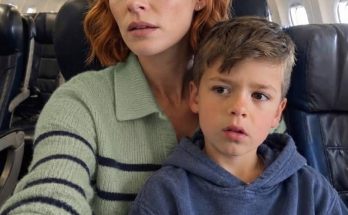
I looked down at the documents. Three years had passed since that catastrophic flight to Chicago.
In the immediate aftermath of the airline’s internal investigation, Luca had been permanently stripped of his captain’s license for gross professional misconduct and flight-deck security violations. The grand public proposal to Chloe Ruiz had unraveled in spectacular fashion: once Luca lost his senior pilot salary, his corporate prestige, and his four-bedroom suburban home, Chloe walked away within ninety days.
Last I heard through mutual acquaintances in the aviation network, Luca was working as a regional ground-handling supervisor for a budget cargo feeder in Ohio—living in a rented one-bedroom apartment, pulling night shifts, and paying off a mountain of legal debt. He was granted limited, court-supervised video calls with Leo once a month, though he rarely used them. The fragile ego that had driven him to propose over a commercial PA system couldn’t bear the reality of looking his son in the eye from the bottom of the ladder.
“Does he still try to challenge the garnishment?” I asked calmly.
“His lawyer tried to file a hardship motion six months ago,” Rachel replied, taking a pastry from the bag. “The family court judge took one look at the transcript from the flight attendant’s deposition, denied the motion in three minutes, and ordered him to pay my legal fees for wasting the court’s time.”
I let out a soft, genuine laugh. “Good.”
“How is Leo holding up with his flight ground-school classes?” Rachel asked, gesturing toward the back classroom.
“See for yourself,” I smiled, pointing toward the runway outside.
Through the wide hangar doors, a small white-and-blue trainer plane was executing a smooth, picture-perfect touch-and-go landing on the main runway. The tires chirped softly against the asphalt before the aircraft lifted smoothly back into the clear afternoon sky, banking gracefully into the crosswind turn.
Five minutes later, the trainer taxied up to our hangar, its propeller spinning down to a quiet stop.
The door popped open, and ten-year-old Leo stepped out onto the wing step, wearing a small leather flight jacket, aviation headsets resting around his neck, and a pair of dark sunglasses. His dark hair was windblown, and his face held an expression of pure, unshakeable confidence.
Behind him stepped out his instructor, Marcus—a retired Air Force veteran with thirty years of flight experience.
“How was the pattern work, Chief?” Marcus called out to me, wiping down the windshield.
“A little heavy on the rudder during the turn to final,” I teased, walking out onto the tarmac to meet them. “But the touchdown was butter.”
Leo grinned, hopping off the wing and pulling off his headsets. “Marcus said I kept the centerline better than the college students he taught yesterday!”
“He’s not lying,” Marcus laughed, patting Leo on the shoulder. “The kid has natural hands. Reads the air before the instruments even react.”
Leo walked up to me, pulling a small, worn sketchbook from his jacket pocket. He flipped to a fresh page and handed it to me.
Drawn in crisp, confident pencil lines was a detailed diagram of the airfield, complete with wind vector arrows, runway headings, and a small drawing of our hangar in the corner. Across the top, written in neat, clear block letters, were the words: STERLING FLIGHT ACADEMY — RUNWAY 18 LEFT.
I looked at the drawing, then up at my son.
The seven-year-old boy who had hidden behind a gift-shop rack in a crowded terminal—terrified, confused, and clutching a crooked drawing for a father who didn’t care—was completely gone. In his place stood a strong, bright ten-year-old boy who knew exactly who he was, where he belonged, and who held his sky steady.
“It’s perfect, Leo,” I said softly, handing the book back to him.
“Can we take the Cessna up for sunset pattern practice?” Leo asked, his eyes shining. “Marcus said if we check the weight and balance, we have time before twilight.”
I looked over at Rachel, who offered a warm, supportive nod, then back at my son.
“Pre-flight inspection first,” I told him, tossing him the fuel-testing cup. “Check the sump drains, inspect the pitot tube, and check the oil level.”
“On it, Cap!” Leo cheered, running toward the open hangar with unbridled energy.
I stood on the sun-warmed tarmac, watching him carefully inspect the wing rivets of our plane.
When Luca had picked up that microphone three years ago, he thought he was humiliating me. He thought he was leaving behind an inconvenient wife and a quiet boy to chase a shiny, hollow fantasy. He had believed that taking away his presence would leave us grounded in the dark.
He never understood that he hadn’t broken our wings. He had simply cleared our airspace.
He had removed the weight of a selfish man from our lives, forcing me to build a foundation so strong, so honest, and so safe that my son would never have to doubt his place in the world again.
I walked into the hangar, grabbed my flight headset from the hook, and stepped up beside my son.
“Oil level is four quarts, clear and clean,” Leo reported proudly, holding up the dipstick.
“Weight and balance calculated?” I asked.
“Checked and double-checked.”
“Then let’s fly, buddy.”
We climbed into the cabin, buckled our harnesses, and closed the doors. As the engine roared to life, smooth and steady, we taxied out toward the runway, leaving the shadows of the past far below us on the ground where they belonged.
THE END